Second-Order Neural Dynamics Explain How Brains Compress and Explore Memories During Sleep
Researchers show how momentum and cellular adaptation work together in neural networks to solve the memory replay puzzle.
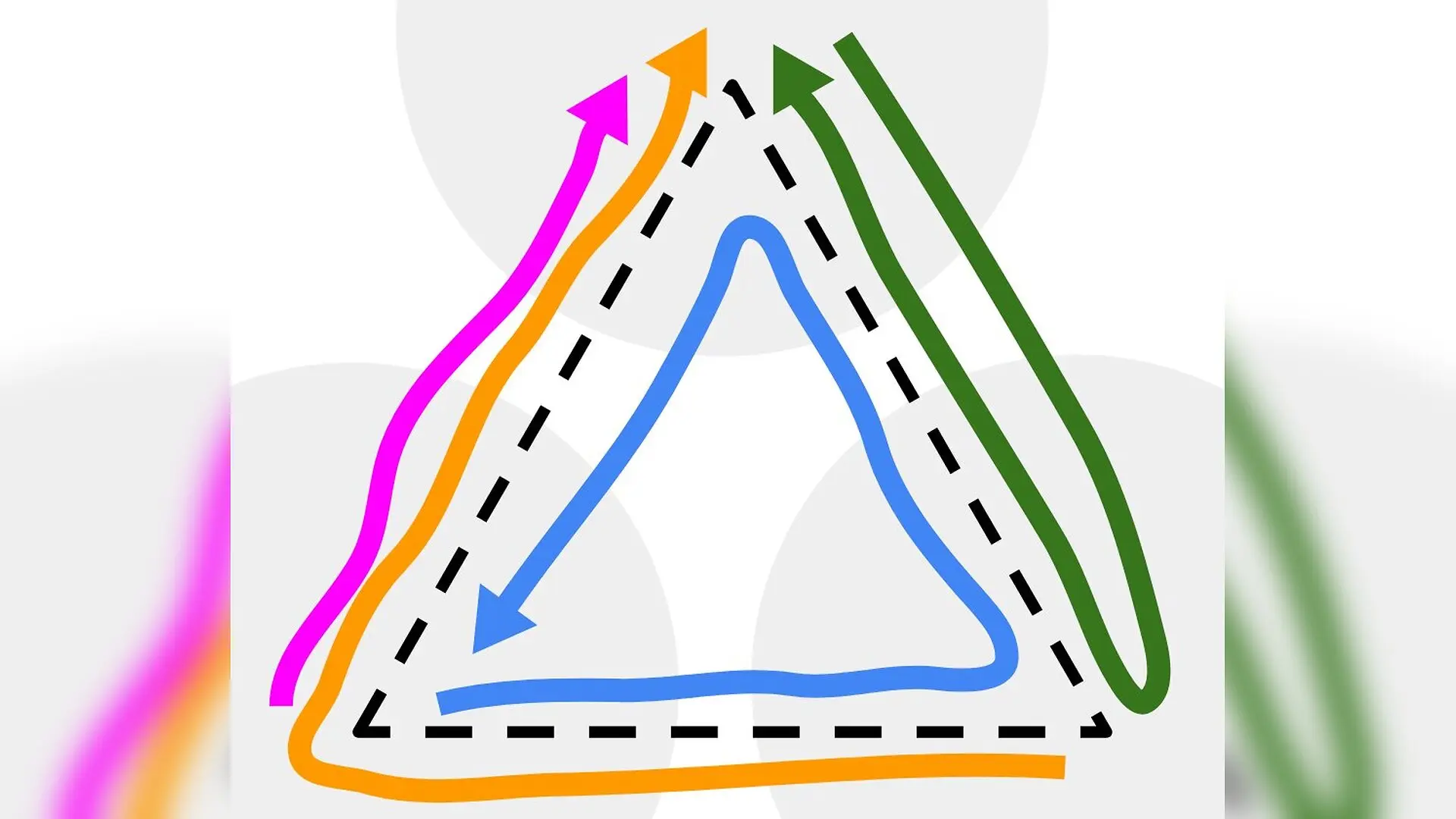
When animals rest or sleep, their brains replay neural activity patterns from wakefulness at lightning speed, a mysterious mental playback that helps consolidate memories and plan future actions. In biological neural networks like the hippocampus, these spontaneous memory sequences compress events in time while exploring diverse trajectories that may never have occurred in exact waking life. Yet, computational models struggle to replicate both of these features simultaneously without breaking down. Now, a study published on arXiv by Josue Casco-Rodriguez, Nanda H. Krishna, and Richard G. Baraniuk reveals how second-order neural dynamics solve this long-standing puzzle.
Why Do Traditional Neural Networks Fail to Replay Memories Accurately?
To understand how memory replay works, researchers often study recurrent neural networks trained on path integration, a fundamental navigational process where an organism estimates its position from velocity signals. Without external sensory inputs during rest, these networks generate noise-driven activity that samples from the distribution of awake experiences. Previous computational theories described this spontaneous activity as first-order Langevin sampling, a mathematical process of gradient ascent along probability distributions. However, this basic model falls short. First-order networks either crawl too slowly or fail to venture off the beaten path, missing the rich environmental exploration and dramatic temporal compression observed in biological brains.
The authors analyzed the role of spike-frequency adaptation, a form of cellular negative feedback where neurons reduce their firing rates during prolonged activity. While adaptation effectively destabilizes familiar memory attractors to encourage spatial exploration, it creates an unintended dynamical drag that severely slows down replay generation. This trade-off left computational neuroscientists wondering how real brains manage to explore alternative paths while zipping through memories at speeds up to thirty times faster than awake experiences.
How Does Momentum Accelerate Memory Playback in Artificial Networks?
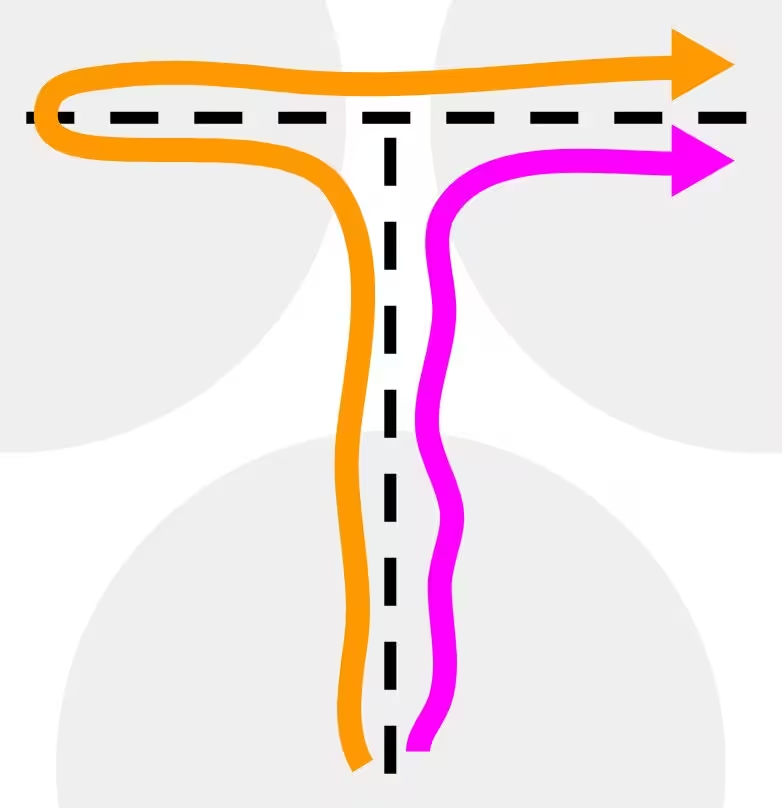
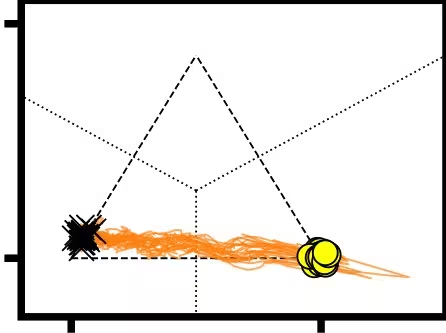
To overcome the dragging effect of adaptation, the researchers introduced a second-order mechanism known as momentum. In physics and optimization, momentum helps algorithms accelerate down slopes by accumulating velocity from previous steps. Translating this concept to neural circuits, the team modeled underdamped Langevin dynamics, where a velocity term helps replay trajectories push past sluggish resting states and converge rapidly toward target endpoints. Through extensive simulations across four distinct spatial navigation tasks, including T-mazes, equilateral triangles, and simulated rat random walks, the authors demonstrated that momentum successfully counteracts adaptation-induced drag.
When both adaptation and momentum are active within recurrent neural networks, the models achieve the best of both worlds. Adaptation encourages the network to visit multiple attractor basins and stray into novel territory, while momentum accelerates trajectory convergence. Across evaluated tasks, this dual mechanism temporally compressed replay sequences by up to thirty percent relative to awake paths while simultaneously expanding cumulative path lengths and regions visited, matching key signatures of biological memory retrieval.
What Is the Biological Basis for Dendritic Input Differentiation?
Implementing physical momentum in artificial intelligence is straightforward, but biological neurons lack a direct way to compute output velocities across time steps. To address this biological plausibility gap, the authors proposed that neural circuits could execute momentum through dendritic input differentiation. By processing identical input signals across separate dendritic branches with built-in time delays and subtracting them where the branches converge, single neurons can effectively compute the recent derivative of their inputs.
The team suggests that neuromodulators like acetylcholine, which naturally fluctuate between wakefulness and sleep states, could modulate the gain of these specialized dendritic receptors. During sleep, shifts in neuromodulator concentrations could disinhibit adaptation while engaging input differentiation to orchestrate rapid memory compression. While these theoretical proposals await direct experimental confirmation, the framework provides testable predictions for neuroscientists investigating how physical structures within memory circuits support high-speed cognitive playback.
The study was posted to the arXiv preprint server on November 23, 2026.
This article has been fact checked for accuracy, with information verified against reputable sources. Learn more about us and our editorial process.
Last reviewed on .
Article history
- Latest version
Reference(s)
- Casco-Rodriguez, Josue. “Second-Order Dynamics in Noisy RNNs Produce Exploration and Temporal Compression in Replay.” arXiv.org <http://arxiv.org/abs/2611.29888v1>.
Cite this page:
- Posted by Jessica Martin