Researchers Find Bedside Signs Trump Chest Scans When Admitting Older Patients, But What Drives Hospital Choices
Specialist consultations and oxygen levels outweigh imaging results in predicting hospital stays for older adults
Older patients arriving at the emergency department with breathing trouble or injuries face hospitalization decisions that depend much more on basic bedside vital signs than on what advanced scans reveal. Researchers evaluating hospital admissions discovered that a patient’s physical stability and the need for medical consultations outweigh the actual findings on a chest computed tomography scan.
For years, emergency physicians have relied increasingly on computerized scanning technology to evaluate older adults presenting with complex symptoms. While these detailed cross-sectional imaging scans provide vital clues about internal organs and help rule out dangerous conditions, doctors often struggle to interpret subtle presentations in geriatric patients who present with multiple health conditions at once. Ayşe Ertekin and colleagues at Afyonkarahisar Health Sciences University examined the medical files of 212 older patients to see which specific factors truly drove the choice to admit someone to the hospital.
Why Bedside Vital Signs Matter Most
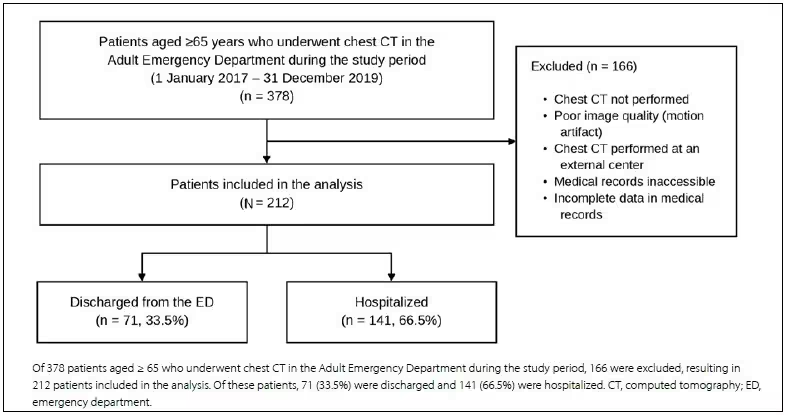
The retrospective cohort study, published in the Sao Paulo Medical Journal, focused on adults aged 65 and older who underwent chest scans between January 2017 and December 2019. Among the 212 participants, with a mean age of about 74 years, roughly 66.5 percent were ultimately admitted to the hospital. Out of those hospitalized patients, 27.4 percent required intensive care unit admission due to severe illness.
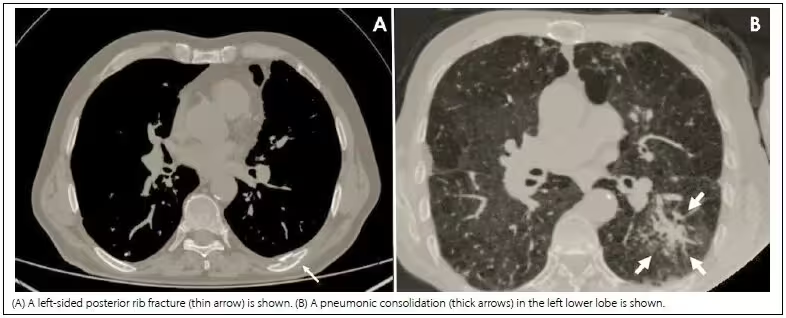
When the team analyzed the data, they found that scanning the chest did not dictate the final ward placement on its own. In fact, more than half of the scans showed no acute pathology at all, highlighting the high degree of diagnostic uncertainty doctors face with elderly individuals.
How Specialist Consultations Triple Admission Odds
The number of specialist consultations requested during the emergency visit emerged as the single strongest statistical predictor of whether a patient would stay in the hospital. Each additional consultation requested by the treating physician increased the odds of hospital admission approximately 3-fold. This pattern suggests that requesting opinions from multiple departments acts as a clear marker of clinical complexity and diagnostic uncertainty, rather than just reacting to an imaging result.
Basic physiological measurements also played a major role in guiding admission choices. Every 1 percent decrease in peripheral oxygen saturation raised the risk of hospitalization by roughly 10 percent. Similarly, lower systolic blood pressure and elevated white blood cell counts were strongly linked to inpatient admission rather than routine discharge home.
The authors note several important limitations to keep in mind when interpreting these findings. Because the work was a single-center retrospective study conducted before the coronavirus pandemic, practices and admission thresholds may differ in modern emergency departments. Furthermore, doctors ordered scans based entirely on clinical judgment rather than a rigid institutional protocol, which could introduce selection bias.
The research was published in Sao Paulo medical journal = Revista paulista de medicina on November 20, 2026.
This article has been fact checked for accuracy, with information verified against reputable sources. Learn more about us and our editorial process.
Last reviewed on .
Article history
- Latest version
Reference(s)
- Ertekin, Ayşe., et al. “Clinical predictors of hospital admission beyond imaging findings in older patients undergoing chest computed tomography in the emergency department: a retrospective cohort study.” Sao Paulo Medical Journal, vol. 144, no. 6, January 1, 2026 FapUNIFESP (SciELO), doi: 10.1590/1516-3180.2026.3639.14092026. <https://doi.org/10.1590/1516-3180.2026.3639.14092026>.
Cite this page:
- Posted by Zubair Ali