How Video Games Help Seventy-Eight Thousand Young Players Adapt to Foreign Cultures Online
A study of scrolling comments on Chinese social media reveals how historical video games spark cross-cultural understanding and community building.
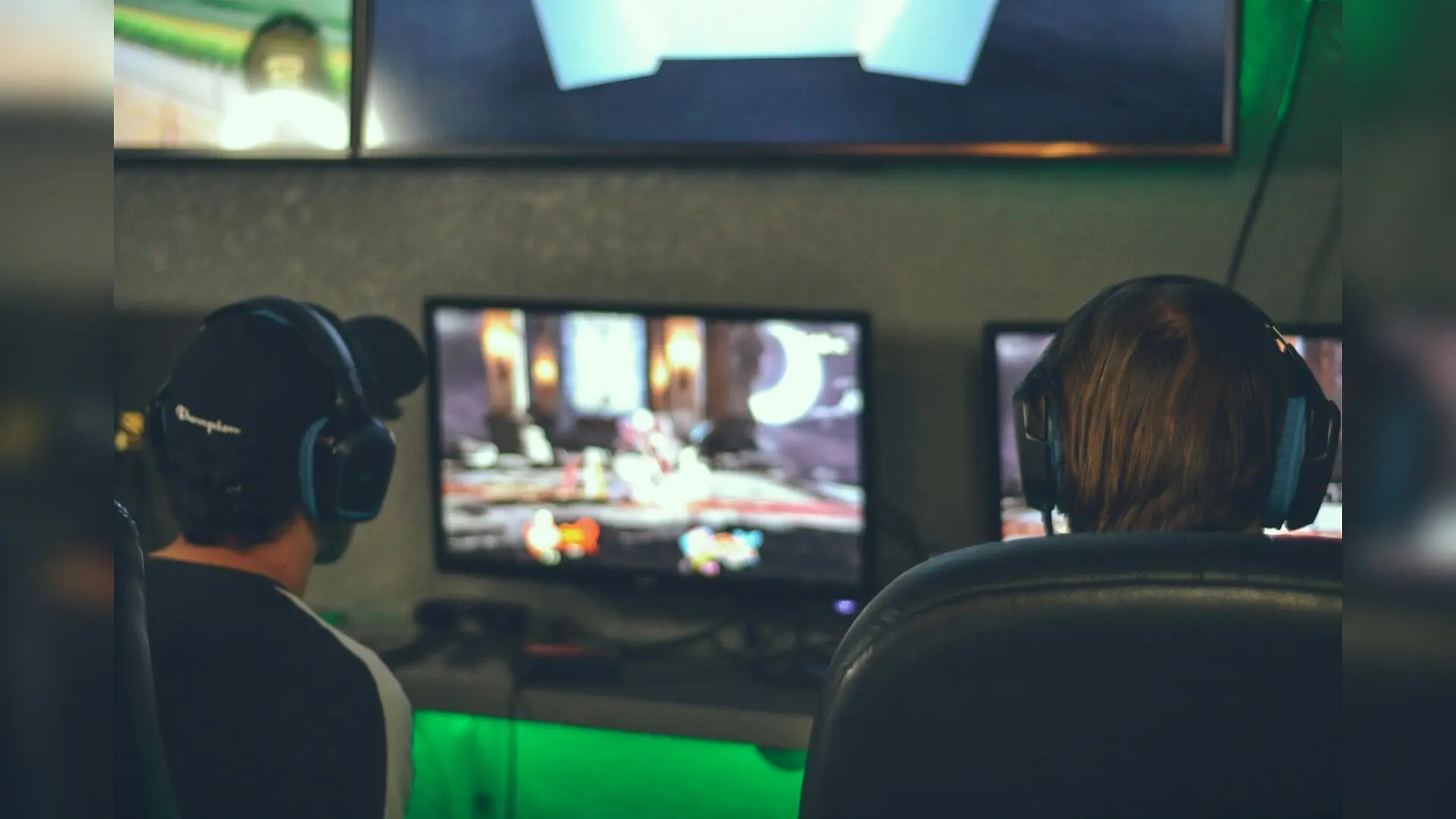
When young people watch videos about foreign video games online, they do not just consume entertainment, but instead actively rebuild their cultural understanding through real-time scrolling comments. Researchers investigating how contemporary youth interact with global media analyzed thousands of video clips and tens of thousands of user comments from the Bilibili platform. Led by Qiaohe Zhang from Peking University and colleagues, the research team examined how games like Assassin’s Creed: Valhalla and Red Dead Redemption help players navigate unfamiliar cultural settings without ever leaving their homes. The study is published in PLOS One, offering a fresh perspective on how digital platforms transform cultural adaptation in the modern era.
How Do Virtual Worlds Change Cultural Understanding?
The study analyzed a dataset of nine hundred unique game videos and seventy-eight thousand one hundred sixty-nine user comments, known as Danmaku, which scroll directly across the screen during playback. When Chinese players encountered foreign cultural elements in historical games, their discussions progressed far beyond surface-level items like weapons and clothing. While material objects sparked initial curiosity, players quickly moved on to examine abstract concepts such as religious beliefs, political structures, and economic systems. The authors noted that players frequently mapped foreign historical events onto their own native history, creating mental bridges that made unfamiliar narratives easier to comprehend.
For example, when players discussed characters rebuilding secret brotherhoods in foreign settings, they often compared these plotlines to famous peasant uprisings and dynastic rises in Chinese history. This process allowed audiences to reduce the cognitive distance between their own values and foreign traditions. Rather than remaining passive consumers, players engaged in a spiral of cognitive reconstruction that transformed simple observation into a deeper appreciation of historical and social contexts.
What Role Does Observational Learning Play in Digital Spaces?
Behavioral adaptation in virtual environments occurs through a structured three-stage process of vicarious learning, meaning learning by observing others. In the initial stage, players focused heavily on operational tips and combat mechanics, watching tutorials to master weapon combos and mission routes. As their familiarity with the game grew, they advanced to interpreting the cultural symbols embedded in those actions, such as understanding nineteenth-century social tensions or indigenous dietary practices mentioned in side quests. In the final stage, some players even bridged virtual and real-world boundaries by recreating traditional recipes or discussing broader European literature inspired by the games.
The scrolling comment system acts as a distributed learning network where thousands of users layer their real-time insights onto specific video timestamps. This collective structure compresses a process that usually takes years of physical travel into immediate, shared online interactions. Users learn not only game tactics from one another but also develop an indirect understanding of foreign social norms, transforming individual gameplay into a shared community experience.
Can Digital Communities Replace Traditional Cultural Contact?
Traditional theories of acculturation focused primarily on physical relocation, such as studying abroad or immigrating to a new country. However, the findings point to the emergence of virtual acculturation as a third pathway where individuals experience cultural learning entirely through digital channels. Over half of the high-engagement video themes centered on historical background, narrative content, and artistic expression, showing that audiences actively prioritize cultural interpretation over mere technical performance.
The authors acknowledge several limitations in their work, noting that manual video screening and data classification can introduce human bias, and that focusing strictly on historical games in China narrows the scope of the conclusions. Future research should examine a wider variety of game genres and incorporate automated analysis tools to test whether these patterns hold true across different global populations. Despite these boundaries, the work demonstrates that digital entertainment platforms now serve as major modern sites for intercultural dialogue and identity negotiation.
The research was published in PLOS One on November 20, 2026.
This article has been fact checked for accuracy, with information verified against reputable sources. Learn more about us and our editorial process.
Last reviewed on .
Article history
- Latest version
Reference(s)
- Zhang, Qiaohe., et al. “How does social media reshape virtual acculturation? A game-mediated framework for cross-cultural adaptation.” PLOS One, vol. 21, no. 11, November 20, 2026, pp. e0344078 Public Library of Science (PLoS), doi: 10.1371/journal.pone.0344078. <https://doi.org/10.1371/journal.pone.0344078>.
- Posted by Zubair Ali