Iron Ore Strength Drops Sharply When Key Minerals Hit a One-to-One Balance
Computer simulations reveal that mixing equal parts of iron and silica creates a weak point where cracks spread easily.
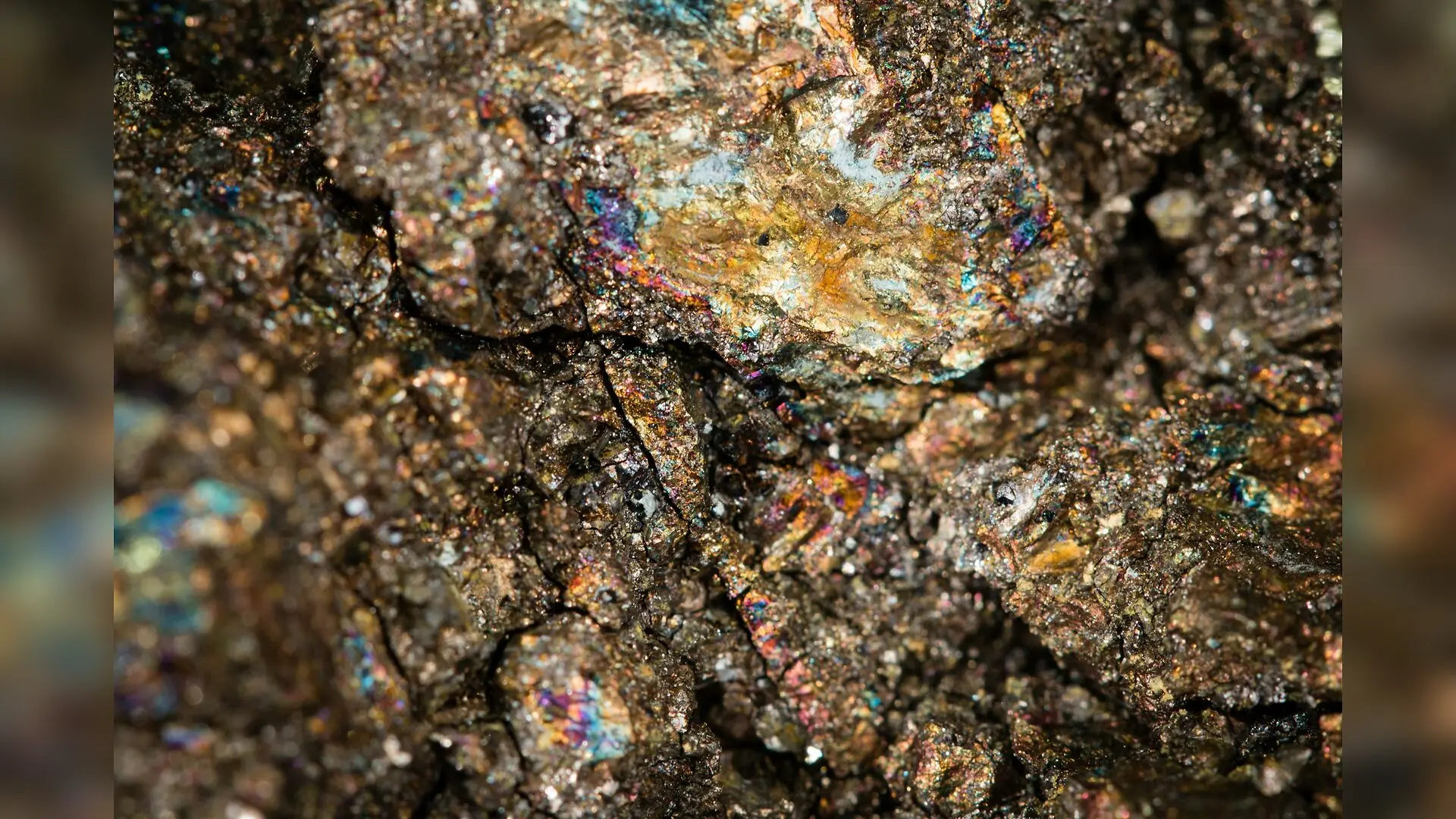
When iron ore is squeezed under extreme pressure, its strength does not simply increase the more iron it contains. Instead, a team of researchers discovered that magnetite ore reaches its weakest point when its main mineral components are balanced in equal proportions.
By simulating rock crushing using advanced computer models, Tao Yuan from Northeastern University and colleagues showed that changing the ratio between iron-bearing crystals and silica quartz alters how microscopic cracks tear through the material. The study, published in PLOS One, reveals that macroscopic strength drops sharply when the ratio of magnetite to silica hits one to one, before climbing again as silica or iron becomes dominant.
Why Does Equal Mineral Mixing Create a Weak Point in Rock?
Natural rocks are complex mixtures of different minerals with varying hardness and elasticity. When an external force squeezes a rock, strong phases act as a load-bearing skeleton, while weaker interfaces concentrate stress and spark microcracks.
The researchers set up a two-dimensional particle flow simulation, representing magnetite ore with three simulated mineral phases: magnetite for the iron, silica for the quartz gangue, and aluminum oxide for accessory minerals. They kept the aluminum component constant at 20 percent while shifting the balance of magnetite and silica across six different test groups.
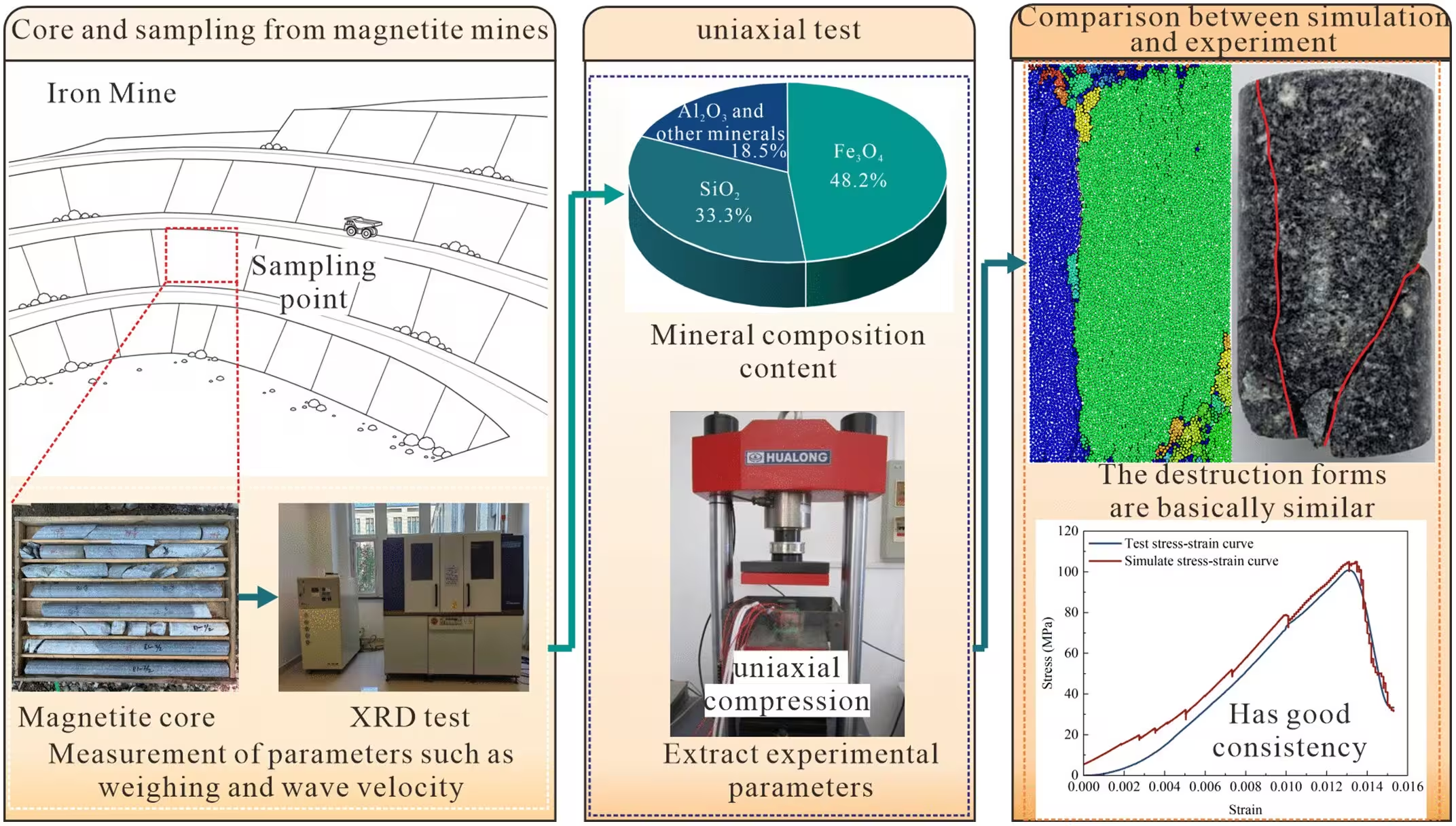
When the magnetite and silica proportions were nearly equal at a ratio of one to one, the simulated specimen collapsed at a peak strength of about 82 megapascals. But when silica dominated the mixture with a magnetite-to-silica ratio of about one to three, the peak strength jumped to roughly 151 megapascals. High iron contents also pushed strength back up, reaching about 132 megapascals when the ratio was three to one.
How Do Strong Bonds Deflect Cracks and Prevent Sudden Collapse?
Microscopic scanning electron microscope and energy dispersive spectroscopy observations helped explain the physical reasons behind these strength swings. Continuous silica-rich regions formed a sturdy framework that forced incoming cracks to bend, stop, or detour around strong zones.
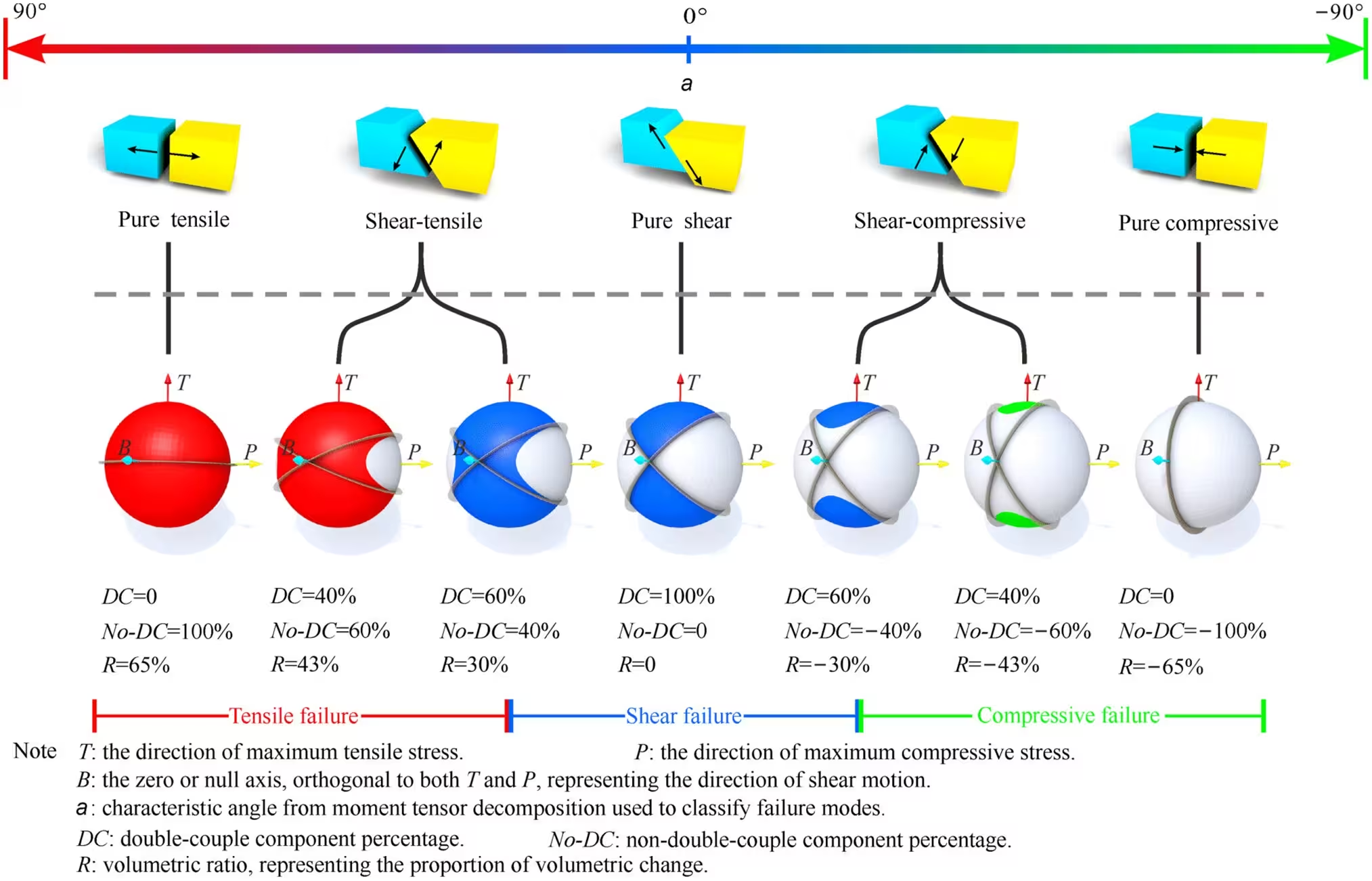
At a one-to-one ratio, however, heterogeneous boundaries between different minerals became highly connected. Cracks found smooth, uninterrupted pathways along these weak interfaces, linking up rapidly to cause premature failure. Tensile cracking accounted for the vast majority of all microcrack growth across every simulation, while shear fractures only played a role late in the process by helping local sliding and final linkage occur.
What Limitations Exist in These Simulated Compression Tests?
The authors noted that their model relies on a simplified two-dimensional representation of mineral interactions, using particle sizes between 0.35 and 0.525 millimeters. Natural ores feature complex three-dimensional arrangements and out-of-plane contact forces that could alter how stress travels through the material.
Future research will need to run multiple random seed simulations to test the statistical stability of the strength minimum and incorporate three-dimensional modeling. For now, the findings demonstrate that rock failure depends heavily on mineral phase ratios and the delicate competition between strong structural frameworks and weak internal boundaries.
The research was published in PLOS One on November 24, 2026.
This article has been fact checked for accuracy, with information verified against reputable sources. Learn more about us and our editorial process.
Last reviewed on .
Article history
- Latest version
Reference(s)
- Yuan, Tao., et al. “Influence of the Fe3O4/SiO2 ratio on the strength and fracture mechanisms of magnetite ore like materials under uniaxial compression.” PLOS One, vol. 21, no. 11, November 24, 2026, pp. e0363600 Public Library of Science (PLoS), doi: 10.1371/journal.pone.0363600. <https://doi.org/10.1371/journal.pone.0363600>.
Cite this page:
- Posted by Nida Rehman