Scientists Map 349 Blood Vessels and 663 Connections Across 20 Human Organs
New crosswalk tables straighten complex vascular loops to reveal hidden gaps in human anatomy.
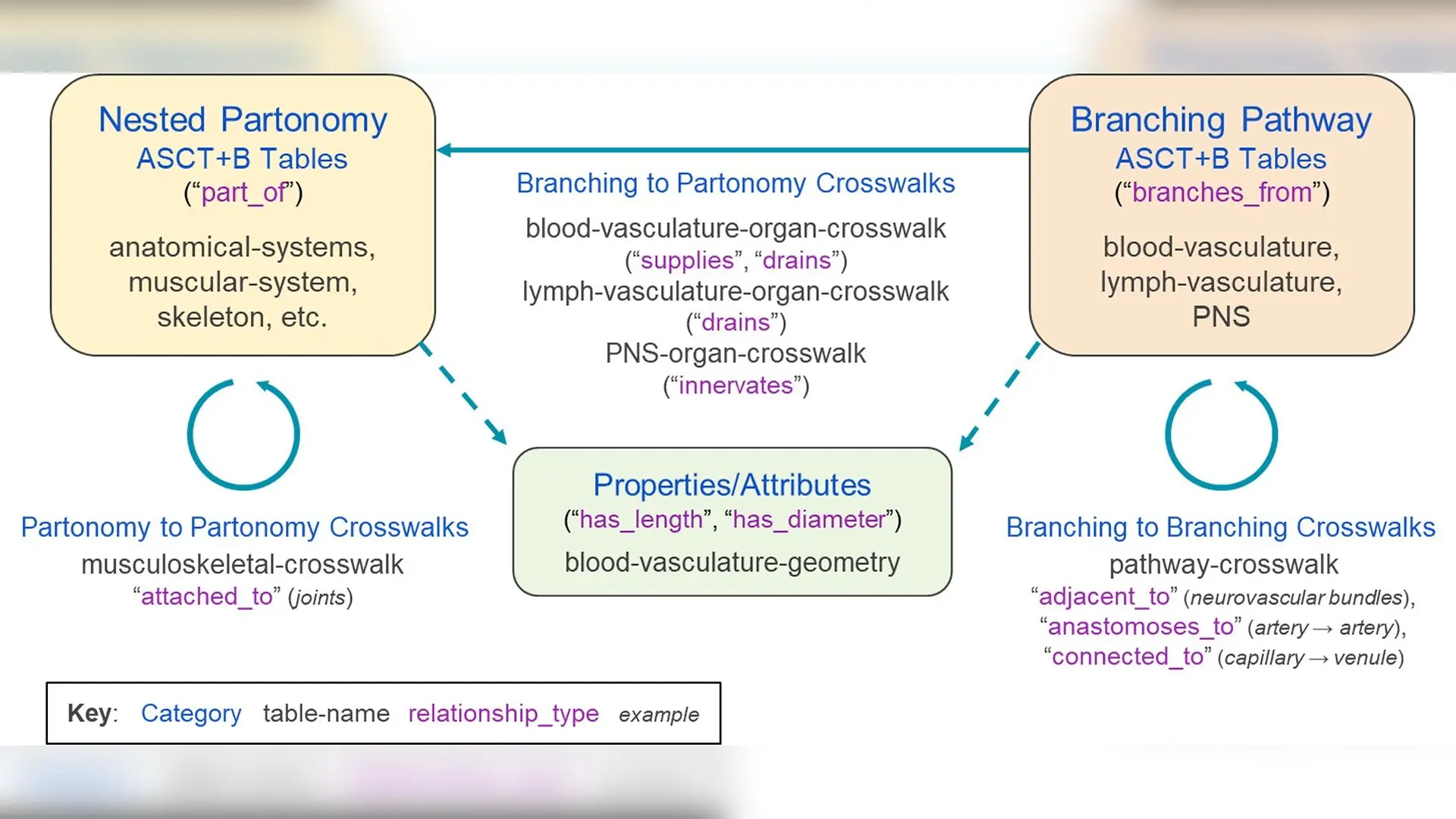
Researchers mapping the human body have cataloged 349 blood vessels and 663 connections to 295 anatomical structures across 20 organs and body regions. The detailed mapping project aims to trace every vascular pathway in a healthy adult.
The human body relies on an intricate, sprawling highway of blood vessels that delivers oxygen and nutrients to every single cell. Tracing these microscopic paths has long challenged medical researchers, because traditional anatomical illustrations often obscure deep pathways and tiny vessels. To solve this puzzle, a team of scientists led by Griffin M Weber at Harvard Medical School developed a specialized mapping system as part of the broader Human Reference Atlas initiative. The new datasets and crosswalk tables are published in arXiv, providing a fresh framework to understand how blood flows through individual organs.
How Do Scientists Map Complex Blood Vessel Loops?
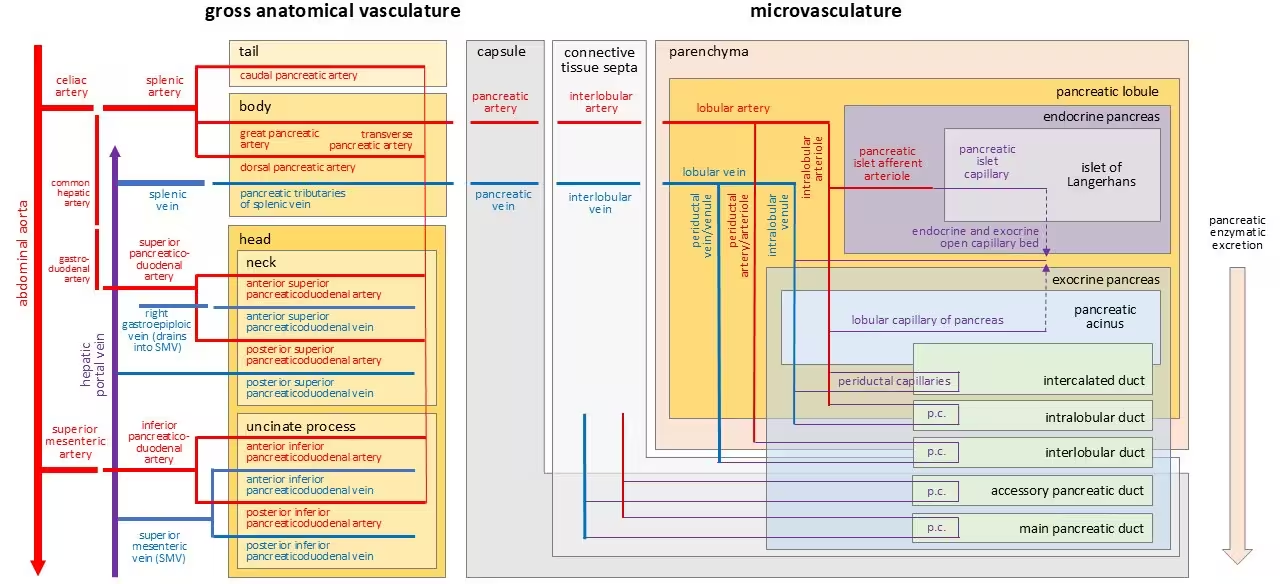
To untangle the complicated geometry of human circulation, the researchers created specialized two-dimensional diagrams that distort normal anatomical shapes. By flattening and straightening vascular pathways into continuous loops, the team forced domain experts to focus strictly on how blood vessels connect to surrounding tissue. Each loop typically starts with a main artery in the upper left, moves through smaller arterioles, reaches tiny capillaries, and returns via venules and veins.
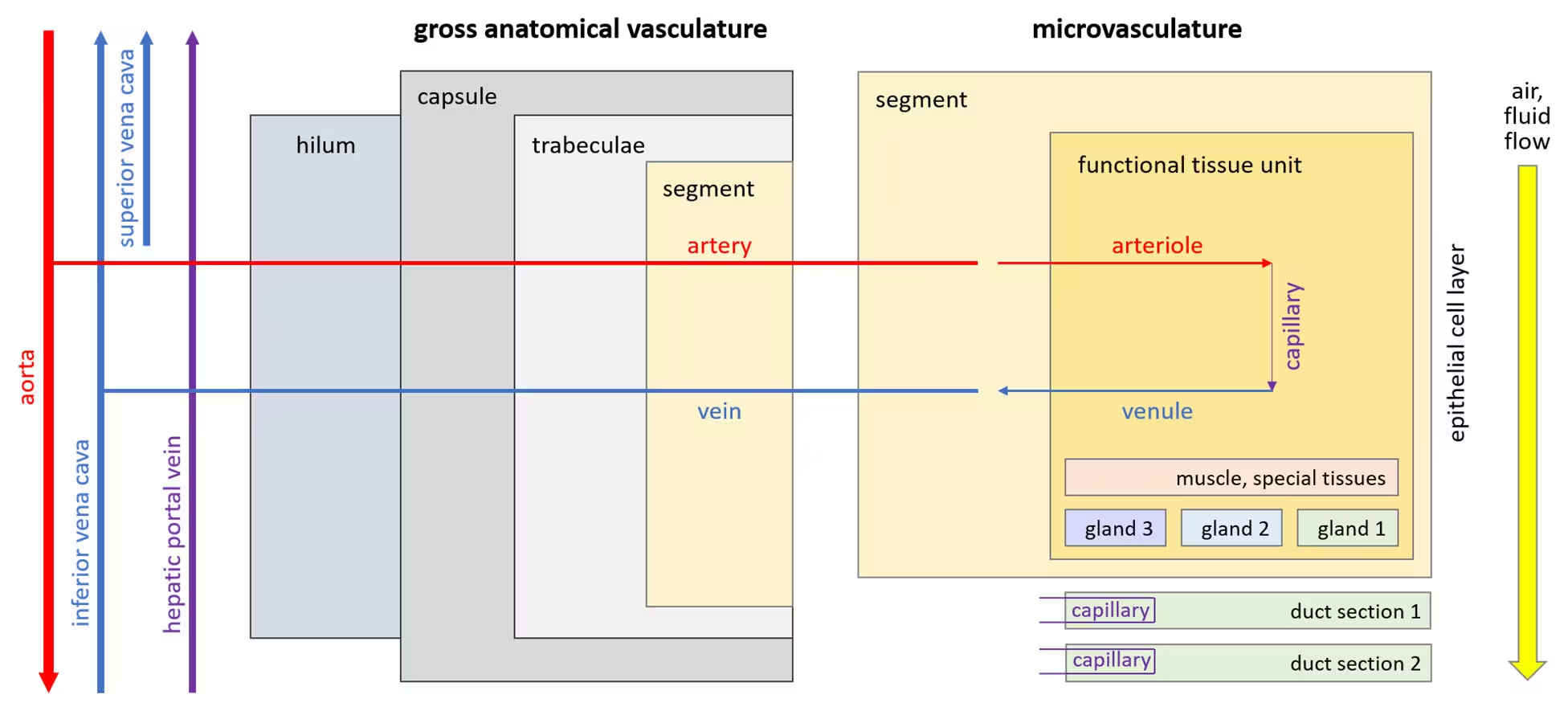
These visual aids allowed scientists to build two core reference datasets known as crosswalk tables. The first dataset, called the blood-vasculature-organ crosswalk, connects specific blood vessels to the exact anatomical structures they supply with nutrients or drain of waste. The second dataset, termed the pathway crosswalk, details relationships between blood vessels, lymphatic vessels, and nerves. Together, these files bridge the gap between gross anatomy and microscopic functional tissue units.
What Did the Crosswalk Tables Reveal About Human Anatomy?
The initial release focuses heavily on 15 major organs and body regions, including the brain, eyes, heart, kidneys, liver, lungs, and pancreas. Within these regions, the catalog maps 663 distinct linkages divided into seven specific relationship types. For instance, the database records 83 capillaries that directly supply and drain structures, alongside 325 indirect arterial supplies and 68 venous drainage routes.
The mapping effort also incorporates 41 three-dimensional tissue regions known as angiosomes, which are areas of skin, muscle, and bone supplied by a single primary artery. These specific regions carry immense clinical importance for surgical procedures like tissue transfers. Furthermore, the framework successfully links blood vessels to 28 different types of functional tissue units across 11 organs, such as the nephrons in kidneys and the liver lobules.
Why Did Mapping the Vasculature Expose Hidden Knowledge Gaps?
Constructing the diagrams forced anatomists and clinicians to confront parts of human circulation that remain surprisingly poorly described. While scientists easily study large main arteries with the naked eye or view microscopic capillaries under a glass slide, the transitional middle ground involving countless unnamed branching arterioles often remains unclear. When experts attempted to arrange these pathways into the standardized loops, missing sections and unmapped connections immediately stood out.
The authors note that the current work is far from finished, as the Human Reference Atlas undergoes major updates every six months to refine its digital objects. Out of the 349 cataloged vessels, 112 are currently linked to standard Uber anatomy ontology identifiers, while 155 rely on the Foundational Model of Anatomy. Researchers are actively working to generate new standardized identifiers for the remaining 82 vessels as the medical community continues expanding the atlas.
The study was posted to the arXiv preprint server on November 22, 2026.
This article has been fact checked for accuracy, with information verified against reputable sources. Learn more about us and our editorial process.
Last reviewed on .
Article history
- Latest version
Reference(s)
- Gustilo, Katherine. “Linking vascular pathways to organ anatomical structures in the Human Reference Atlas.” arXiv.org <http://arxiv.org/abs/2611.29215v1>.
Cite this page:
- Posted by David Anderson