Common Anti-Parasitic Drug Blocks Hidden Immune Weapons Released By Worm Guts
New research reveals that ivermectin shuts down vesicles secreted by roundworm intestines, disrupting how parasites manipulate host immune defenses.
Common parasitic roundworms that infect more than one and a half billion people globally rely on tiny fluid-filled sacs to suppress human immune defenses, but a widely used anti-parasitic drug can disrupt this process. Soil-transmitted helminths affect vulnerable populations in low-income regions, causing malnutrition and developmental delays while costing billions of hosts dearly in health and productivity. Researchers investigating how treatments actually work at a cellular level discovered that the intestinal tract of the giant pig roundworm, known scientifically as Ascaris suum, secretes thousands of extracellular vesicles loaded with proteins that manipulate host biology. The study, published in PLOS Neglected Tropical Diseases by Dongjie Liu and colleagues at Iowa State University, reveals that the common medication ivermectin stops these vesicles from releasing and remodels their molecular cargo.
How Do Parasitic Intestines Release Immune-Suppressing Vesicles?
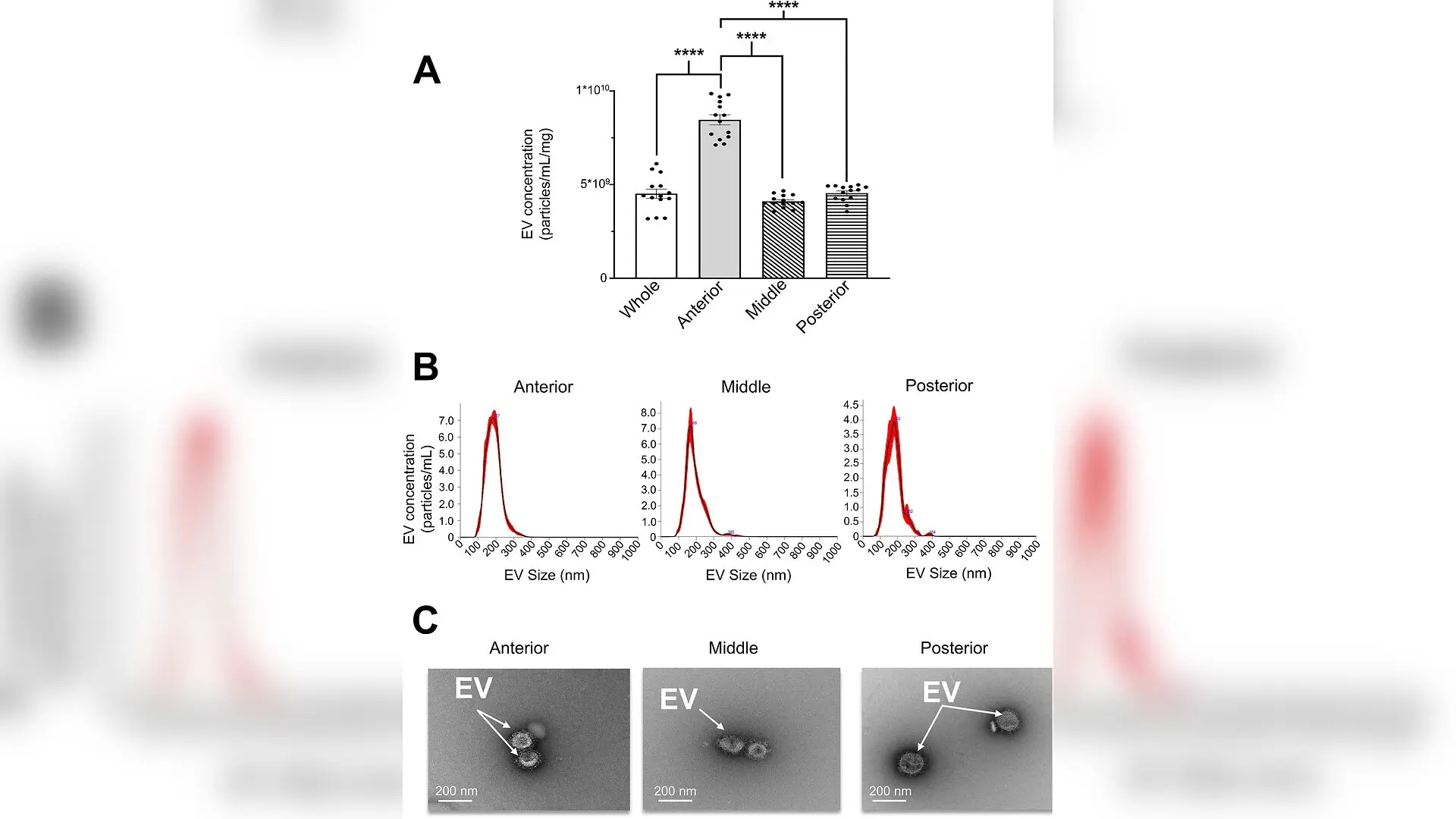
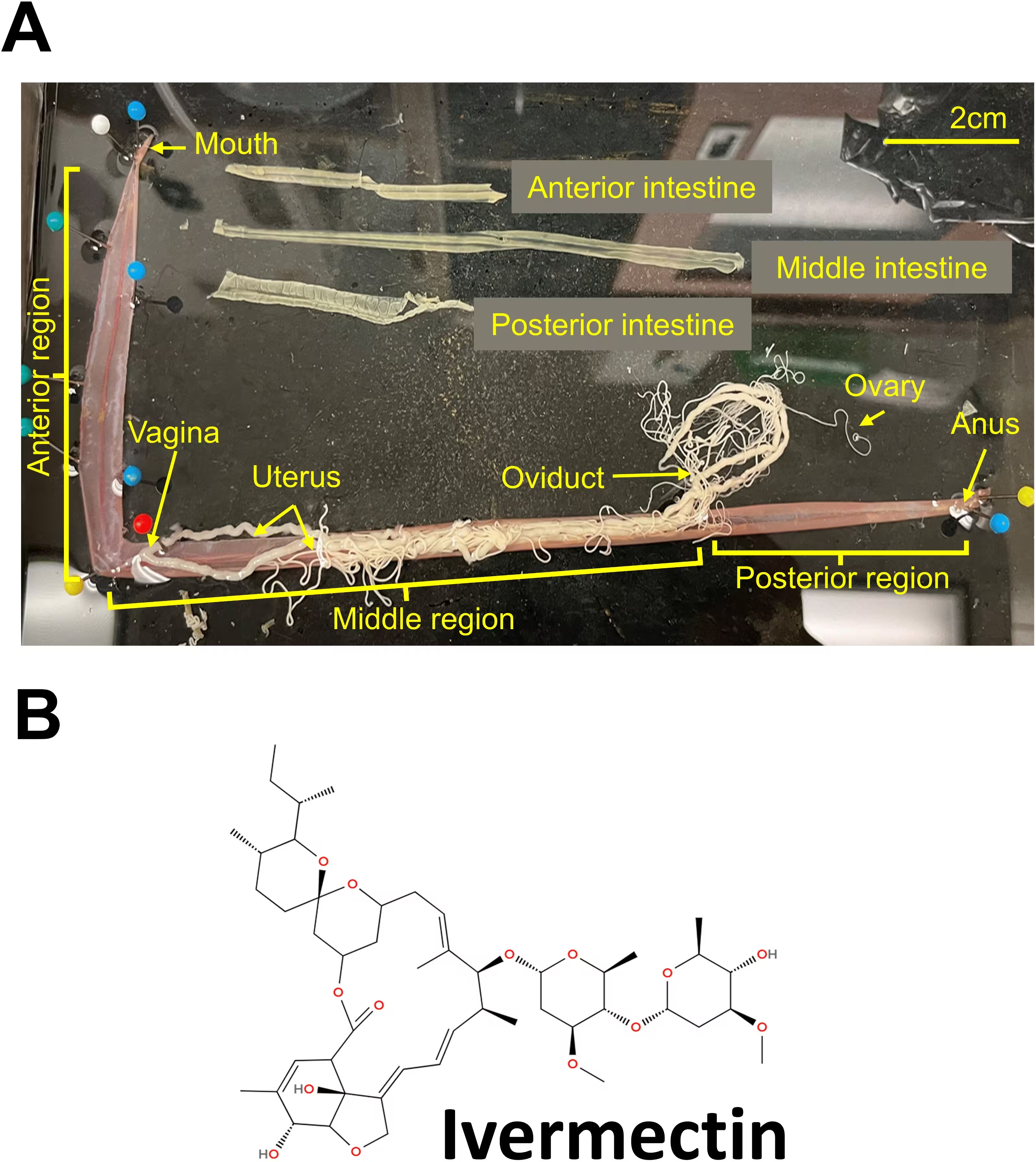
For decades, scientists believed that parasitic nematodes released their signaling packages primarily through an excretory pore near the head of the worm. The new research demonstrates that the intestinal tract itself acts as a major manufacturing and release center for these membrane-enclosed structures, which range in size from fifty to four hundred nanometers. When the investigators dissected the intestinal tissue from fourteen adult female worms, they found that all three anatomical regions successfully secreted vesicles, with the anterior region near the mouth producing the highest concentration at over eight billion particles per milligram of tissue weight.
Proteomic analysis of these intestinal vesicles identified one thousand five hundred seventy-four distinct proteins, including one hundred proteins linked to immune modulation and one hundred forty associated with digestion. These packages carry critical cargo such as heat-shock proteins, galectins, and proteases that help the parasite evade immune clearance in infected hosts. The discovery shifts our understanding of parasite biology, pointing to the gut lining as an active interface for host manipulation rather than a passive tube for food absorption.
What Happens When Worms Encounter Ivermectin?
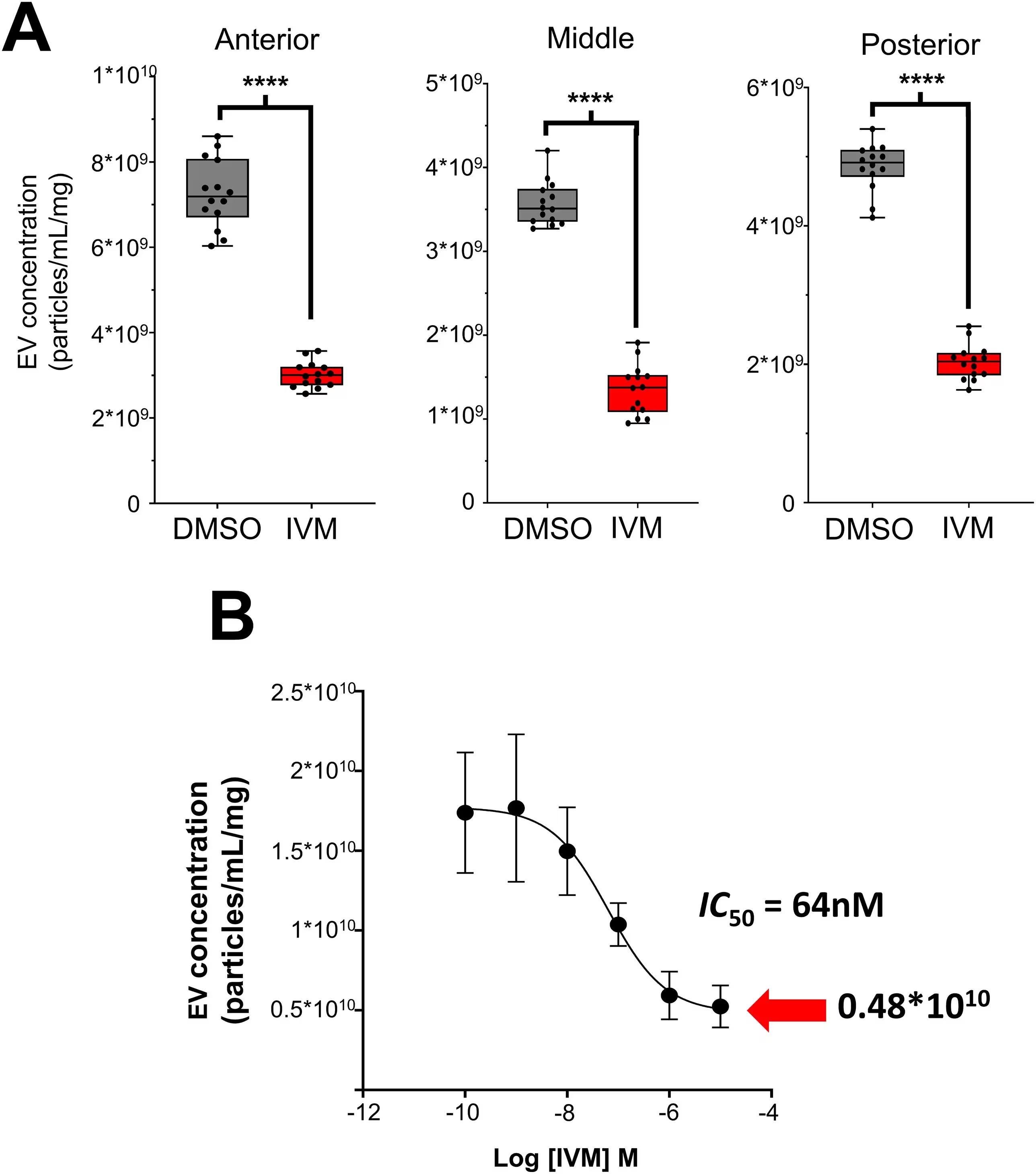
When the team treated isolated intestinal sections with one micromolar of ivermectin, vesicle secretion dropped significantly across all regions of the gut. Dose-response experiments on the anterior gut segments revealed an inhibitory concentration value of sixty-four nanomolar, showing that the drug potently blocks secretory machinery. However, the treatment did not halt all production, as roughly twenty-seven percent of vesicle release persisted, suggesting the existence of a secondary, drug-insensitive pathway.
The drug also altered the specific contents of the vesicles that managed to escape. Out of one thousand five hundred quantified proteins, thirty-four showed significant shifts in abundance after drug exposure, including eleven immune-related candidates and nine digestive proteins. While certain immunomodulatory factors decreased, others increased, pointing to a complex cellular stress response rather than a simple shutdown of protein packaging.
Why Do Glutamate-Gated Channels Matter Here?
Ivermectin traditionally paralyzes parasites by binding to nerve and muscle receptors known as glutamate-gated chloride channels. To determine why the drug affects intestinal cells that lack typical neuromuscular tissue, the researchers used reverse transcription polymerase chain reaction to screen for channel subunits. They confirmed that the parasite intestine expresses four key channel genes, namely Asu-glc-2, Asu-glc-3, Asu-glc-4, and Asu-avr-14, along with multiple isoforms of the Asu-glc-3 gene.
Activation of these chloride channels by ivermectin allows chloride ions to flood the enterocytes, hyperpolarizing the cells and shutting down the calcium-dependent signaling required for vesicle exocytosis. By blocking both muscular movement and intestinal secretion, the medication deprives the parasite of its ability to suppress host immune responses, facilitating faster clearance by the infected animal or human.
The research was published in PLOS Neglected Tropical Diseases on November 23, 2026.
This article has been fact checked for accuracy, with information verified against reputable sources. Learn more about us and our editorial process.
Last reviewed on .
Article history
- Latest version
Reference(s)
- Liu, Dongjie., et al. “Ivermectin inhibits intestinal extracellular vesicle release and alters immune-related protein cargo in Ascaris suum.” PLOS Neglected Tropical Diseases, vol. 20, no. 11, November 23, 2026, pp. e0014894 Public Library of Science (PLoS), doi: 10.1371/journal.pntd.0014894. <https://doi.org/10.1371/journal.pntd.0014894>.
- Posted by Tariq Hassan