New Artificial Intelligence Method Stops Medical Scans From Erasing Tumors and Lesions
A novel mathematical framework preserves critical patient anomalies during AI-assisted scan reconstructions.
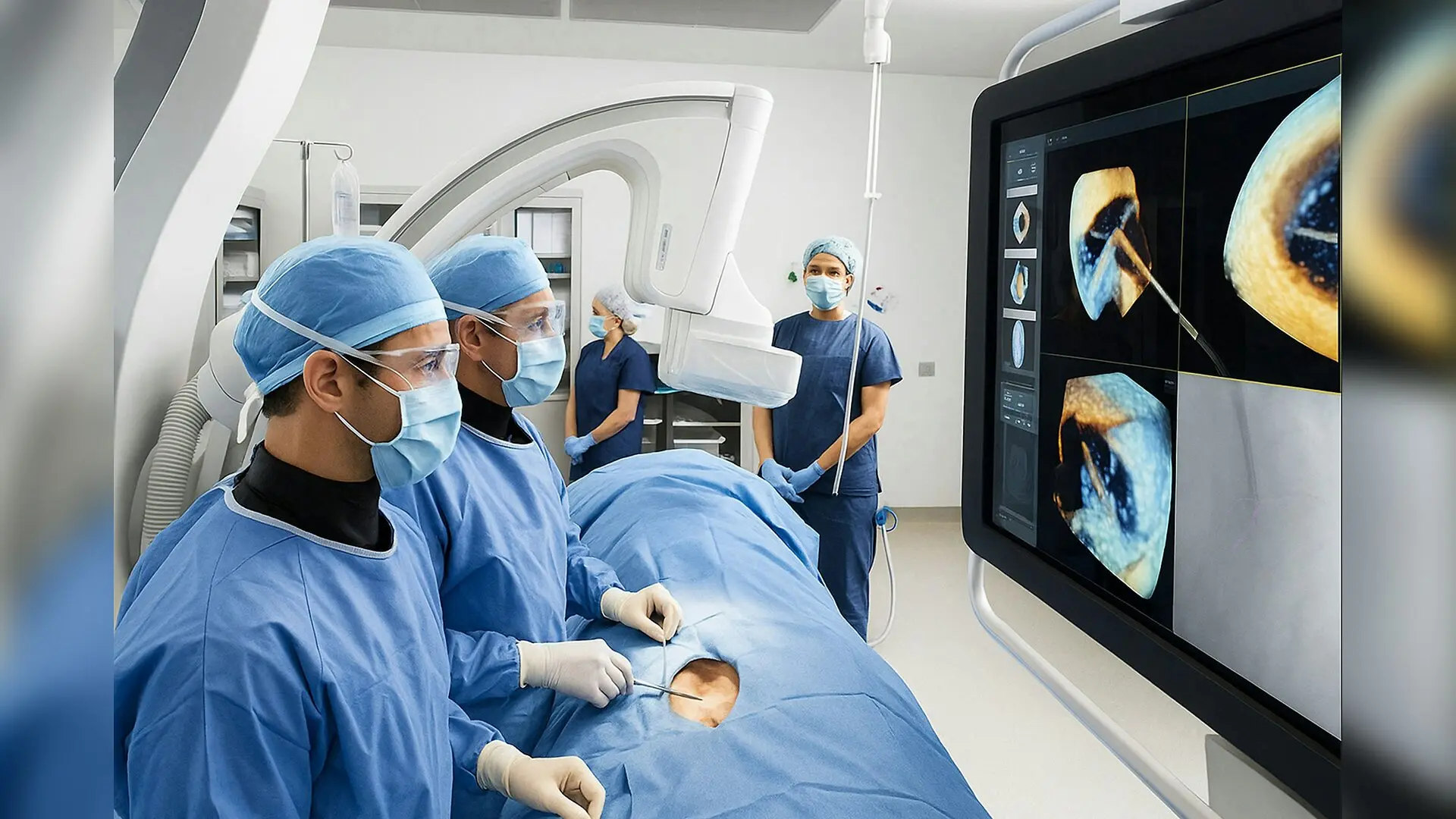
Advanced medical imaging techniques like accelerated magnetic resonance imaging, sparse view computed tomography, and photoacoustic tomography use fewer measurements to drastically reduce scan times and radiation exposure. However, these incomplete data scans require complex computer reconstruction algorithms that rely on learned generative models, which can inadvertently smooth away and erase subtle abnormalities like tumors or lesions. To solve this problem, a research team led by Nicolas Tricard at the Massachusetts Institute of Technology introduced a mathematical framework called selective anchoring that preserves reliable measurement data while allowing artificial intelligence models to fill in the missing anatomical details. The findings are published on the arXiv preprint server.
How Does Selective Anchoring Protect Missing Details?
When an artificial intelligence model reconstructs an incomplete scan, it often relies heavily on training data consisting of normal, healthy images. This strong preference for healthy anatomy can cause the model to heal away real pathological features that are present in the patient’s actual measurements. Selective anchoring prevents this by dividing the scan data into components that are measured with high precision and those that are weakly observed or unmeasured. The reliable components are strictly locked to the measurement values, while the generative model is left to reconstruct only the unresolved structural parts.
The researchers tested this approach across simulated computed tomography chest scans, brain magnetic resonance imaging scans with real tumors, and photoacoustic breast phantoms. In brain scans utilizing accelerated magnetic resonance imaging, the technique significantly boosted tumor detection performance. Specifically, the method raised the mean area under the receiver operating characteristic curve from about 78.4 percent to 84.6 percent across eight different generative sampling algorithms. Furthermore, lesion sensitivity at a low false-positive rate improved from 38.8 percent to 47.5 percent.
Why Is Managing Measurement Uncertainty Critical for Diagnostics?
A major challenge in medical image reconstruction is accounting for acquisition noise without triggering false alarms. Traditional generative models often enforce measurements so rigidly that they ignore underlying noise, causing downstream diagnostic tests to misinterpret normal variations as abnormalities. The selective anchoring technique handles this by incorporating known measurement variance analytically or through stochastic ensemble perturbations. This ensures that uncertainty is properly calibrated, helping physicians and automated systems distinguish between true pathological signals and reconstruction errors.
The team also developed a fast constrained flow matching model called AnchoredFM to accelerate the reconstruction process. This specialized model generates a sixteen-sample ensemble in less than six milliseconds on advanced hardware, operating up to seventy-four times faster than full-budget generative samplers. This speed is essential for clinical environments where image reconstruction must keep pace with live data acquisition during real-time procedures.
What Are the Limitations of the Current Study?
Despite the promising performance improvements, the study authors note several important limitations that must be addressed before clinical translation. All evaluations relied entirely on simulated acquisitions rather than real physical scans, and the magnetic resonance imaging tests used magnitude images derived from reconstruction operators rather than raw multi coil data. Additionally, the technique assumes a known linear operator and noise level, meaning that operator inaccuracies or noise misspecification can degrade lesion reconstruction quality and increase false alarm rates.
The study was posted to the arXiv preprint server on November 24, 2026.
This article has been fact checked for accuracy, with information verified against reputable sources. Learn more about us and our editorial process.
Last reviewed on .
Article history
- Latest version
Reference(s)
- Tricard, Nicolas. “Do Not Let the Prior Heal the Anomaly: Selective Anchoring for Detection from Incomplete Measurements.” arXiv.org <http://arxiv.org/abs/2611.33331v1>.
Cite this page:
- Posted by Sana Malik