Global Mesothelioma Mortality Trends Reveal Deep Disparities Across Nations Over 26 Years
While high-income countries report declining death rates due to early regulations, other regions face rising burdens from historical industrial exposures.
A rare and aggressive form of cancer linked primarily to asbestos exposure continues to show deeply divided mortality patterns across the globe, with some nations experiencing sharp drops in deaths while others see concerning rises. Even as international bans take effect, the profound latency period of the disease means that current figures reflect exposures that happened decades ago.
How Did Global Mesothelioma Death Rates Shift Between 1997 and 2023?
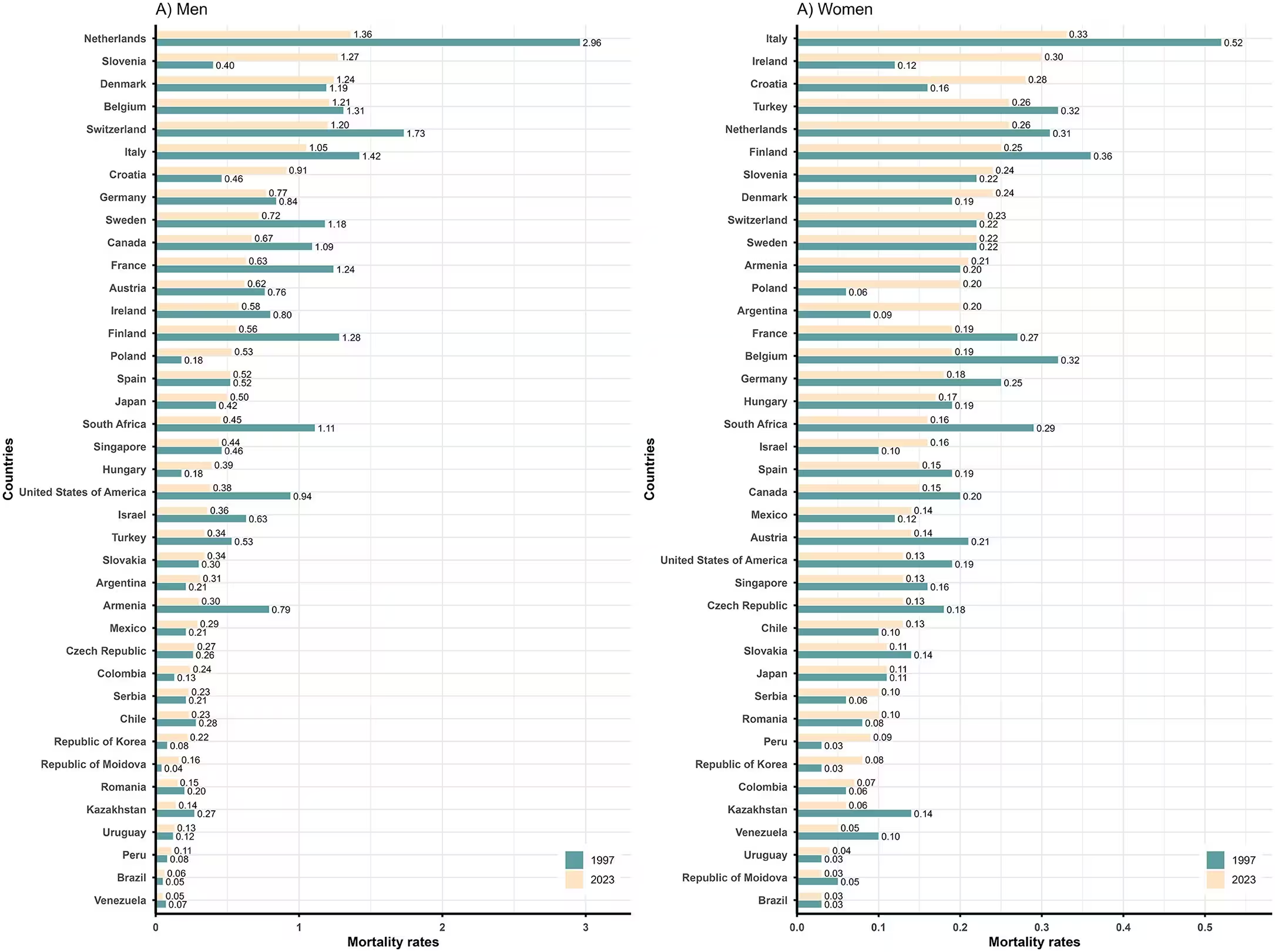
To understand how death rates have evolved on a global scale, a team of researchers analyzed official statistics from the World Health Organization Mortality Database spanning the years 1997 through 2023. The study evaluated age-standardized mortality rates across dozens of countries, tracking how populations of men and women experienced this lethal malignancy over more than two decades. The research is published in PLOS One, offering a comprehensive look at international disparities in mesothelioma survival and reporting.
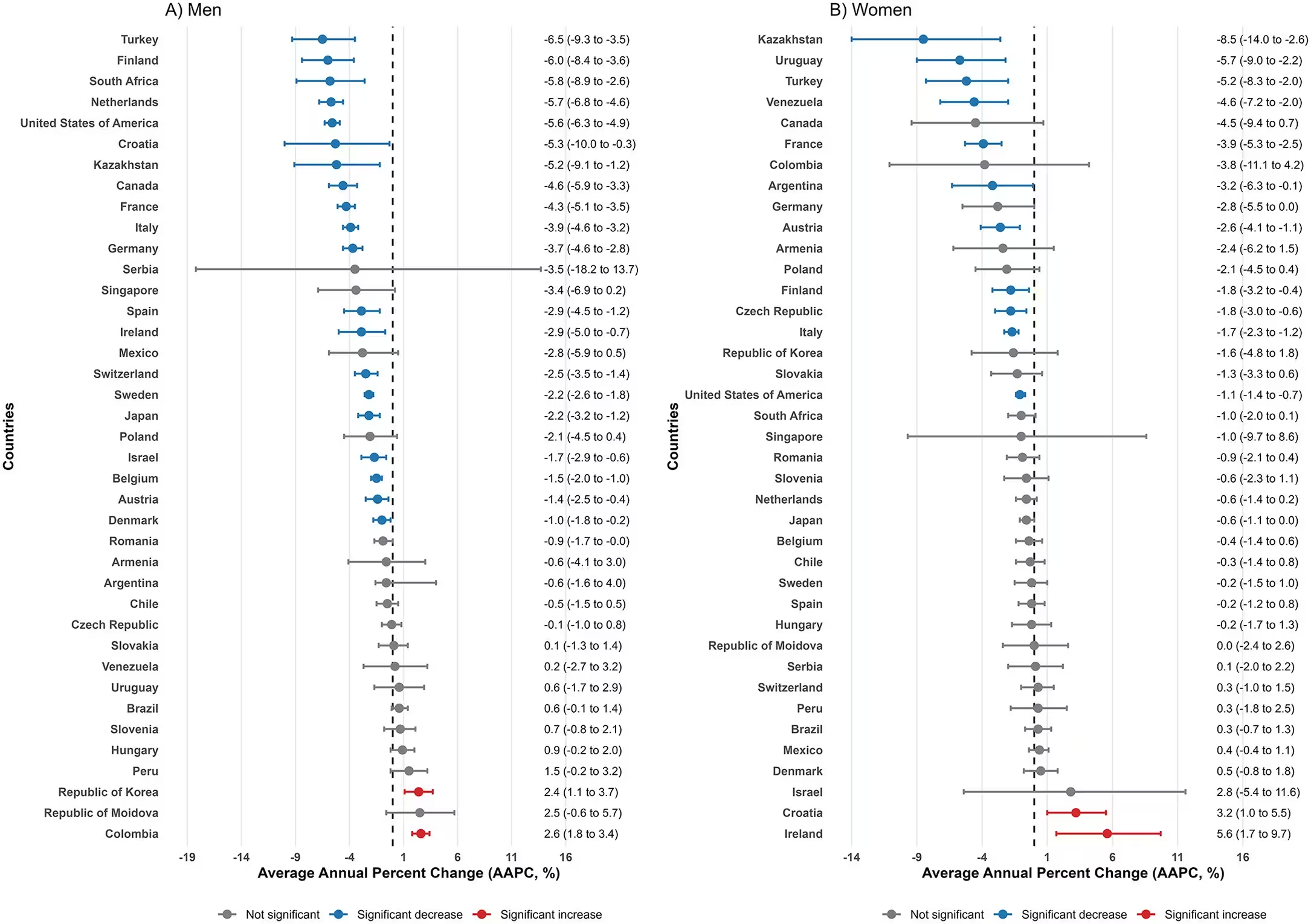
Led by Myriam Coronel-Tineo and colleagues, the investigation revealed that high-income nations in Europe and North America generally recorded significant downward trends in male mortality. For instance, the United States saw an average annual decrease of about three point seven percent, while the Netherlands and Finland also reported substantial declines. Conversely, nations such as the Republic of Korea, Poland, and Colombia registered significant upward trajectories in deaths among men during similar timeframes.
Why Do Death Rates Remain So Much Higher Among Men Than Women?
The stark difference between the sexes stems largely from historical patterns of occupational hazards in male-dominated heavy industries like shipbuilding, construction, and manufacturing. Men historically encountered prolonged direct contact with toxic mineral fibers, leading to a much higher cumulative burden of disease later in life. Although women generally showed lower overall rates, certain countries like Ireland and Croatia registered notable increases among female populations, which point toward secondary, environmental, or household exposures.
Because these microscopic fibers can linger in aging buildings and industrial machinery for generations, ordinary residents living near old manufacturing sites or handling contaminated materials in older homes remain vulnerable. The long latency period, which frequently spans twenty to forty years before symptoms materialize, means that individuals diagnosed today were typically exposed long before modern safety regulations were enacted.
What Role Do National Asbestos Bans Play in Shaping These Trends?
Countries that implemented comprehensive restrictions early, such as Sweden in 1986 and Germany in 1993, are now observing the anticipated drop in age-standardized mortality. Nations that delayed bans until the twenty-first century, or those that still lack comprehensive prohibitions, find themselves at different stages of the public health epidemic. However, the authors caution that declining mortality numbers do not automatically mean fewer total deaths, especially in aging populations where absolute case numbers can remain stable despite falling rates.
Furthermore, discrepancies in local healthcare infrastructure mean that low- and middle-income countries often report artificially low numbers due to underdiagnosis and a lack of specialized pathology services. Misclassification of pleural cancers can obscure the true toll of the disease, masking real public health crises behind incomplete records.
What Are the Primary Limitations of This Global Mortality Analysis?
As an ecological study relying on secondary vital statistics, the research cannot establish direct cause-and-effect relationships at the individual level. Variations in death certification quality, missing data series in certain regions, and shifts in diagnostic capabilities over the twenty-six-year study window complicate direct comparisons between nations. The authors emphasize that mortality data cannot be used interchangeably with cancer incidence, as improvements in medical treatment and patient survival also influence how many people ultimately succumb to the illness each year.
The research was published in PLOS One on November 23, 2026.
This article has been fact checked for accuracy, with information verified against reputable sources. Learn more about us and our editorial process.
Last reviewed on .
Article history
- Latest version
Reference(s)
- Coronel-Tineo, Myriam., et al. “Persistent global mesothelioma mortality despite asbestos control policies: A WHO mortality database analysis, 1997–2023.” PLOS One, vol. 21, no. 11, November 23, 2026, pp. e0362206 Public Library of Science (PLoS), doi: 10.1371/journal.pone.0362206. <https://doi.org/10.1371/journal.pone.0362206>.
Cite this page:
- Posted by Rabia Shah