New Solvers Tackle Complex Stochastic Equations Without Traditional Restrictions
Mathematicians derive martingale and min-max solvers with rigorous error bounds for coupled forward-backward systems under general probability spaces.
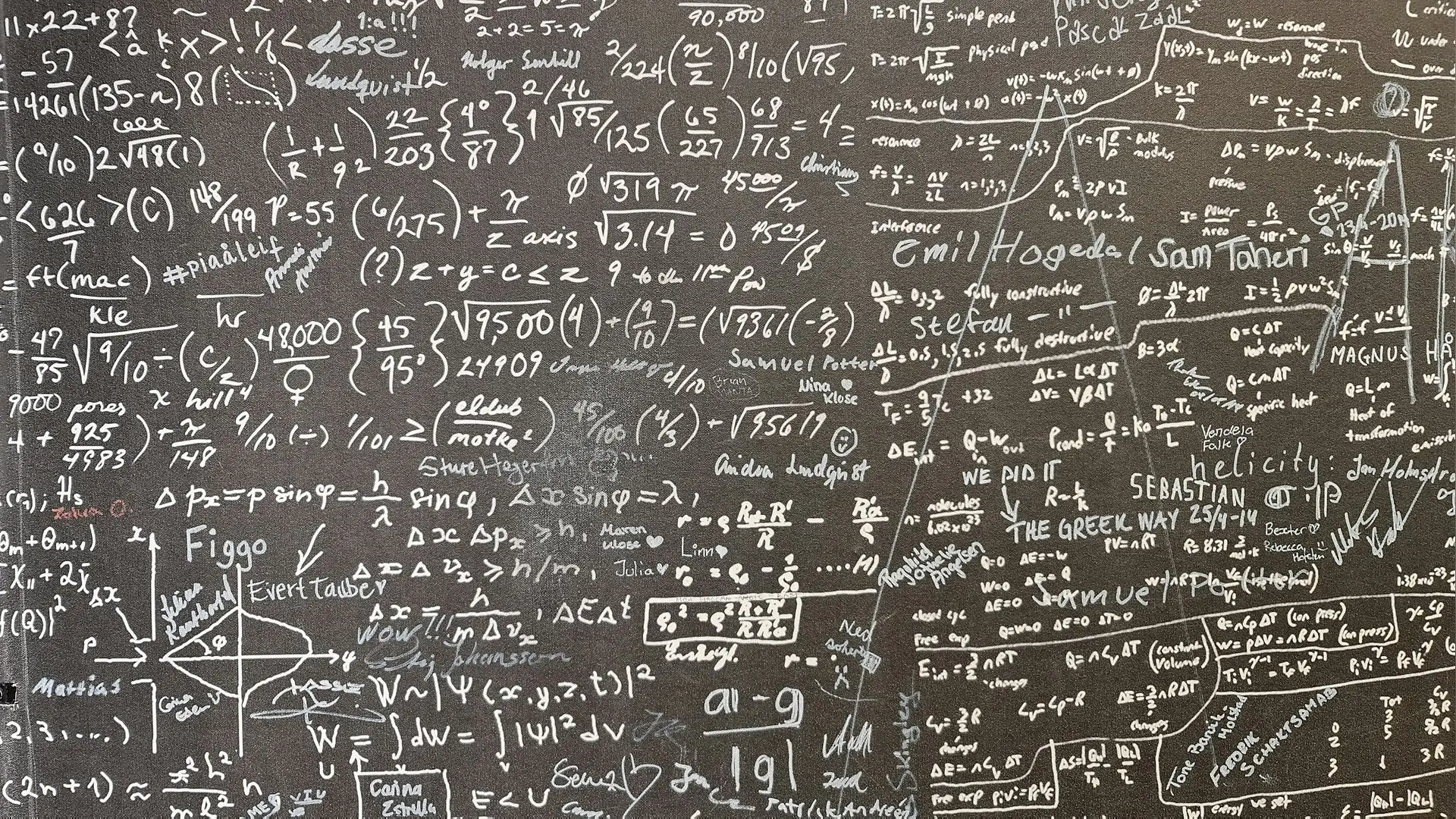
Mathematicians have developed new numerical solvers for complex forward-backward systems under general probability settings, providing stable error bounds for stochastic equations where traditional methods fall short. Stochastic equations describe systems that evolve over time while influenced by random noise, playing a crucial role in finance, optimal control, and physics. When these systems couple forward-running dynamics with backward-looking expectations, finding numerical solutions becomes exceptionally difficult.
In a study available on the arXiv preprint server, researcher Matthew Keyworth from the University of Warwick derived two distinct numerical solvers for coupled forward-backward systems without relying on restrictive assumptions like the existence of a decoupling field. Previous computational approaches often required specific mathematical structures, such as a Brownian motion driver or a known decoupling field, to guarantee convergence. By reformulating the problem through fixed point theory on Hilbert spaces, the new work bypasses those limitations and establishes rigorous error guarantees.
How Do the Martingale and Min-Max Solvers Work?
The author introduced two complementary approaches: a martingale solver and a Hilbert space orthogonal min-max solver. The martingale solver adapts ideas from deep forward-backward stochastic differential equation solvers studied in recent literature, framing the problem as a variational search over square integrable martingales. In probability theory, a martingale is a model of a fair game where the expected future value given current information equals the present value. The martingale solver achieves strong stability, controlling whole path differences uniformly in time.
However, implementing the martingale solver directly requires parameterizing the space of martingales, which typically demands that the underlying probability filtration possesses the martingale representation property. To handle more general filtrations where that property fails, the author designed the min-max solver. This second approach frames the problem as a two-player game, enforcing the required martingale property via a Hilbert space orthogonality condition instead of direct parameterization.
What Are the Trade-Offs in Solver Stability?
While the min-max solver eliminates the need for restrictive martingale representations, it comes with a mathematical cost. The min-max formulation provides stability only in a weaker topology of expected squared differences rather than pathwise uniformity. The study proves that both theoretical solvers yield a posteriori error bounds, meaning researchers can estimate the error of an approximate solution after computation.
The author also analyzed discretized versions of both solvers, proving that the distance between an approximate solution and the true solution is bounded by the solver objective value plus error terms stemming from time discretization and function approximation capacity. These findings provide a mathematical foundation for implementing stable numerical algorithms in high-dimensional stochastic control and financial modeling settings where standard decoupling assumptions do not hold.
The study was posted to the arXiv preprint server on November 20, 2026.
This article has been fact checked for accuracy, with information verified against reputable sources. Learn more about us and our editorial process.
Last reviewed on .
Article history
- Latest version
Reference(s)
- Keyworth, Matthew. “Solvers for a Class of Coupled Forward-Backward Systems Under General Filtrations.” arXiv.org <http://arxiv.org/abs/2611.27748v1>.
Cite this page:
- Posted by Rabia Shah