Rural-Origin Urban Residents Report Greater Happiness When Social Trust and Status Rise
A new study of 3,646 adults in China reveals how perceived social standing, economic evaluations, and loneliness shape life satisfaction.

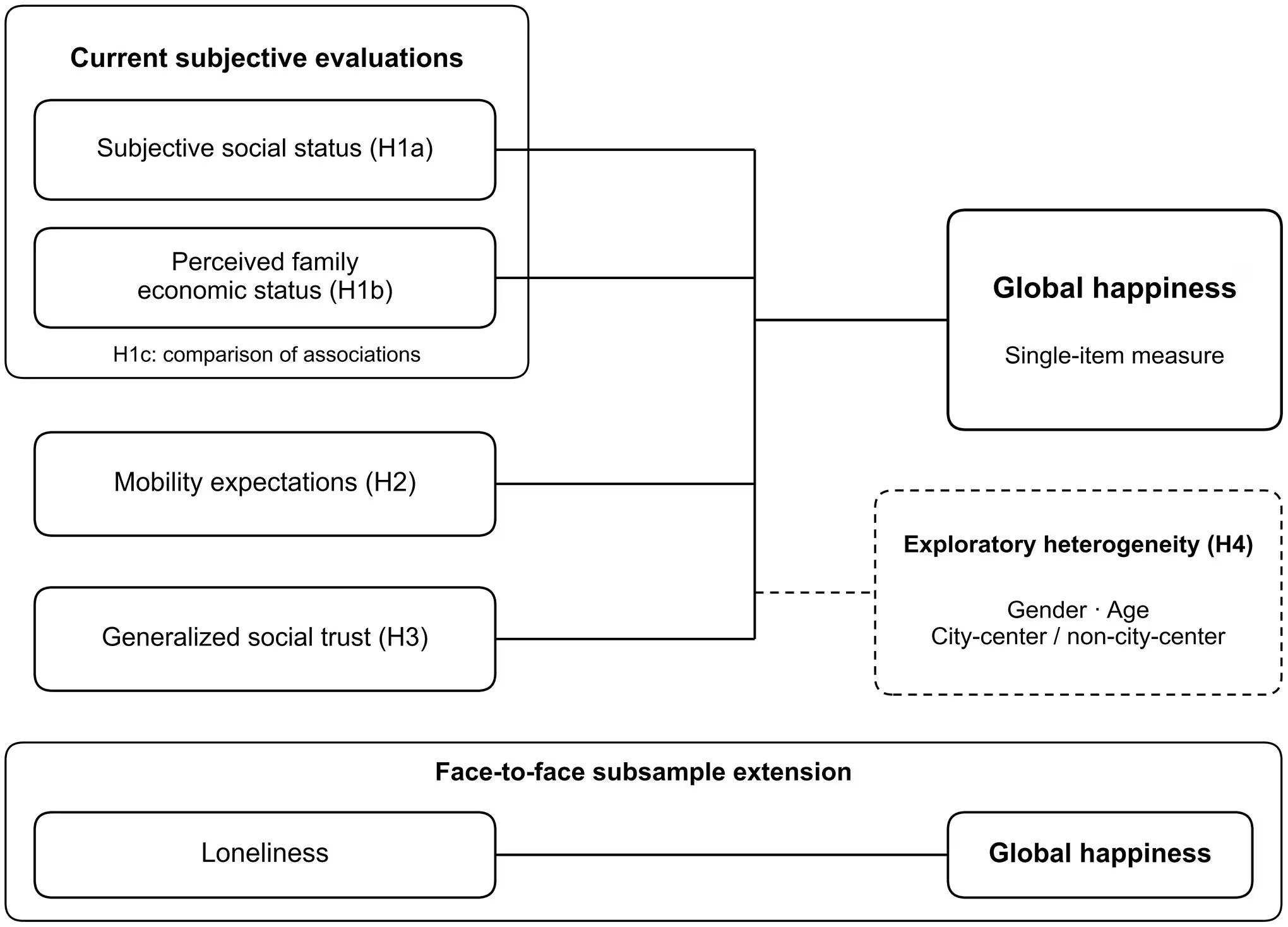
Rural-origin adults living in China’s urban centers and towns report higher global happiness when they hold favorable views of their social standing, household finances, and interpersonal trust, according to a cross-sectional analysis published in PLOS One. The study shifts focus away from broad comparisons between migrants and non-migrants, exploring instead the psychological and social factors that shape well-being among 3,646 individuals with an agricultural household registration, known as hukou.
How Social Standing and Trust Shape Daily Happiness
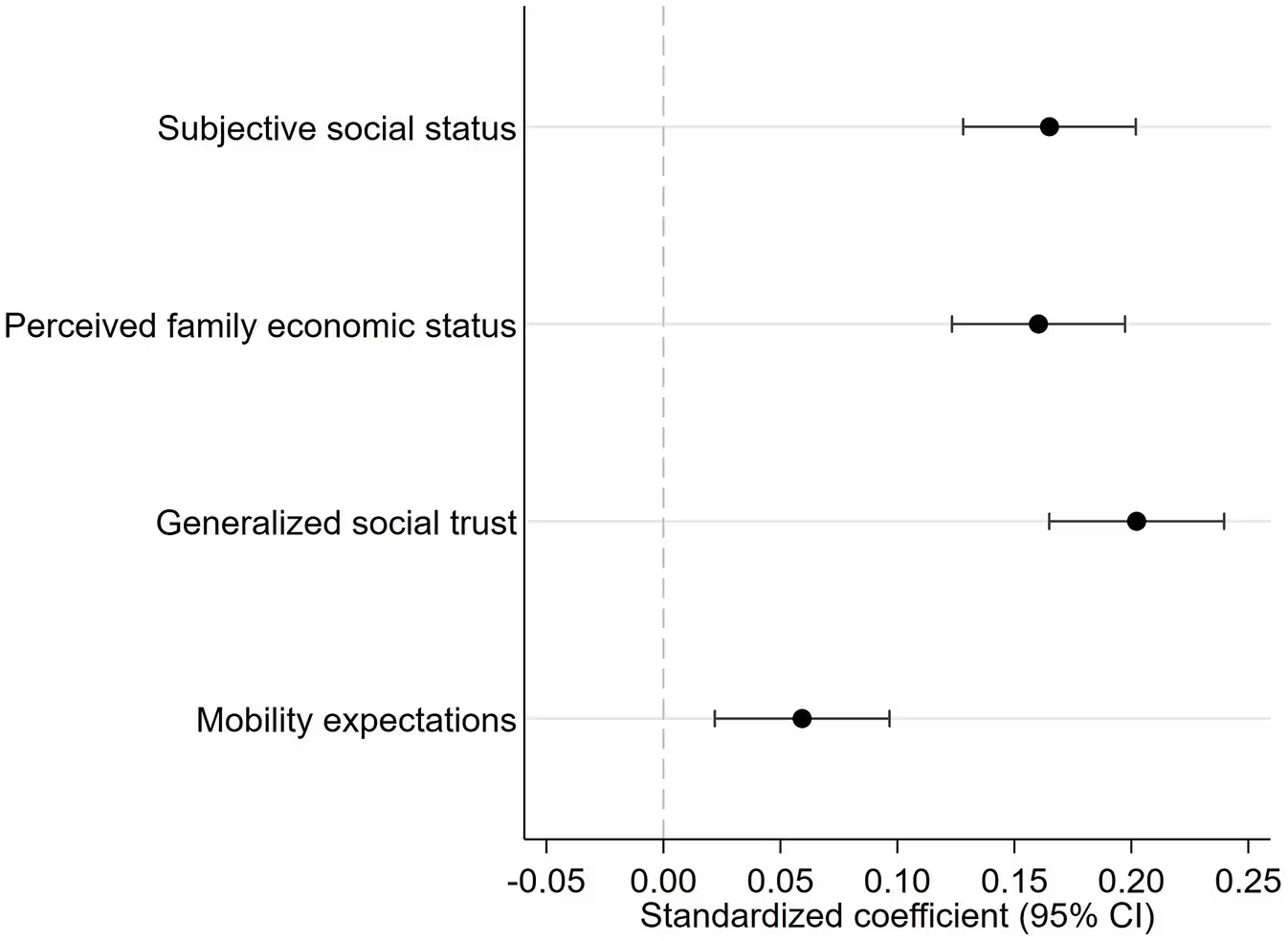
The study utilized data from the 2023 Chinese General Social Survey to examine how subjective social status, perceived family economic standing, generalized social trust, and mobility expectations relate to overall life happiness. Researchers Yuxi Liu, Haijiang Chen, Yadong Chen, and Changhan Luo analyzed responses using ordinary least squares regression. They found that individuals who perceive themselves higher on a societal ladder and view their family finances as superior to local averages report greater happiness.
Generalized trust, defined as the belief that most people can be trusted, also showed a strong positive association with global happiness. Meanwhile, anticipated social mobility, measured by comparing expected social status in ten years with current status, correlated positively with happiness, though with a more modest magnitude than current self-assessments.
The Hidden Toll of Loneliness in Urban Settings
In a subset of face-to-face interviews involving 1,351 respondents, the authors evaluated loneliness by measuring how often individuals lacked companionship or felt left out. The loneliness index revealed a negative association with global happiness, underscoring that subjective feelings of social disconnection weigh heavily on well-being regardless of broader socioeconomic evaluations.
Examining Income Surprises and Subgroup Differences
An unexpected finding emerged regarding personal income. When adjusted for subjective social status and family economic perceptions, log annual personal income showed a negative association with global happiness. The authors note that personal income and perceived family economic status measure different constructs, and their opposite signs do not imply that earning money reduces happiness.
Exploratory interaction tests evaluated whether these psychological associations varied by gender, age, or residence type. While a gender difference appeared in the association between family economic status and happiness, the data did not support robust age or residence-type differences in the primary focal associations.
Study Limitations and Next Steps
Because the investigation relies on cross-sectional survey data, the findings represent conditional associations rather than causal effects. Reverse causality remains entirely plausible, as happier individuals may naturally evaluate their social environments and finances more optimistically. Furthermore, the reliance on a single-item global happiness measure and an operational proxy for rural-origin residence rather than detailed migration histories points to the need for longitudinal research to track how these psychosocial dimensions evolve over time.
The research was published in PLOS One on November 18, 2026.
This article has been fact checked for accuracy, with information verified against reputable sources. Learn more about us and our editorial process.
Last reviewed on .
Article history
- Latest version
Reference(s)
- Liu, Yuxi., et al. “Within-group psychosocial correlates of global happiness among rural-origin urban and town residents in China: Cross-sectional evidence from the 2023 Chinese General Social Survey.” PLOS One, vol. 21, no. 11, November 18, 2026, pp. e0353321 Public Library of Science (PLoS), doi: 10.1371/journal.pone.0353321. <https://doi.org/10.1371/journal.pone.0353321>.
- Posted by David Anderson