Why Expert Staffing Decisions Ignore Market Demand Surges
A mathematical queueing model reveals how professional service firms must pivot their pricing and visit durations when customer volume changes.
When a healthcare clinic or professional consulting firm hires top-tier talent, intuition might suggest that swelling customer demand should immediately trigger a scramble for higher-ranked experts. However, a mathematical model mapping professional service networks reveals a counterintuitive reality, showing that the optimal rank of expert a firm should recruit remains completely insulated from overall market demand fluctuations. Instead, hiring decisions are dictated solely by the invisible tension between customer sensitivity and labor market wages.
To untangle how professional organizations manage waiting rooms, staffing tiers, and pricing strategies, researchers developed a specialized queueing-theoretic framework published in PLOS One. Led by Jing Zhang and colleagues from the East University of Heilongjiang and the Harbin Institute of Technology, the study investigates the operational mechanics of expert service enterprises. These businesses range from medical practices and legal offices to auditing firms and technical consulting agencies, where providers rely heavily on specialized judgment, customized knowledge input, and professional competence.
Balancing Customer Congestion and Expert Salaries
Operating an expert service enterprise involves navigating two interconnected and frequently competing arenas, namely the customer market and the expert labor market. Customers naturally prefer professionals with higher credentials and stronger reputations, but high-tier queues quickly become congested, while lower-ranked experts face underutilization. Simultaneously, firms must manage wage constraints, as paying top dollar for elite professionals imposes heavy cost pressures.
To capture these dynamics, the authors formulated a customer utility function incorporating baseline perceived utility, expert rank, service duration, and waiting costs under a classic M/M/1 queueing structure. In this mathematical model, customer arrival follows a Poisson distribution while service times follow an exponential distribution. The framework treats expert rank as an endogenous variable rather than an fixed condition, allowing researchers to evaluate how firms optimize service pricing, duration, and staff selection across different economic scenarios.
Strategic Stability Across Demand Scales
The analysis demonstrates that the optimal expert rank chosen by an enterprise is driven exclusively by two parameters: customer sensitivity to expert rank and the wage differentiation level within the industry. Because this optimal rank does not shift with the overall volume of potential customers, the authors argue that professional firms should treat expert recruitment as a long-term strategic positioning decision rather than a reactive measure to short-term market spikes.
However, operational decisions regarding pricing and service duration must adapt fluidly when market conditions shift from insufficient demand to sufficient demand. Under conditions of insufficient demand, where potential client volume stays below system capacity, firms cannot boost revenue by moving high volumes. Consequently, they must charge higher prices per customer and extend service durations to enhance perceived utility and cover the steep salaries of higher-ranked professionals.
The Low-Margin, High-Volume Pivot
When market demand exceeds the service system capacity, the operational landscape changes entirely. In these high-demand scenarios, firms enjoy a distinct market advantage and must pivot toward a low-margin, high-volume strategy to maximize profitability. Rather than letting customers languish in long queues, enterprises should encourage experts to complete consultations as quickly as the minimum service duration allows.
By shortening service times and slightly reducing prices, firms can dramatically expand service throughput and accommodate a much larger customer base. For instance, in busy hospital emergency departments or high-volume clinics during peak illness seasons, physicians must transition from extended diagnostic discussions to streamlined evaluations. While this rapid turnaround helps clear waiting rooms and serves more people, the authors note that a mismatch between patient expectations and accelerated visit times can occasionally strain provider-patient relationships.
Evaluating Market Limits and Target Audiences
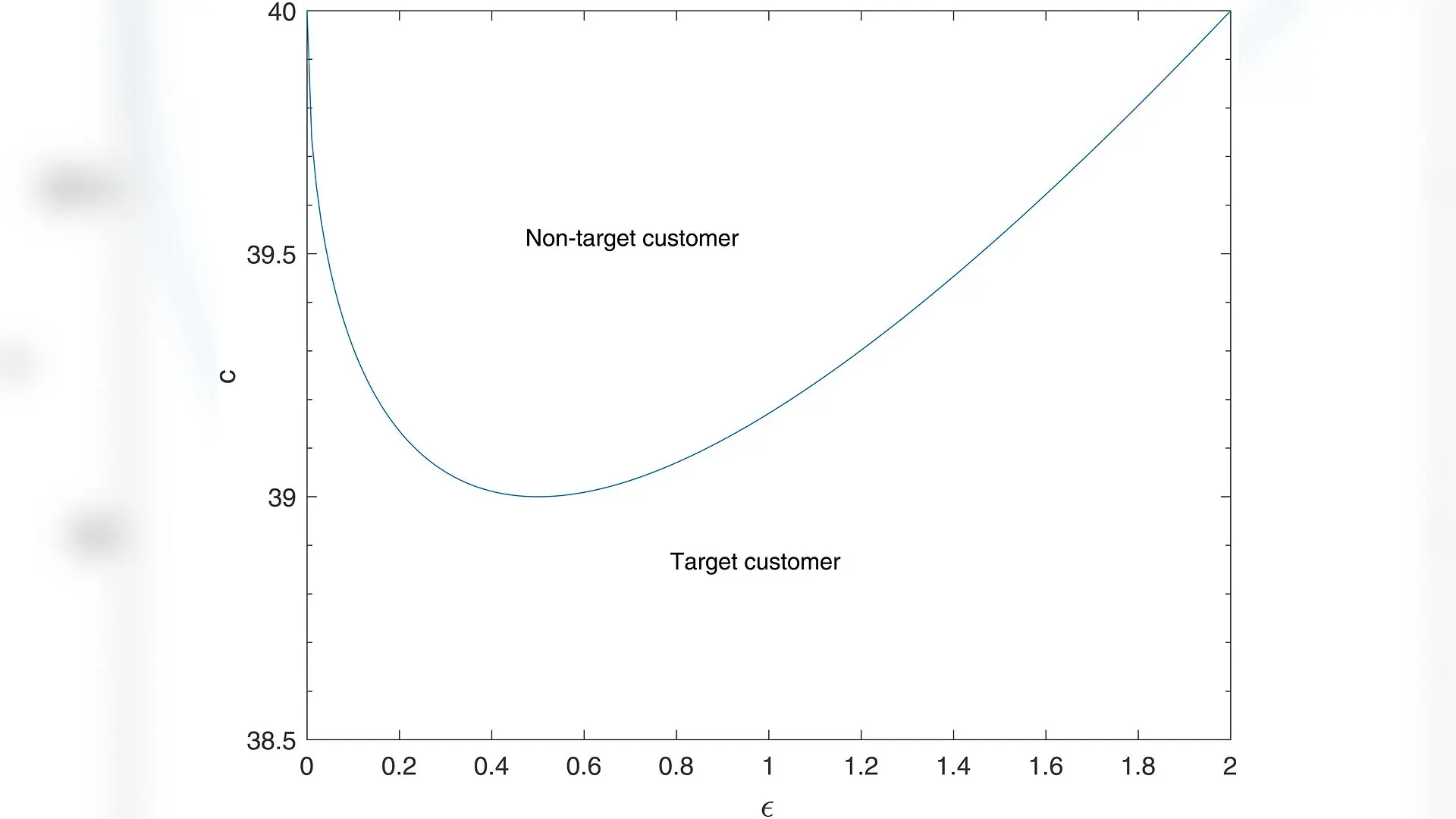
The mathematical modeling also establishes critical thresholds for target customer segments based on delay costs and sensitivity coefficients. If customer sensitivity falls below a specific mathematical floor, those individuals exhibit deep distrust or reluctance toward professional services, making them unprofitable to serve due to pricing constraints. Conversely, when target customers demonstrate high sensitivity to expert rank, firms can successfully capture higher profits by aligning their service duration and pricing structures with specialized labor costs.
While the study relies on theoretical modeling and numerical simulations rather than direct empirical validation, its closed-form analytical solutions provide a scalable framework for managers. By calibrating the model with industry-specific data regarding wage gaps, baseline valuations, and waiting costs, professional service enterprises can better navigate the complex trade-offs between speed, quality, and financial sustainability.
The research was published in PLOS One on October 30, 2026.
This article has been fact checked for accuracy, with information verified against reputable sources. Learn more about us and our editorial process.
Last reviewed on .
Article history
- Latest version
Reference(s)
- Zhang, Jing., et al. “The optimal operation decisions of expert service enterprises based on queuing system.” PLOS One, vol. 21, no. 10, October 30, 2026, pp. e0360850 Public Library of Science (PLoS), doi: 10.1371/journal.pone.0360850. <https://doi.org/10.1371/journal.pone.0360850>.
Cite this page:
- Posted by Sana Malik