At-Home Oral Esketamine Shows Promise for Severe Depression
A real-world study tracking patients for nearly two years reveals sustained symptom stability and highlights important safety considerations.
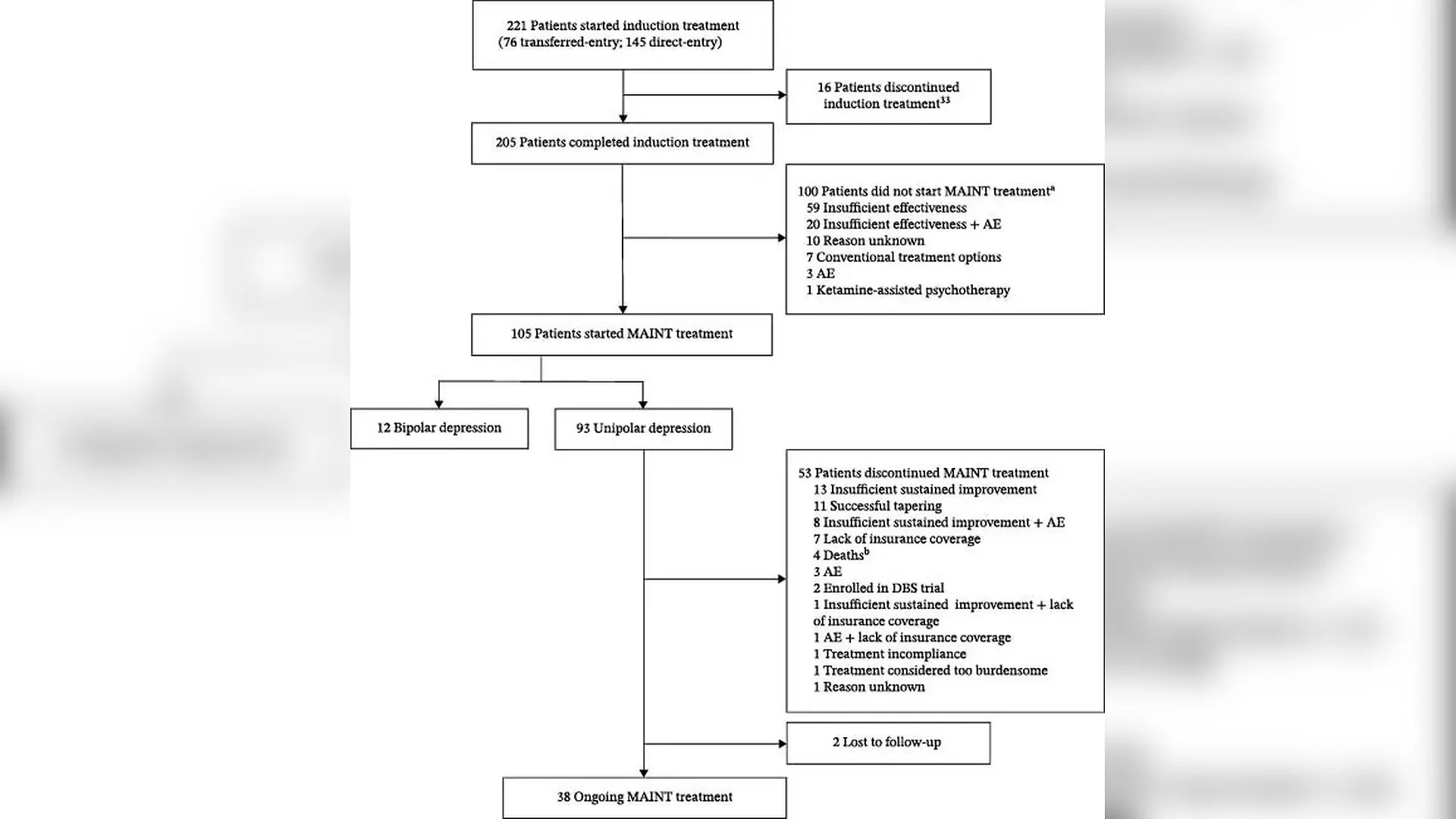
Nearly half of patients with severe, treatment-resistant depression who transitioned to at-home oral esketamine maintenance treatment maintained their symptom stability over a span averaging nearly two years, according to a real-world observational study.
While ketamine and its chemical relative esketamine offer rapid relief for severe mood disorders, their benefits often fade quickly after dosing stops. Researchers have explored various continuation strategies to prolong these initial gains, but long-term data on at-home oral administration have remained sparse. To address this gap, investigators in the Netherlands tracked 221 individuals with severe unipolar depression who entered an off-label treatment program between June 2017 and March 2024.
How the At-Home Maintenance Program Worked
Following a six-week clinical induction phase of individually titrated oral esketamine delivered twice weekly, 105 participants transitioned to an optional maintenance regimen at home. Among this group, 93 patients had unipolar depression. These individuals received supplies every two weeks and self-administered the medication up to twice a week under local medical supervision.
The analysis, published in Depression and Anxiety, focused primarily on trajectories of depression symptom severity measured by clinical rating scales. Mean exposure to esketamine during the maintenance phase reached 20.8 months, with some patients continuing treatment for up to 80 months.
Symptom Stability and Nuanced Individual Trajectories
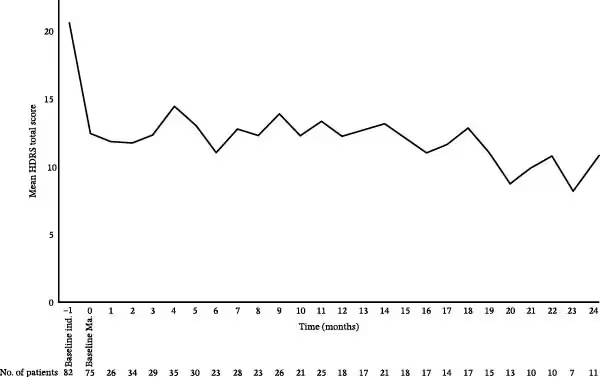
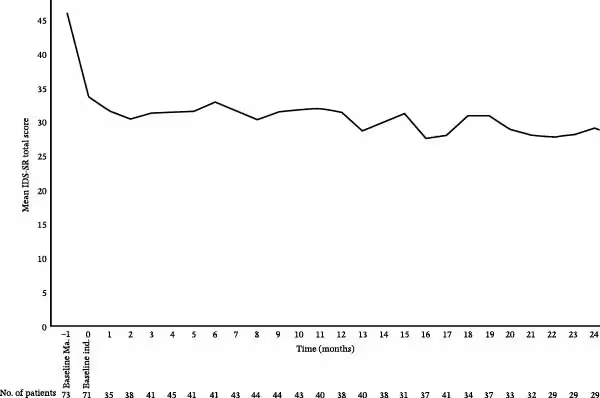
At the group level, statistical analyses revealed no significant change in depression symptom severity between the start of maintenance and the last observed follow-up. This points to sustained stability for many participants over extended periods. However, individual tracking exposed diverse patterns. While some patients maintained consistent response or achieved remission, others experienced intermittent symptom fluctuations or relapsed without regaining initial benefits.
Among initial responders who met strict criteria for improvement at the end of the induction clinic phase, a subset maintained that response throughout the maintenance period. Conversely, a portion of initial nonresponders eventually met response criteria after months of continued at-home therapy, suggesting that some patients require extended time frames to experience meaningful therapeutic gains.
Safety Profiles and Unexpected Long-Term Signals
Regarding tolerability, the treatment was generally considered safe, with only a small fraction of participants stopping use entirely due to adverse events. Common side effects reported during routine safety assessments included excessive sweating, sleep disturbances, fatigue, and memory complaints. Serious urinary tract problems, which are occasionally linked to heavy recreational ketamine abuse, remained uncommon, though mild issues require close clinical monitoring.
Interestingly, researchers noted reports of sexual dysfunction as a prominent severe adverse event during maintenance. While sexual difficulties frequently accompany major depressive disorders, the authors emphasized that systematic tracking of sexual health in clinical trials remains rare, making this finding an important signal for future investigations.
Limitations and What Comes Next
Because this study was observational and lacked a randomized control group, investigators caution that causal links between at-home esketamine and sustained wellness cannot be definitively proven. Expectancy bias and missing follow-up data also require cautious interpretation of the outcomes.
Despite these limitations, the findings indicate that at-home oral esketamine maintenance can be safely managed for select individuals with severe, treatment-resistant depression. Future research will need to compare oral delivery directly against other administration routes and refine symptom-driven dosing strategies to prevent relapse.
The research was published in Depression and anxiety on January 1, 2026.
This article has been fact checked for accuracy, with information verified against reputable sources. Learn more about us and our editorial process.
Last reviewed on .
Article history
- Latest version
Reference(s)
- Smith-Apeldoorn, Sanne Y.., et al. “Oral Esketamine Maintenance Treatment for Treatment‐Resistant Depression: Clinical Outcomes During an Off‐Label Treatment Program.” Depression and Anxiety, vol. 2026, no. 1, October 29, 2026 Wiley, doi: 10.1155/da/8320239. <https://doi.org/10.1155/da/8320239>.
Cite this page:
- Posted by David Anderson