Surprising Study Reveals Why Cataracts Strike Working-Age Adults
A 9-year medical review uncovers the hidden metabolic and surgical risk factors driving severe vision loss in patients under 50.

When people think of cataracts, they almost always picture older grandparents or elderly adults losing their sight over many years. But a comprehensive medical review reveals a surprising number of working-age adults face significant vision loss from the condition much earlier in life.
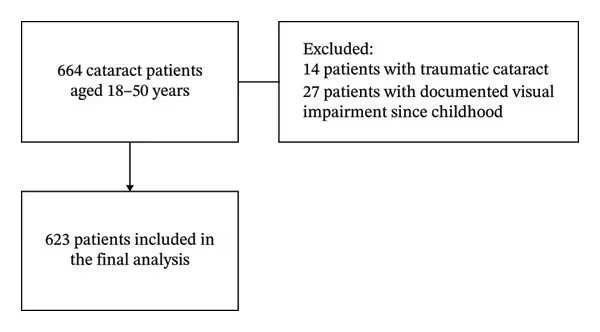
Researchers examined hundreds of patient files to understand why cataracts develop in younger populations and how the disease behaves differently when it affects only one eye compared to both. The retrospective cohort study, published in the Journal of Ophthalmology, analyzed 623 patients between the ages of 18 and 50 who were diagnosed with cataracts at a tertiary care center between January 2016 and October 2024.
What Did the Data Reveal About Working-Age Patients?
Out of the 623 patients evaluated by Su Xu and colleagues, 351 individuals suffered from cataracts in both eyes, while 272 patients had the condition in just one eye. The average age of the entire group was roughly 40 years old. Interestingly, men made up a slightly larger share of the patients, accounting for 345 cases compared to 278 women.
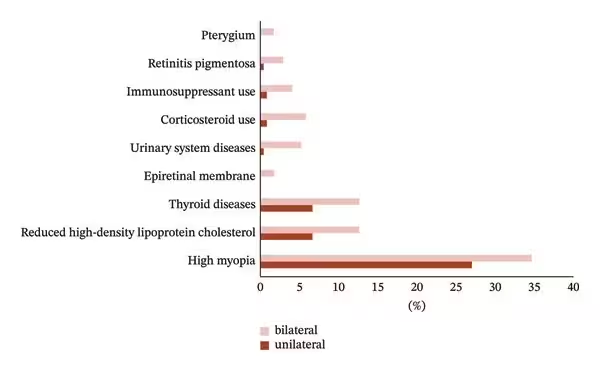
The team discovered that metabolic and systemic health issues were remarkably common in these younger patients. More than half of the cohort struggled with hyperlipidemia, which means having elevated levels of fats or cholesterol in the blood. Additionally, 14 percent had high blood pressure, 13 percent had atopic conditions like drug allergies or asthma, and 10 percent lived with diabetes.
Why Do Unilateral Cataracts Present More Severe Challenges?
When comparing patients with single-eye cataracts to those with bilateral disease, the researchers noticed striking differences. Patients with single-eye cataracts were diagnosed at a noticeably younger age and arrived at the clinic with significantly worse best-corrected visual acuity, meaning their vision was severely compromised by the time they sought medical help.
Statistical models showed that having a history of a vitrectomy, which is a surgical procedure to remove jelly from inside the eye, drastically increased the odds of developing a single-eye cataract. Previous eye inflammation, known as uveitis, was also frequently tied to single-eye cases. Conversely, patients with bilateral cataracts tended to have higher rates of other systemic and eye-related disorders, such as dry eye precursors, retinal membrane issues, and the use of immunosuppressant medications.
Which Cataract Subtype Struck Younger Adults Most Often?
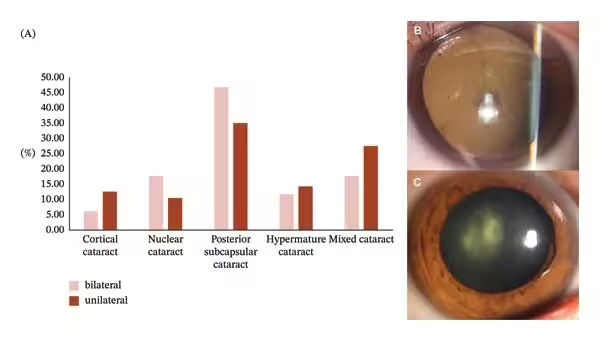
Regardless of whether one eye or both eyes were affected, posterior subscapular cataract emerged as the most common subtype in this working-age demographic. This specific form of lens clouding develops at the back of the lens and tends to progress rapidly, causing noticeable glare and difficulty seeing in bright light long before traditional age-related clouding typically sets in.
The authors note that lifestyle habits, such as daily sun exposure and caffeine intake, showed no direct statistical divergence between the groups. However, because the study relied on retrospective hospital records rather than a healthy control group, the researchers emphasize that these lifestyle findings remain exploratory and require further confirmation through prospective studies.
What Are the Limits of the Study and What Happens Next?
Because the investigation was restricted to a single hospital center, the findings might not fully represent every demographic or region. The authors also lacked a healthy control group without cataracts, which made it impossible to calculate exact independent risk factors for the general public.
Despite these limitations, the authors conclude that clinicians need to monitor younger adults much more closely, especially those with a history of eye surgery or metabolic disorders. Recognizing these overlapping health markers early could help safeguard working-age vision before irreversible damage occurs.
The research was published in Journal of ophthalmology on January 1, 2026.
This article has been fact checked for accuracy, with information verified against reputable sources. Learn more about us and our editorial process.
Last reviewed on .
Article history
- Latest version
Reference(s)
- Xu, Su., et al. “Clinical Characteristics of Cataract and Visual Impairment in Working‐Age Adults: A 9‐Year Retrospective Cohort Study.” Journal of Ophthalmology, vol. 2026, no. 1, October 29, 2026 Wiley, doi: 10.1155/joph/6062456. <https://doi.org/10.1155/joph/6062456>.
Cite this page:
- Posted by Sana Malik