Pre-Pandemic Brain Scans Predict Who Will Struggle Most With Lockdowns
Researchers discover that gray matter volume in key emotional processing regions and pandemic-specific anxiety shape individual shifts in well-being.
Brain scans taken before the COVID-19 pandemic can successfully predict how an individual’s life satisfaction will shift during a public health crisis, according to a longitudinal study tracking university students. Researchers found that specific volumes of gray matter in key emotional processing regions of the brain act as prospective markers for psychological resilience under extreme societal stress.
The study, published in Depression and Anxiety, investigated whether pre-existing brain structure could forecast changes in subjective well-being when populations face strict lockdowns and social isolation. While overall life satisfaction scores across the entire group remained relatively stable on average, individual trajectories varied widely as roughly half of the participants reported increases while over a third experienced noticeable declines.
How Specific Brain Regions Forecast Emotional Resilience
To uncover the neuroanatomical roots of these psychological shifts, the team examined structural magnetic resonance imaging scans from 115 healthy university students collected between October 2019 and January 2020, just before the global outbreak hit China. Follow-up behavioral assessments were conducted roughly one year later, between March and April 2021, after participants had endured prolonged lockdown measures.
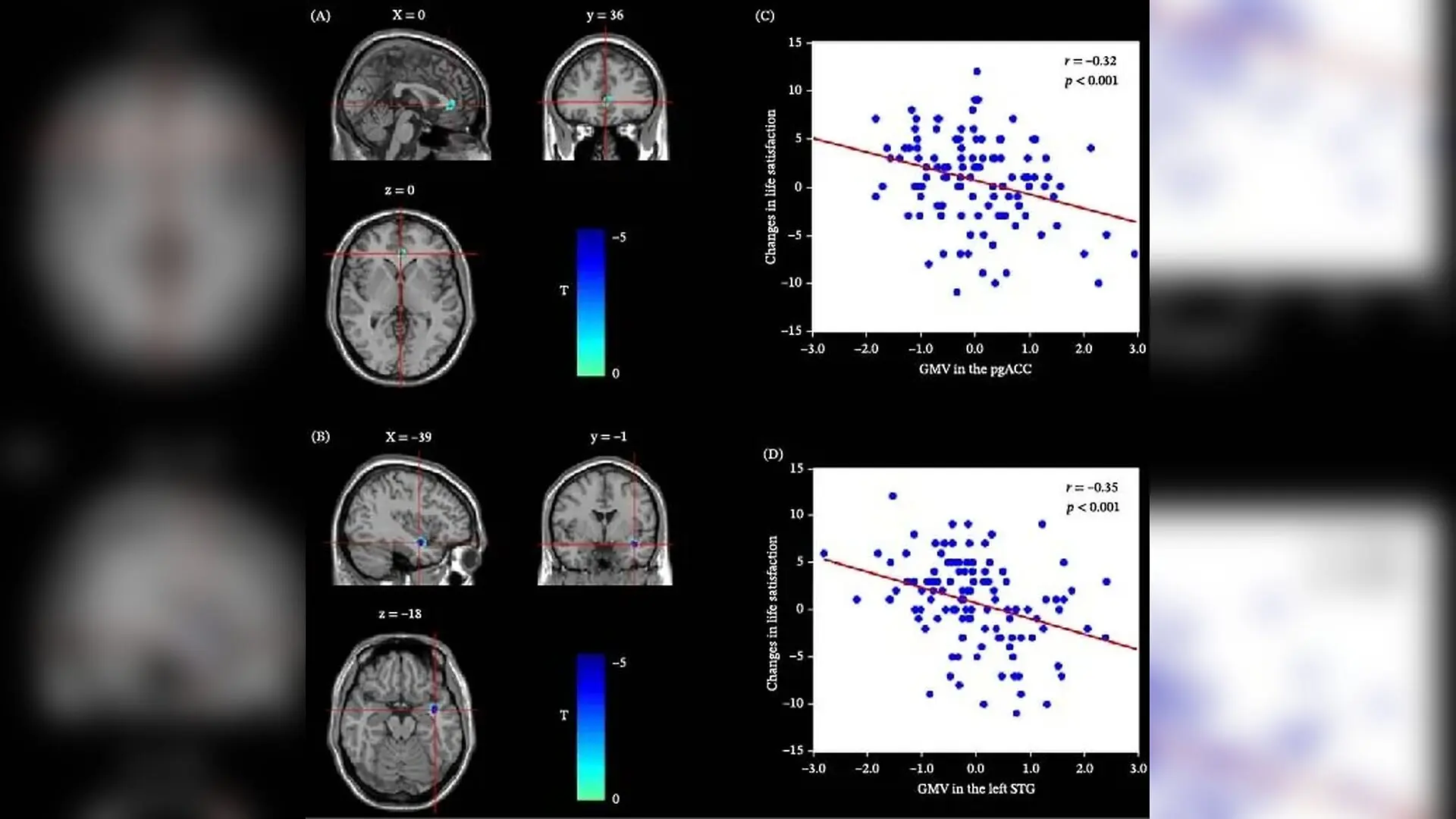
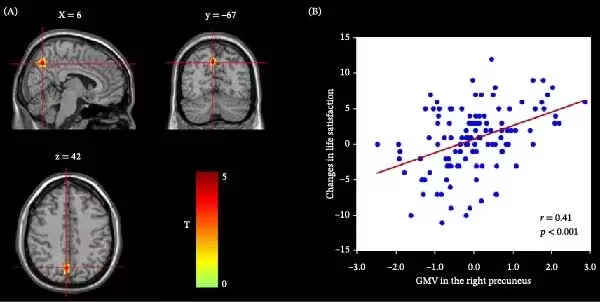
Using whole-brain voxel-based morphometry, a technique that measures local concentrations of gray matter volume, the researchers identified distinct brain regions where pre-pandemic anatomy correlated with subsequent changes in life satisfaction. Specifically, lower gray matter volume in the pregenual anterior cingulate cortex and the left superior temporal gyrus prior to the pandemic predicted greater improvements in life satisfaction later on. Conversely, higher gray matter volume in the right precuneus was positively associated with an increase in life satisfaction over the same period.
The pregenual anterior cingulate cortex is a critical hub connecting frontal control networks to limbic emotion centers, playing an active role in self-evaluation and reward processing. The authors suggest that smaller volumes in this region among certain young adults might reflect more refined synaptic pruning during adolescence, which could facilitate smoother cognitive and emotional regulation when confronting sudden environmental stress.
The Mediating Power of Pandemic Anxiety
Beyond direct anatomical predictions, the researchers sought to understand the psychological mechanisms connecting brain structure to shifting life satisfaction. They evaluated pandemic-specific anxiety using standardized metrics including the COVID-19 Anxiety Syndrome Scale and the Coronavirus Reassurance-Seeking Behaviors Scale.
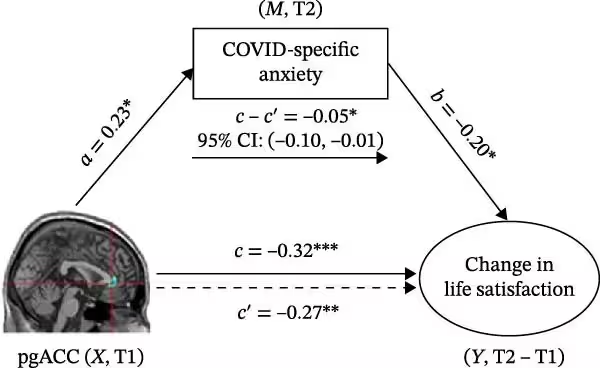
Statistical mediation analysis revealed that COVID-specific anxiety partially mediated the relationship between gray matter volume in the pregenual anterior cingulate cortex and subsequent changes in life satisfaction. Participants with greater pre-pandemic gray matter volume in this region tended to report higher levels of pandemic-related anxiety, which in turn drove declines in their life satisfaction. Importantly, these statistical links remained robust even after controlling for family socioeconomic status, general mental health scores, and unrelated stressful life events.
Context and Limitations of the Findings
While these insights point to a biological vulnerability underlying psychological distress during a crisis, the study authors noted several important limitations. The participant pool consisted entirely of uninfected university students, a demographic characterized by ongoing neuroplasticity, strong peer support networks, and high digital literacy, which may limit how broadly these conclusions apply to older adults or clinical populations.
Furthermore, because neuroimaging data was only acquired before the pandemic, the researchers could not directly measure structural brain changes that may have occurred concurrently with lockdown stressors. The reliance on self-report behavioral questionnaires also introduces potential subjective biases.
Despite these constraints, the findings offer new directions for early psychological intervention. Identifying neurostructural markers alongside early assessments of pandemic-related anxiety could help clinicians spot vulnerable individuals early and target them with cognitive behavioral therapy or specialized support before long-term mental well-being suffers.
The research was published in Depression and anxiety on January 1, 2026.
This article has been fact checked for accuracy, with information verified against reputable sources. Learn more about us and our editorial process.
Last reviewed on .
Article history
- Latest version
Reference(s)
- Feng, Zhuqing., et al. “From Brain Structure to Stress Response: COVID‐Specific Anxiety Links Pre‐Pandemic Gray Matter Volume to Changes in Life Satisfaction.” Depression and Anxiety, vol. 2026, no. 1, October 29, 2026 Wiley, doi: 10.1155/da/7767487. <https://doi.org/10.1155/da/7767487>.
Cite this page:
- Posted by David Anderson