Does Isoflurane Anaesthesia Slow Down Rabbit Digestion?
A controlled study on New Zealand White rabbits reveals how varying durations of inhalation anaesthesia impact gut transit time and recovery.
When healthy adult rabbits undergo short procedures under isoflurane anaesthesia, their digestive tracts keep moving largely as normal despite lingering questions about post-operative gastrointestinal complications. Veterinary researchers investigated how varying durations of the commonly used inhalation gas impact gut motility, feeding, and defecation in small animal patients.
Domestic rabbits have delicate anatomical and physiological traits that make sedation uniquely risky, with past data attributing up to 38 percent of peri-anaesthetic events to digestive issues. Because these animals are hindgut fermenters, any disruption to regular gut motility can trigger dangerous complications like gastrointestinal stasis syndrome, where reduced muscle activity allows harmful bacteria to proliferate. To clarify whether the commonly used gas anaesthetic isoflurane contributes directly to this slowdown, researchers at the University of Tehran designed a controlled trial involving five healthy male New Zealand White rabbits.
How the Controlled Inhalation Study Was Conducted
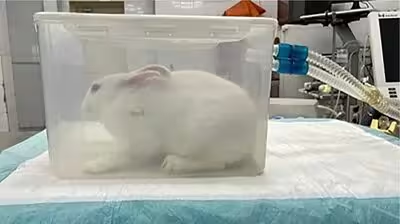
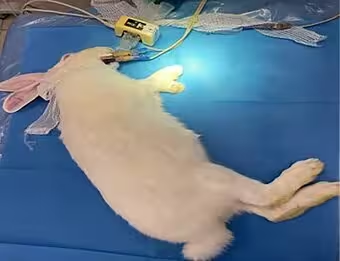
The repeated-measures study, published in Veterinary Medicine and Science, evaluated each animal across four separate conditions including an awake control state alongside 15 minutes, 30 minutes, and 60 minutes of surgical anaesthesia. Anaesthesia was induced using 5 percent isoflurane in 100 percent oxygen inside a chamber before the rabbits were intubated and maintained on 1.5 to 3 percent isoflurane. Each experimental condition was separated by a six-day washout period to eliminate carry-over effects, and the researchers randomized the order of exposure for every subject.
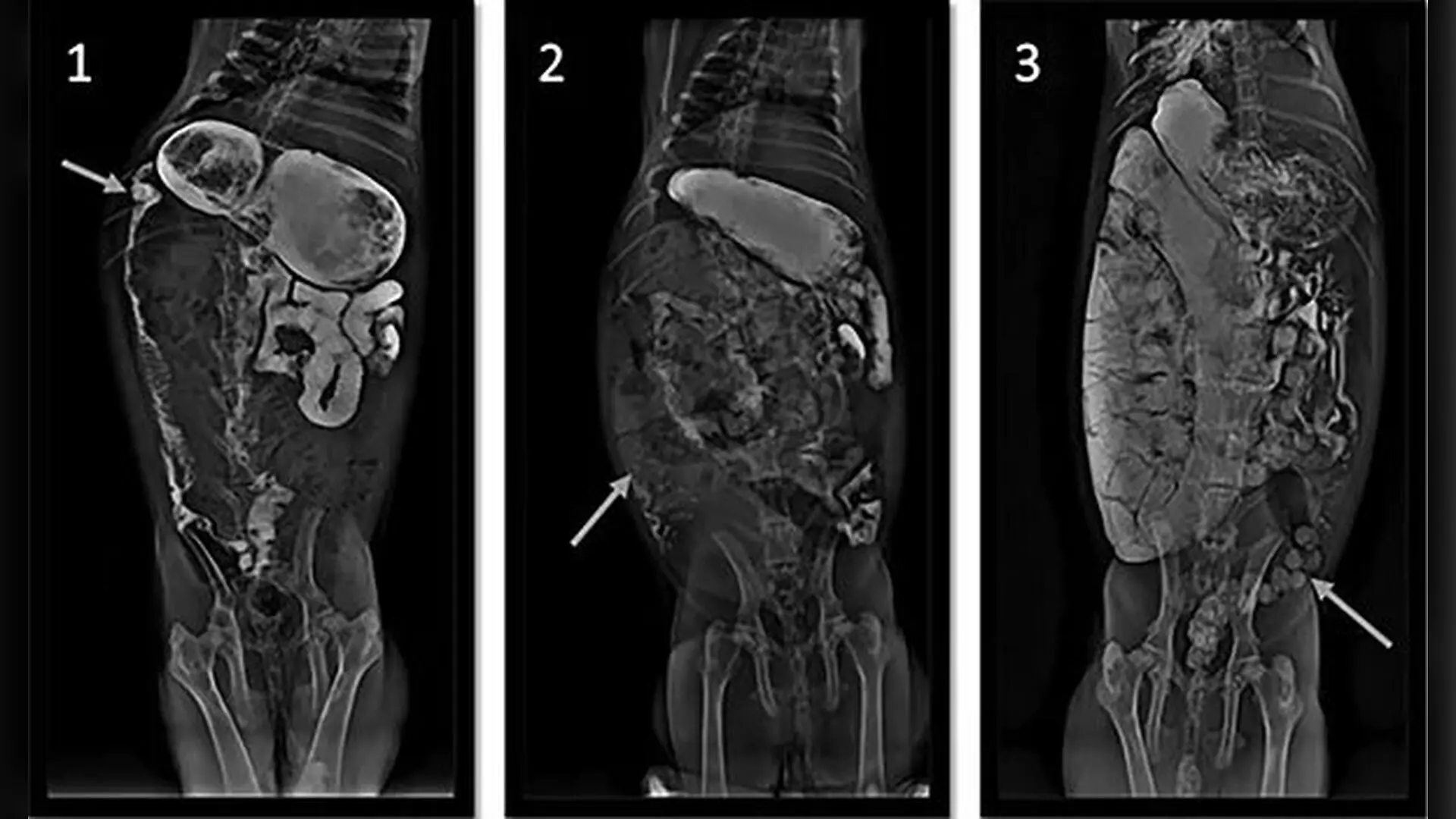
To measure gastrointestinal movement precisely, the team utilized barium sulphate contrast radiography administered via a nasogastric tube at set intervals up to 420 minutes post-administration. The protocol tracked three primary transit markers: gastric transit time marked by barium entering the small intestine, small intestinal transit time marked by arrival in the caecum, and the time required for hard faeces formation within the colon. Additionally, the team recorded daily feed intake and total faecal output in grams for six days following each anaesthetic condition to catch any lingering changes in eating or bathroom habits.
What the Transit Times and Daily Habits Revealed
The analysis revealed that gastric transit time remained entirely consistent across all conditions, with the contrast agent appearing in the small intestine at the very first minute check in every single trial. Time to hard faeces formation also showed no statistically significant differences, averaging between 168 and 240 minutes across the various groups. Furthermore, daily measurements of feed consumption and faecal output demonstrated no meaningful alterations linked to how long the animals spent under anaesthesia.
Small intestinal transit time did show an overall statistical variation when evaluated globally, with median times shifting from 60 minutes in the awake, 15-minute, and 30-minute groups up to 120 minutes in the 60-minute exposure group. However, when the authors performed pairwise comparisons against the awake control group specifically, none of those differences reached statistical significance. The only statistically significant variation in direct pairwise testing occurred between the 30-minute and 60-minute groups, though the authors caution that discrete radiographic intervals and small sample sizes limit broad clinical conclusions.
Why These Findings Matter for Pet Rabbits and Future Care
The findings suggest that isoflurane anaesthesia up to 60 minutes does not cause acute, clinically evident impairments in gut transit, appetite, or waste output in healthy subjects. Because the study utilized a non-surgical design, it successfully eliminated confounding pain and tissue trauma factors that normally accompany veterinary surgeries. The authors note that while an overall difference appeared in the small intestine, the lack of significant deviation from awake controls points toward relative safety regarding short-term postoperative function.
Nevertheless, veterinary professionals are advised to exercise caution when translating these results to actual clinical settings. Real-world patients frequently encounter additional compounding risk factors, such as pre-existing digestive hypomotility, surgical inflammation, pain, or the administration of opioid analgesics known to suppress bowel motility. The research team emphasizes that larger future investigations incorporating continuous monitoring tools like fluoroscopy will help clarify whether prolonged exposure or intermediate thresholds produce subtle transit delays in vulnerable patients.
The research was published in Veterinary medicine and science on November 1, 2026.
This article has been fact checked for accuracy, with information verified against reputable sources. Learn more about us and our editorial process.
Last reviewed on .
Article history
- Latest version
Reference(s)
- Zarein, Amir., et al. “Evaluation of the Effects of Isoflurane Anaesthesia on Gastrointestinal Transit Time, Feed Intake and Defecation in Rabbits.” Veterinary Medicine and Science, vol. 12, no. 6, October 30, 2026 Wiley, doi: 10.1002/vms3.71272. <https://doi.org/10.1002/vms3.71272>.
Cite this page:
- Posted by Sana Malik