Common Immune Epitopes Rely on Multiple Genetic Variants
A newly validated computational pipeline reveals that nearly all dominant immune targets bypass single-allele rules, offering a clearer path to universal vaccines.
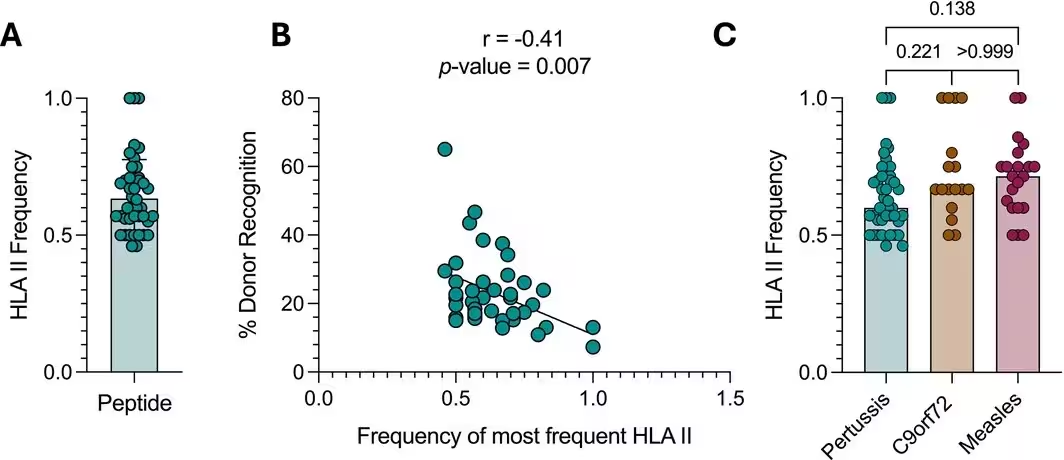
Only 3 out of 43 dominant T cell epitopes examined in a recent study rely on a single human leukocyte antigen type, revealing a widespread genetic phenomenon that upends traditional models of immune recognition.
T cells protect the body by recognizing short peptide fragments, known as epitopes, presented on the surface of cells by human leukocyte antigen molecules. Understanding which specific genetic variants present a given epitope is vital for designing effective vaccines and understanding autoimmune diseases. Traditionally, researchers assumed that a single dominant protein variant typically presents a specific epitope to the immune system. However, scientists have long known that peptide presentation can overlap, meaning multiple genetic variants might display the exact same fragment, a property known as promiscuous restriction.
To measure how frequently this occurs across populations, a research team analyzed large datasets spanning multiple infectious agents and protein targets, including Bordetella pertussis, the bacterium responsible for whooping cough, as well as the measles virus and the human C9orf72 protein. Their findings, published in HLA published in HLA, demonstrate that promiscuous restriction is nearly universal among dominant immune targets rather than a rare exception.
Why Traditional Single-Allele Methods Miss Critical Immune Patterns
Standard computational tools designed to infer human leukocyte antigen restrictions from population response data typically look for a single genetic variant overrepresented in responding individuals. When multiple different variants independently present the same epitope, individuals reacting to alternate variants dilute the statistical signal. This mathematical bottleneck causes conventional analysis pipelines to miss secondary or tertiary genetic restrictions entirely.
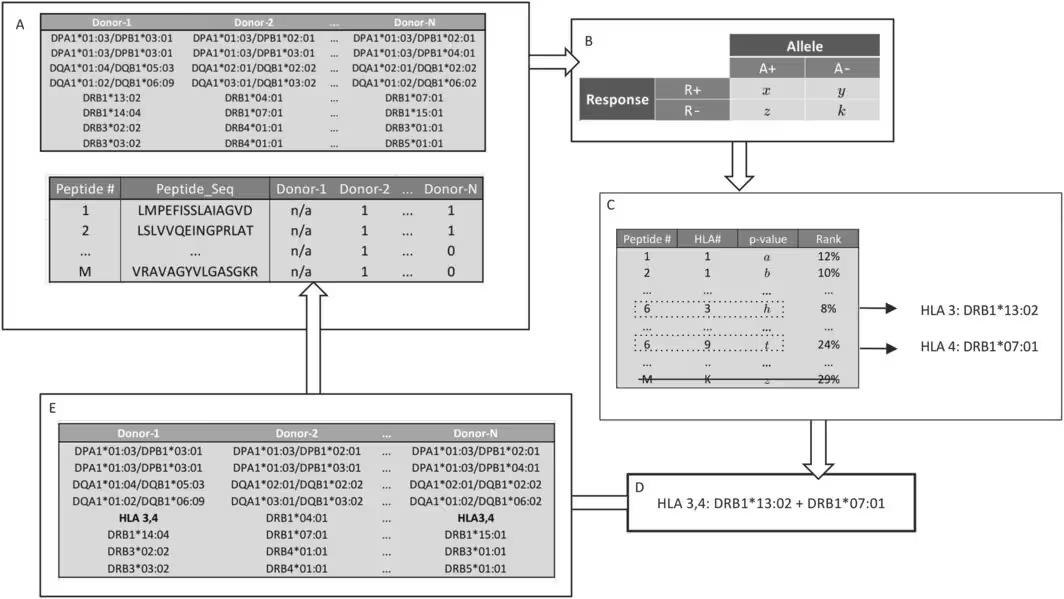
To overcome this limitation, the investigators developed a new bioinformatic extension called COMBO-RATE. Instead of evaluating individual genetic variants in isolation, the algorithm iteratively tests combinations of human leukocyte antigen alleles to uncover multi-allelic restriction patterns. When applied to 43 immunodominant CD4+ T cell epitopes from Bordetella pertussis, the new approach successfully identified restrictions for 35 epitopes, compared to only 24 detected by conventional single-allele software. Furthermore, the pipeline uncovered 64 additional allele restrictions, including 29 unique variants that previous methods overlooked.
Experimental Validation Confirms Multi-Allelic Presentation
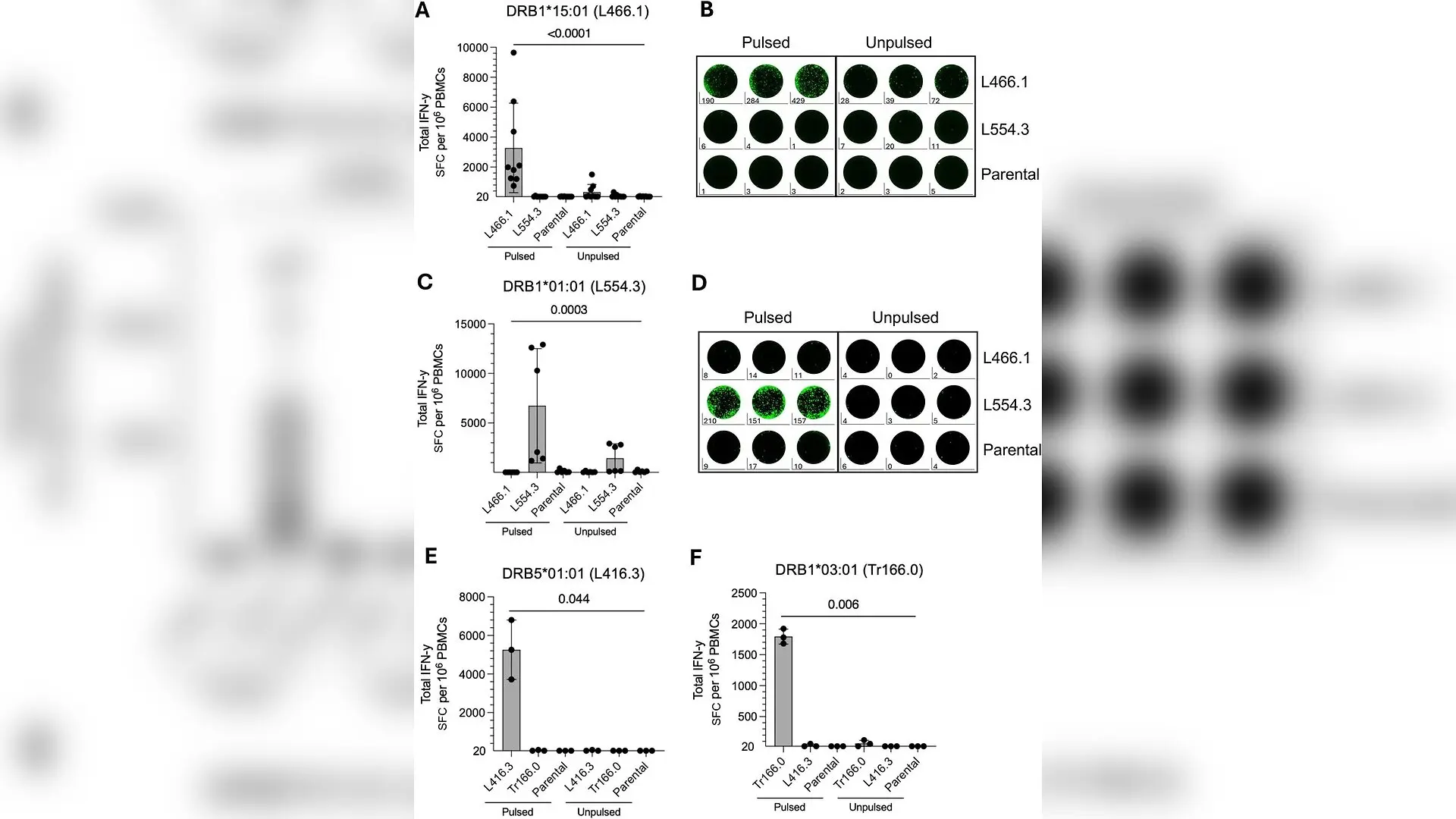
To prove that these computationally inferred multi-allelic restrictions reflect real biology, the researchers performed laboratory presentation assays using specialized cell lines transfected with single human leukocyte antigen molecules. Focusing on a representative Bordetella pertussis epitope designated as P23, traditional analysis pointed only to the DRB1*15:01 variant. However, the COMBO-RATE pipeline flagged an additional candidate, DRB1*01:01, which failed to reach statistical significance on its own.
Laboratory tests using isolated donor immune cells confirmed that both genetic variants independently presented the P23 epitope to T cells, triggering robust releases of the pro-inflammatory signaling molecule interferon-gamma. Additional validation tests on other epitopes from distinct bacterial antigens confirmed that the pipeline accurately pinpoints functional multi-allelic restrictions across different biological systems.
What These Findings Mean for Next-Generation Vaccine Design
The discovery that dominant immune epitopes are universally promiscuous carries immediate practical consequences for vaccine development. Global human populations display vast genetic diversity, making it difficult to design subunit vaccines that trigger strong immune responses across every demographic group. Because promiscuous epitopes bind to multiple human leukocyte antigen variants simultaneously, they naturally achieve broader population coverage while remaining less vulnerable to viral or bacterial mutations.
To make these analytical advances accessible to the broader scientific community, the research team released their pipeline as both a standalone Python package and a user-friendly web application. By streamlining the identification of complex immune presentation patterns from existing clinical datasets, the tool aims to accelerate the creation of universal vaccines that protect genetically diverse populations without requiring exhaustive laboratory screening.
The research was published in HLA on November 1, 2026.
This article has been fact checked for accuracy, with information verified against reputable sources. Learn more about us and our editorial process.
Last reviewed on .
Article history
- Latest version
Reference(s)
- Nevarez‐Mejia, Jessica., et al. “
COMBO ‐RATE : An Experimentally Validated Bioinformatic Tool to Identify PromiscuousHLA Restrictions.” HLA, vol. 108, no. 5, October 31, 2026 Wiley, doi: 10.1111/tan.71060. <https://doi.org/10.1111/tan.71060>.
Cite this page:
- Posted by David Anderson