Hidden Cave Systems Are Slowly Rising to the Surface of Australia’s Nullarbor Plain
Scientists have discovered a geological clue beneath an Australian plain that could help locate hidden cave systems on Earth and other planets.
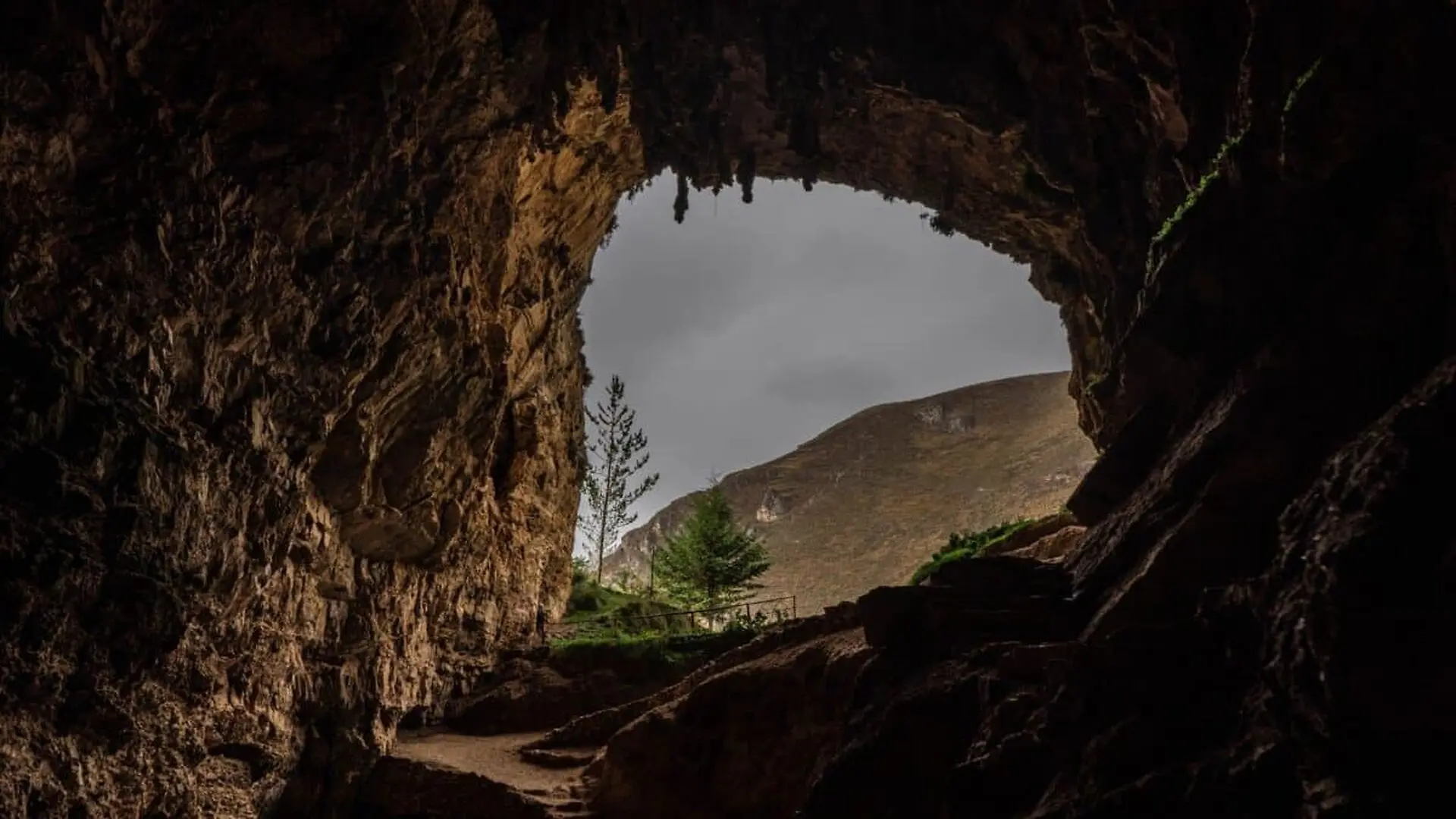
The Nullarbor Plain, a vast expanse of arid, flat terrain spanning over 200,000 square kilometers in southern Australia, appears deceptively simple at first glance. However, new research from Curtin University scientists Milo Barham and Matej Lipar suggests that this desolate surface hides a complex, subterranean reality: an intricate network of massive caves that are slowly migrating toward the surface.
The region originated approximately 14 million years ago following the retreat of a shallow ancient sea, leaving behind a sprawling limestone landscape. While the Mirning People have lived along its southern fringes for tens of thousands of years, the interior remains largely enigmatic. Because access to these hidden chambers is typically restricted to isolated points where they breach the surface, mapping the full extent of the system has historically been an uphill battle for geologists. A study published in Communications Earth & Environment now reveals a method to identify these voids, offering insights that may extend to the geology of other planets.
Deciphering Mysterious Surface Scars
While the Nullarbor is known for scattered sinkholes and cave openings, researchers identified more peculiar features: linear, shallow trenches stretching up to 20 kilometers across the plain. These trenches, which align in a rough north-to-south orientation, are nearly imperceptible from the ground but appear prominently in high-resolution digital landscape models generated from satellite and aerial data.
These features initially mimic the appearance of ancient river valleys, yet they lack the telltale signs of water-driven erosion. They exhibit no branching tributaries, appear and disappear abruptly without connecting to broader drainage basins, and lack the sediment characteristic of alluvial systems. Instead, these trenches serve as a top-down reflection of the unstable, fractured rock foundations located deep below the surface.
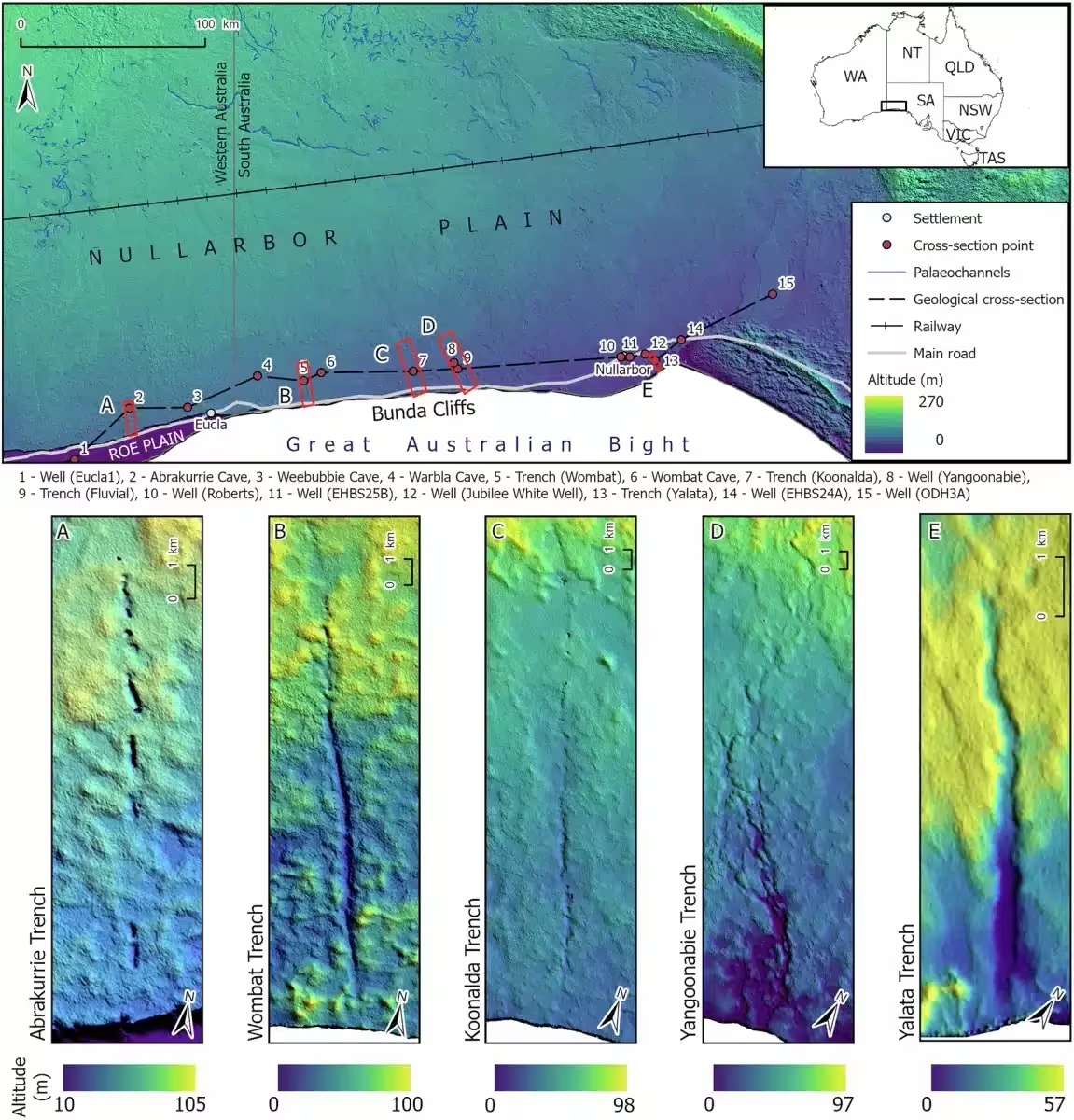
Advanced Imaging Reveals Subterranean Collapses
To confirm the link between surface geography and subterranean architecture, the research team utilized a suite of diagnostic tools, including borehole sampling, drone surveys, and geophysical imaging techniques akin to medical X-rays. The investigation confirmed that the trenches act as surface manifestations of underlying voids. Essentially, the massive cave systems below are undergoing a process of gradual upward collapse, impacting the ground layers over millions of years.
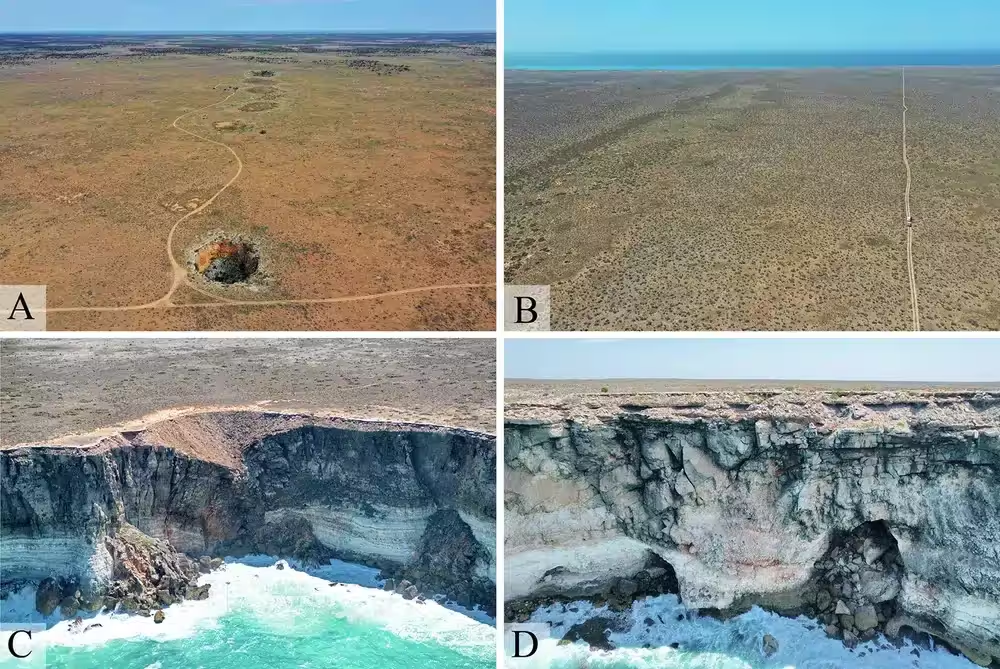
Geological Hazards and Extraterrestrial Implications
Understanding these hidden karst structures is critical for modern infrastructure. With karst landscapes covering roughly 15 percent of the Earth’s ice-free surface and providing essential water supplies to nearly a quarter of the global population, the ability to map these voids informs everything from civil engineering and tunnel stability to groundwater management. Furthermore, these caves act as natural time capsules, preserving ecological data protected from the forces of surface erosion.
Beyond our planet, the Nullarbor provides a terrestrial analog for planetary exploration. As space agencies look toward Mars, where similar features have been spotted, these cave systems are being viewed as potential refuges for life. The dry, static environment of the Nullarbor serves as an ideal laboratory for understanding how ancient, buried cavities can be detected from orbit, potentially guiding future efforts to find life on the Red Planet.
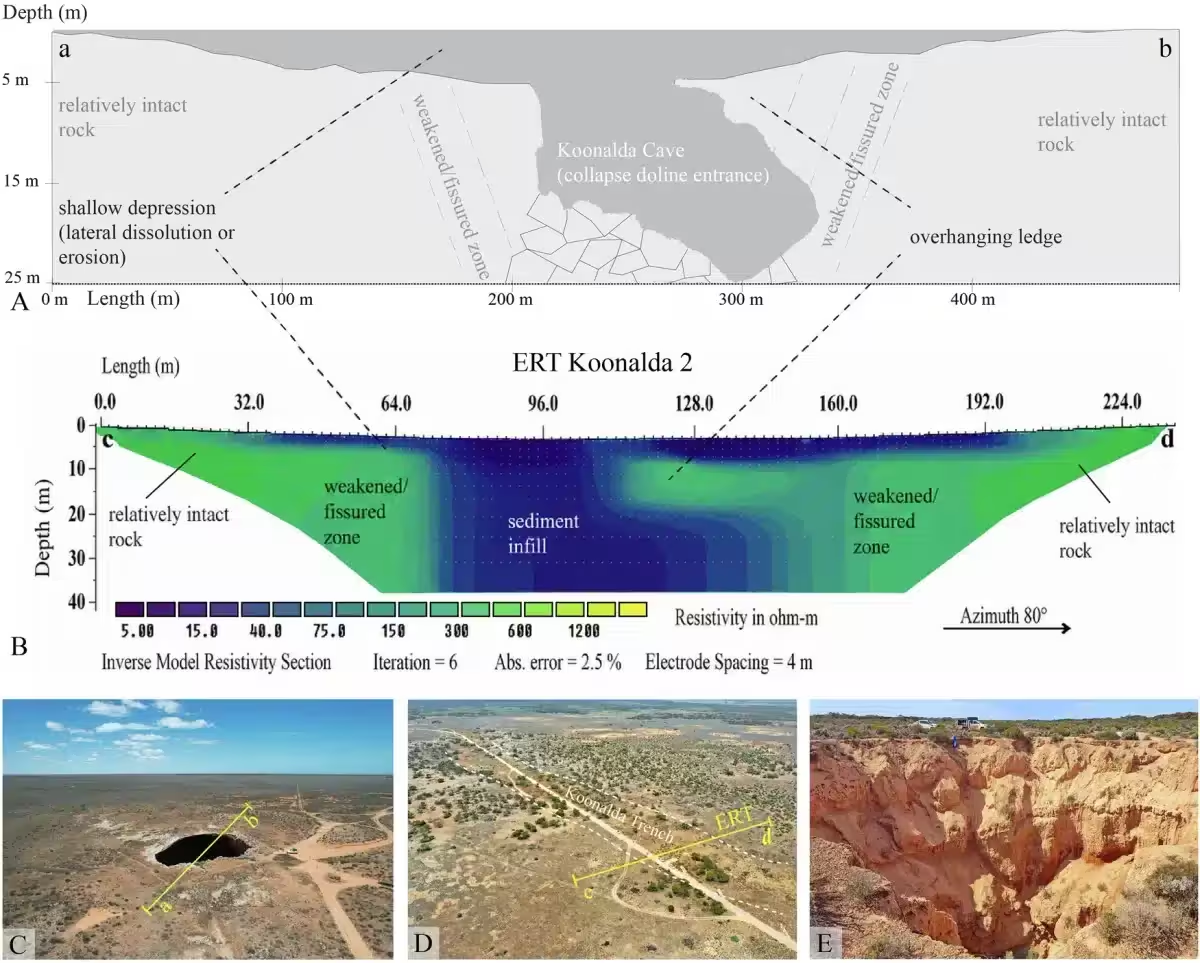
This article has been fact checked for accuracy, with information verified against reputable sources. Learn more about us and our editorial process.
Last reviewed on .
Article history
- Latest version
Reference(s)
- Lipar, Matej. “Subdued surface expression of deep cave collapse - Communications Earth & Environment.”, vol. 7, no. 1, September 17, 2026, pp. 735 Nature, doi: 10.1038/s43247-026-04016-7. <https://www.nature.com/articles/s43247-026-04016-7>.
Cite this page:
- Posted by David Anderson