Male Bumblebees Are Secretly Acting As Babysitters To Help Their Hives Thrive
New research reveals that male bumblebees actively help incubate their young, a surprising behavior that significantly boosts the overall health of the hive.
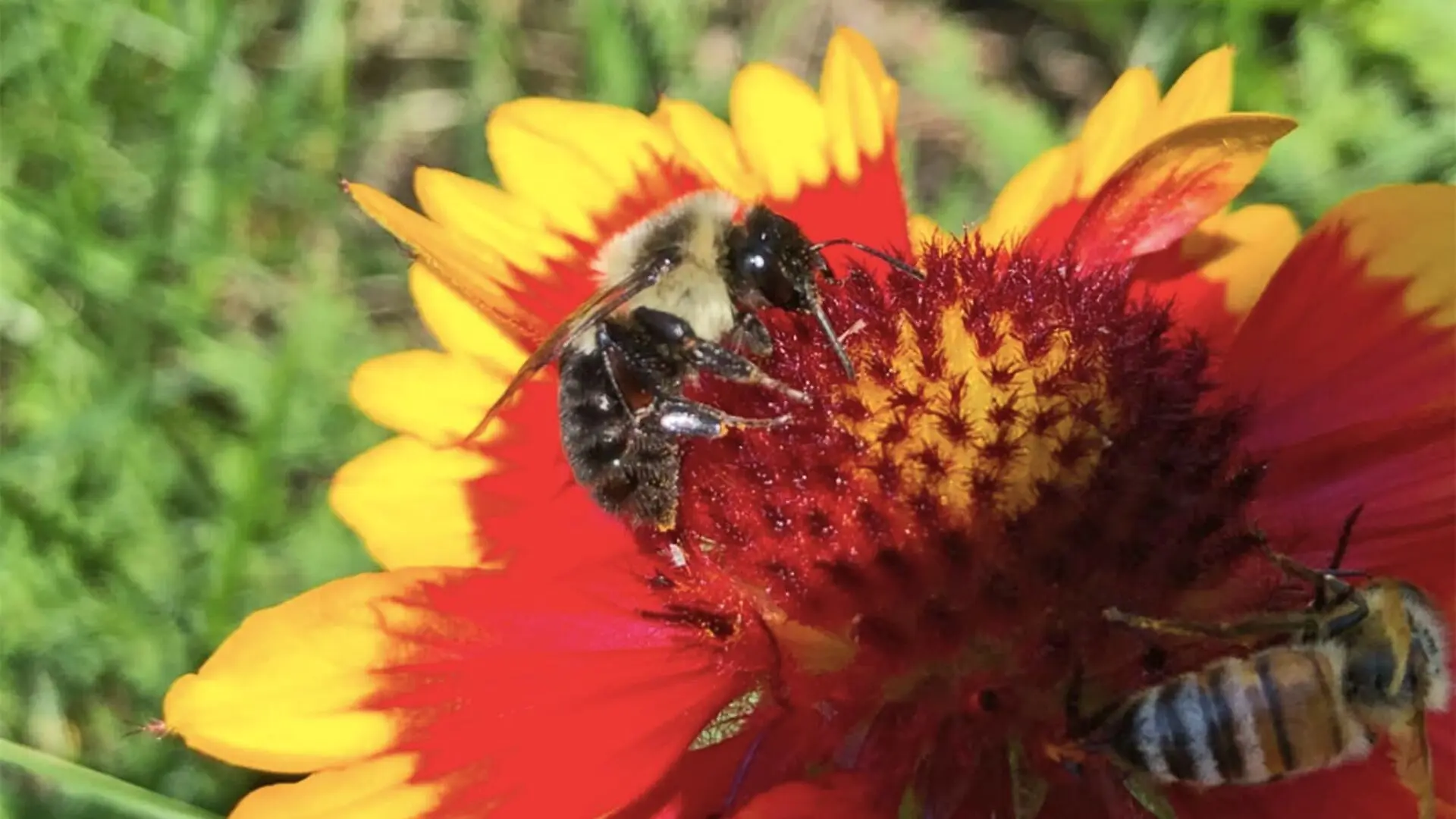
Hidden Parental Care: Male Bumblebees Play Vital Role in Hive Success
For decades, the prevailing narrative in entomology has painted male bumblebees as little more than biological delivery systems for genetic material. Often dismissed as “flying bags of sperm,” these males were thought to contribute nothing to the complex social structure of the hive beyond mating. However, new research published in the journal Royal Society Open Science suggests this long-standing assumption is fundamentally flawed.
A study led by researchers at the University of California, Riverside, reveals that male bumblebees actively engage in brood care, functioning as surrogate parents that significantly boost the development of their siblings. By providing essential warmth to eggs and larvae, these males help colonies flourish at a critical time when wild bee populations face mounting pressures from habitat destruction and environmental stressors.
The discovery began by chance when lead author and entomologist Meghan Moore utilized thermal imaging to monitor bumblebee nests. While analyzing heat maps of the colonies, she observed unexpected bright white hotspots—signs of elevated temperatures—emanating from the males. Closer observation confirmed that these bees were adopting a distinct “incubation posture,” positioning their thoraxes directly over the brood to transfer heat generated by their wing muscles.
A Surprising Boost to Hive Productivity
To quantify the impact of this behavior, the research team established controlled laboratory colonies featuring queens with varying numbers of male companions, ranging from zero to five. Because these experimental nests lacked female workers, the researchers were able to isolate the specific contribution of the males.
The results were striking. Queens housed alongside males began the egg-laying process twice as quickly as those without male assistance. Ultimately, these nests produced up to 1.5 times more offspring. “This is an important result at a time when bumblebee populations are threatened by pollution and habitat loss,” Moore noted.
Thermal data showed that the males maintained a thoracic temperature of approximately 34.8 degrees Celsius while incubating—notably higher than their typical resting temperature of 31 degrees Celsius. Interestingly, the males kept the brood slightly cooler than the queens do during their own incubation efforts. Researchers hypothesize that this temperature differential may be an evolutionary strategy to ensure the males preserve their sperm viability while still providing the heat necessary to accelerate larval growth.
Challenging Conventional Wisdom
The findings offer long-overdue validation for research conducted in the 1980s by entomologist Sydney Cameron, who first hinted at the existence of male parental care. Her initial work was largely overlooked by the scientific community, which remained tethered to the belief that hive maintenance was the exclusive domain of female workers.
While the study relied on laboratory settings, the researchers are confident that this behavior occurs in the wild as well. In preliminary observations conducted alongside this study, the team witnessed males providing care even in the presence of female workers. “In the literature, they say the males’ only purpose is to be ’flying bags of sperm,’ that their only purpose is to mate with queens,” says Moore. “But our research, and Sydney’s, shows this just isn’t true.”
Future Inquiries into Energy Trade-offs
As the team looks toward future research, they aim to understand the physiological cost of these nurturing behaviors. Biological processes are rarely without a price, and the team intends to investigate whether the energy expended in incubation impacts the males’ longevity or reproductive health.
“What’s the trade-off? There’s no free lunch,” says Hollis Woodard, a professor of entomology at UCR and co-author of the study. “Males are exerting energy to care for siblings. We’d like to understand what it costs them.”
Understanding these hidden dynamics provides a more nuanced view of bumblebee society, suggesting that the survival of the colony is a more collaborative effort than scientists previously dared to imagine.
This article has been fact checked for accuracy, with information verified against reputable sources. Learn more about us and our editorial process.
Last reviewed on .
Article history
- Latest version
Reference(s)
- Moore, Meghan E.., et al. “Male bumblebees are capable of providing brood care and impacting nest development in incipient nests.” Royal Society Open Science, vol. 13, no. 11, November 18, 2026 The Royal Society, doi: 10.1098/rsos.261826. <https://doi.org/10.1098/rsos.261826>.
Cite this page:
- Posted by Elizabeth Taylor