Automated Screen Exposes Thousands of Fake Bioinformatics Papers Hiding in Open Access Journals
A newly developed detection system reveals that paper mills are mass-producing flawed biomedical studies by exploiting basic biological misinterpretations.

Thousands of scientific papers published in open-access journals rely on a fundamental biological error that commercial paper mills exploit to mass-produce fraudulent studies without doing any laboratory work. By scanning more than seven million articles published between 2010 and 2026, researchers uncovered a sharp rise in formulaic computational papers that treat biologically incompatible data as if they were identical.
How Does the Gene Symbol Illusion Fool Scientific Reviewers?
Paper mills are commercial operations that sell manufactured manuscripts, fabricated data, and unearned authorship slots to researchers seeking to pad their publication records. While traditional integrity screening catches duplicated paragraphs or photoshopped microscope images, computer-generated bioinformatics studies bypass those traps by reusing public databases and automated analysis pipelines. A paper can be written in minutes by swapping out a disease name or a drug compound while keeping the exact same computer code, yielding a polished article that looks rigorous on the surface.
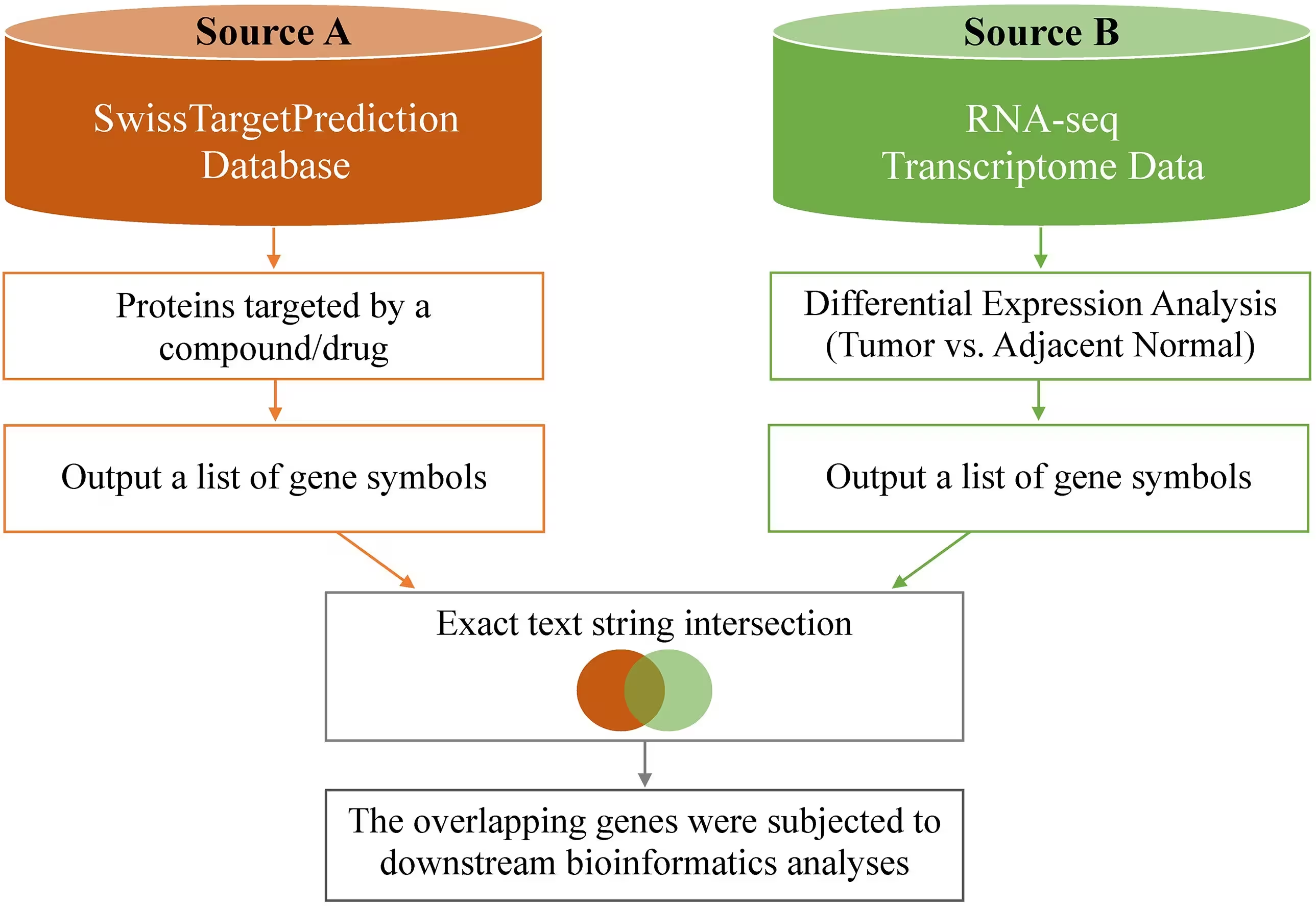
The core mechanism behind many of these papers is known as the gene symbol illusion. Gene symbols are standardized labels for human genes, but biological databases often reuse those exact same text labels for completely different entities, such as predicted protein targets, messenger ribonucleic acid expression changes, or disease associations. When paper mills reduce these different types of data down to simple lists of text names, they intersect them and treat any shared symbols as proof that a specific drug affects a specific disease.
While this text-matching overlap is technically correct as a string search, the biological inference requires independent experimental validation. Downstream steps like network construction or molecular docking cannot fix the unsupported premise that started the analysis. The research is published in PLOS One by Kelvin Tan, detailing the scope of this automated fabrication method.
What Did the Large-Scale Audit Reveal About Questionable Papers?
To measure the scale of the problem, the author developed an automated screening system centered on gene symbol illusions and recurrent workflow patterns. After initial optimization on a curated set of articles, the system achieved a high external validation accuracy of about ninety-eight percent when tested against an enriched set of 1,223 PubMed Central articles, correctly spotting problematic workflows with ninety-nine percent specificity.
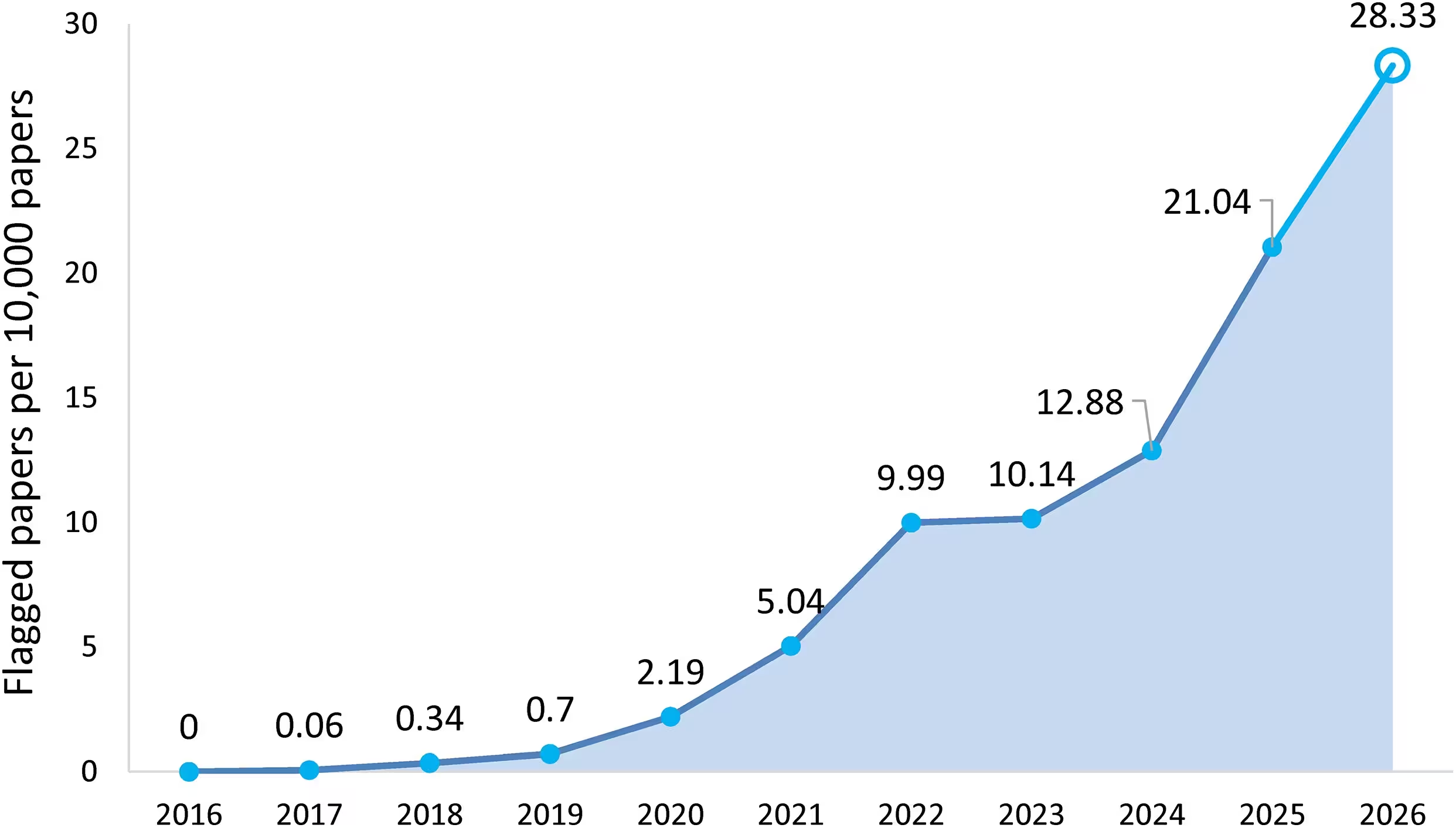
When applied to the full corpus of more than seven million open-access articles in PubMed Central published through June 2026, the tool flagged 5,399 journal articles. The annual rate of flagged papers showed a dramatic upward trajectory over the decade. No flagged articles appeared prior to 2017, but the rate climbed from about one paper per twenty thousand in 2017 to over twenty-one per ten thousand by 2025, with an even higher rate recorded during the partial 2026 interval.
Geographic and publisher distributions showed that flagged papers appeared across a wide variety of outlets rather than being isolated to a single publisher. Author affiliations from China appeared in about ninety-one percent of the flagged records, a concentration that aligns with previous large-scale integrity audits. The flagged papers were scattered across 605 different journals and 75 publisher groups, with titles from Frontiers in Pharmacology, Scientific Reports, and Medicine heading the total counts.
What Happens When Flagged Papers Meet Retraction Databases?
Cross-matching the flagged articles against the Retraction Watch Database revealed 25 retracted papers, every single one of which contained the gene symbol illusion. Sixteen of those retracted papers specifically listed paper-mill involvement among their official retraction reasons, although none of the original retraction notices mentioned the biological mismatch itself. Furthermore, the audit exposed template-like publication patterns, such as papers using identical analytical frameworks and parallel titles to study the exact same traditional medicine decoction across different diseases while listing completely different authors.
These unsupported computational studies pose a serious threat to the scientific record because they can contaminate systematic reviews, warp clinical guidelines, and mislead artificial intelligence models trained on biomedical literature. To help editors catch these issues before publication, the author established a public web application named Decontamina, which allows reviewers to upload manuscripts and check for gene symbol illusions in real time. The author notes that while the screening tool cannot determine author intent or prove misconduct on its own, catching these flawed biological assumptions early can help protect the integrity of future medical research.
The research was published in PLOS One on November 25, 2026.
This article has been fact checked for accuracy, with information verified against reputable sources. Learn more about us and our editorial process.
Last reviewed on .
Article history
- Latest version
Cite this page:
- Posted by Faisal Qureshi