Targeted Gut Steroid Reduces Protein Leakage and Stabilizes Kidney Function in Eighty-One IgA Nephropathy Patients
A real-world observational study reveals significant drops in urine protein over nine months, though researchers emphasize the need for controlled trials.
Adults with a common immune-driven kidney disorder who received a targeted steroid medication experienced significant drops in urine protein levels while maintaining stable renal function over nine months of treatment. The real-world study followed eighty-one patients at a single medical center in Shenzhen, exploring how the therapy performs outside of strict clinical trial settings.
The research, published in Drug Design, Development and Therapy, investigated the effects of Nefecon, an oral formulation of budesonide engineered to release the drug in the lower part of the small intestine. By targeting this specific region, known as the distal ileum, the medication aims to modulate local immune activity in gut-associated lymphoid tissue without exposing the entire body to high levels of systemic corticosteroids.
How Did the Real-World Patient Group Differ From Clinical Trials?
Pivotal trials for the medication typically enforce narrow entry criteria, such as specific filtration rate thresholds and persistent high protein leakage despite standard blood pressure medications. In contrast, the current retrospective observational investigation included eighty-one adults with biopsy-confirmed primary IgA nephropathy, a condition where abnormal antibodies deposit in the glomeruli, which are the tiny filtering units of the kidneys. Nearly thirty-nine percent of the cohort had an estimated glomerular filtration rate below sixty milliliters per minute, and some participants presented with advanced chronic kidney disease stages four or five or received concurrent immunosuppressive agents.
During the nine-month observation window, patients took sixteen milligrams daily of the targeted-release budesonide. Most individuals also received background kidney-protective therapy, including eighty-six percent on renin-angiotensin system inhibitors and sixty-three percent on sodium-glucose co-transporter-2 inhibitors, which are modern medications that help protect renal function.
What Measured Changes Occurred in Proteinuria and Kidney Function?
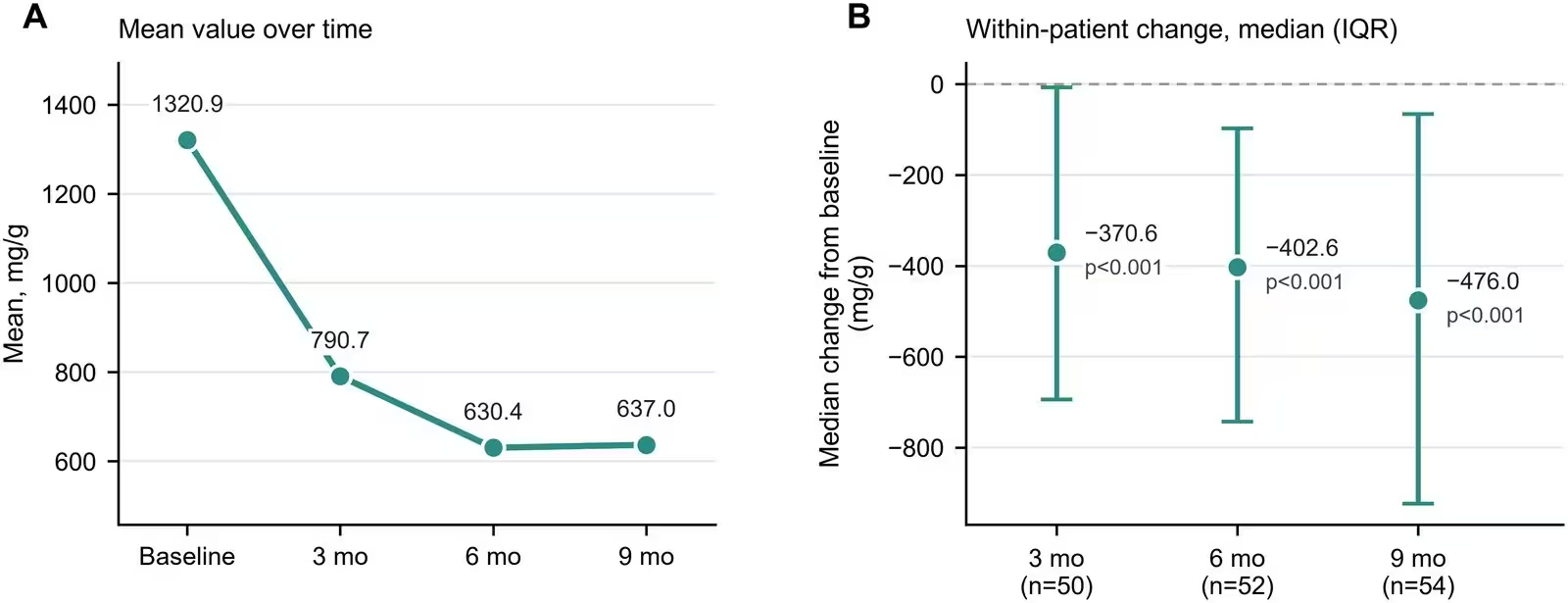
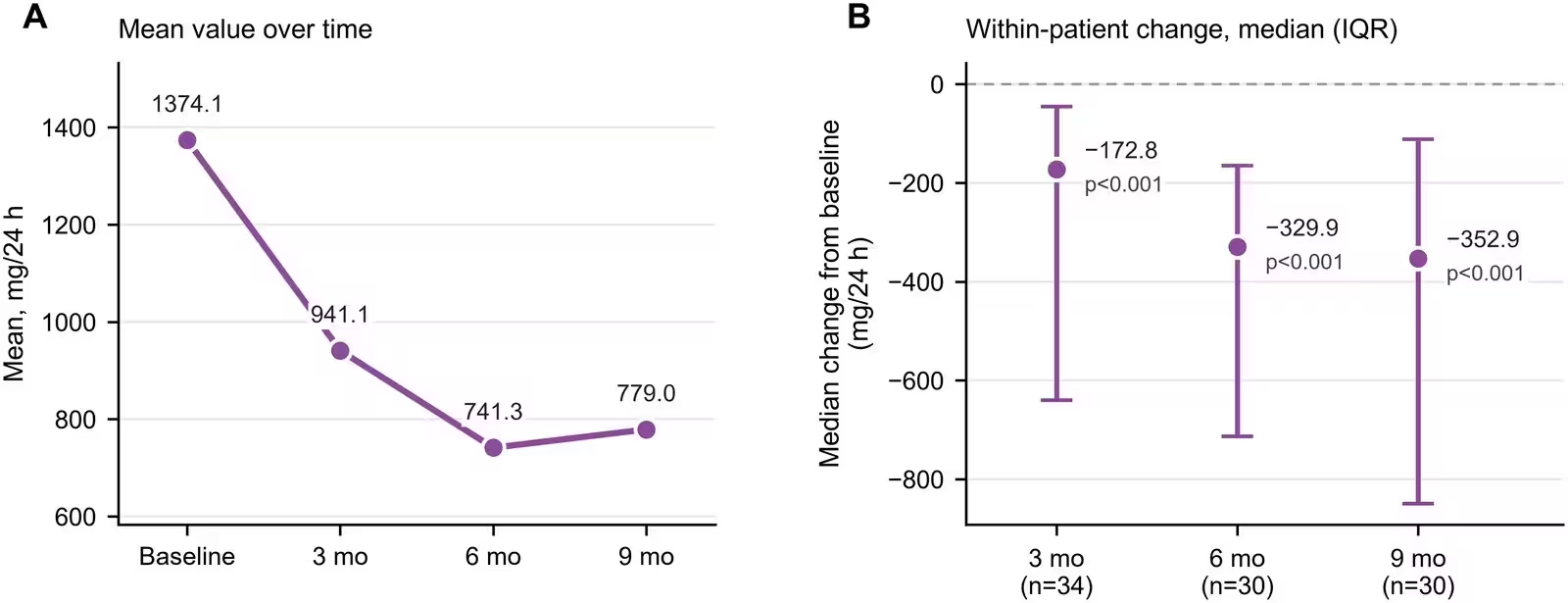
By the ninth month of treatment, participants showed substantial reductions in protein leakage. The urine protein-to-creatinine ratio decreased by a median of about four hundred seventy-six milligrams per gram, representing a relative drop of roughly twenty-seven percent from baseline values. Twenty-four-hour urine protein measurements similarly fell by a median of about three hundred fifty-three milligrams per day, corresponding to a relative decrease of nearly forty percent.
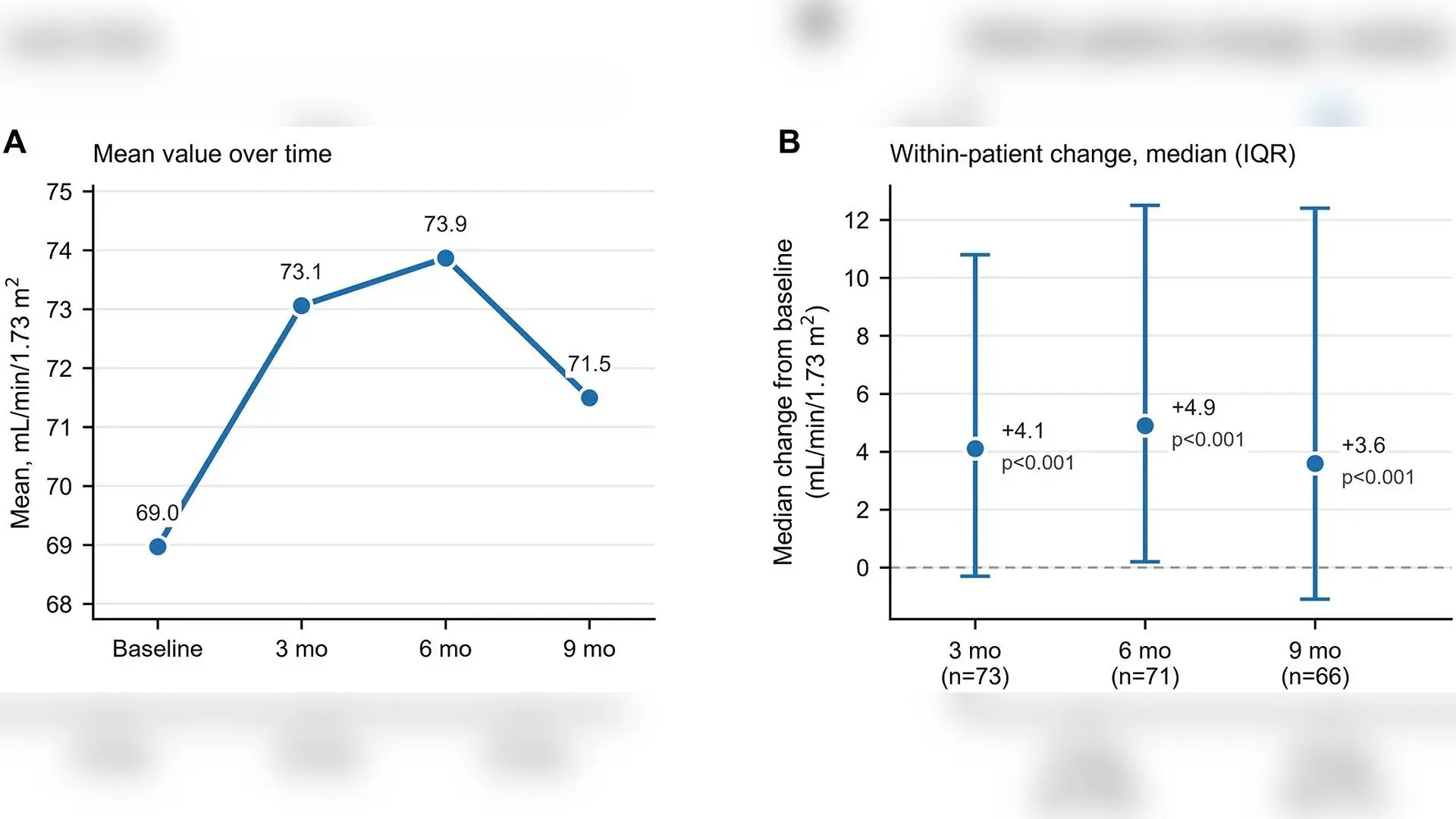
These antiproteinuric effects appeared as early as three months and remained sustained throughout the entire treatment period. Meanwhile, the estimated glomerular filtration rate remained stable relative to baseline, showing small numerical increases rather than declines. Hematuria, or the presence of red blood cells in the urine, showed only numerical improvements without statistical confirmation over the nine-month interval.
What Are the Clinical Implications and Limitations of the Findings?
Because protein leakage is a primary predictor of long-term kidney decline, reducing it is considered a reliable surrogate marker for preserving renal health. Lead researcher Zhixia Song and colleagues noted that the observed benefits were consistent across various clinical and pathological subgroups, including patients with different sex classifications, Oxford MEST-C histological features, and Lee disease grades.
However, the study design carries important limitations that require cautious interpretation. Because the work was retrospective, single-center, and single-arm without a concurrent control group, researchers cannot attribute the positive outcomes solely to the targeted steroid therapy. Background supportive care, regression to the mean from peak baseline measurements, and natural fluctuations in kidney function could have contributed. Furthermore, adverse symptoms occurred in nearly twenty percent of patients, with acne, sleep disturbances, menstrual irregularities, and mild gastrointestinal issues reported most frequently. Larger prospective, controlled trials with longer follow-up periods are necessary to confirm these real-world findings.
The research was published in Drug design, development and therapy on November 18, 2026.
This article has been fact checked for accuracy, with information verified against reputable sources. Learn more about us and our editorial process.
Last reviewed on .
Article history
- Latest version
Reference(s)
- Zhang, Junwei., et al. “Proteinuria Reduction and Preservation of Renal Function During 9 months of Targeted-Release Budesonide (Nefecon) in IgA Nephropathy: A Single-Centre Real-World Observational Study.” Drug Design, Development and Therapy, vol. Volume 20, November 1, 2026, pp. 1-17. Informa UK Limited, doi: 10.2147/DDDT.S648130. <https://doi.org/10.2147/DDDT.S648130>.
Cite this page:
- Posted by William Moore