Medical Students Redesign Community Health Training With Local Leaders
A new participatory framework extends student clerkships and prioritizes trust-building over traditional grading.
Medical students at an academic medical center in the northeastern United States are stepping outside traditional lecture halls to reshape how future physicians learn about community health. Differences in social determinants of health, which encompass non-medical factors like housing stability and economic security, account for up to fifty-five percent of the variation in health outcomes.
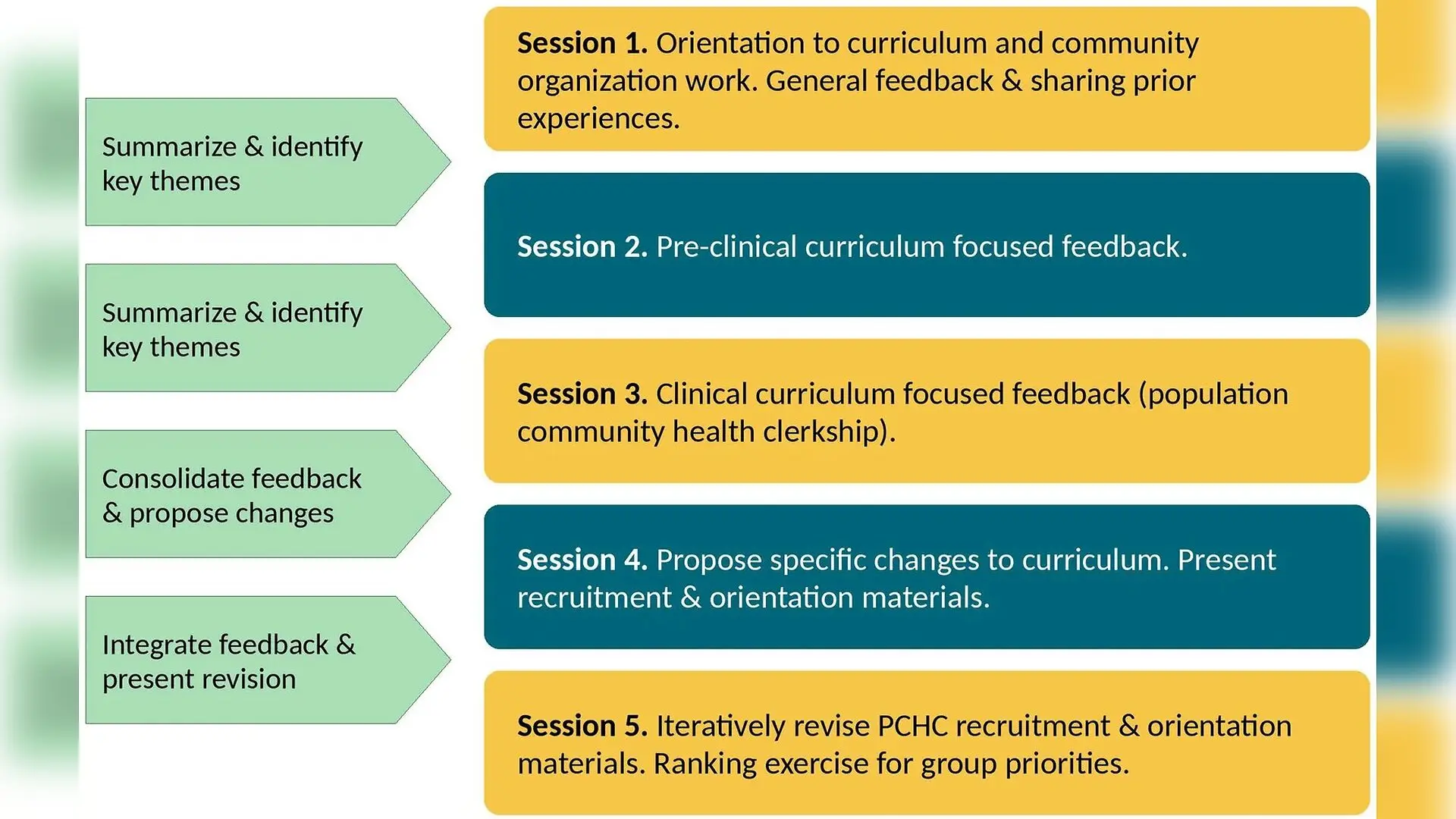
To address this gap, researchers led by Susan Hogan at the University of Massachusetts Chan Medical School organized a series of collaborative planning sessions between January and March 2025. The study, published in Advances in Medical Education and Practice, brought together twenty participants, including ten representatives from community-based organizations, five medical students, and five faculty members, to overhaul the school’s four-year medical training curriculum.
How Did Community Partners Help Redesign Medical Training?
The project used a participatory design framework, ensuring that local public health agencies, cultural organizations, and free clinics held equal power in deciding what students need to learn. Organizers hosted five two-hour working sessions to evaluate existing courses and establish new priorities. Through rapid qualitative content analysis of session transcripts, the team identified four major areas requiring urgent revision.
Participants highlighted the need for foundational training in trust-building and cultural humility before students ever enter community settings. Community leaders stressed that learners must adopt a beginner mindset rather than approaching real-world social challenges like a standard biology assignment. They advocated for teaching practical communication skills, such as actively asking underserved populations what they need and want.
What Specific Curriculum Changes Are Now Underway?
The collaboration resulted in a restructuring of the medical school’s Population and Community Health Clerkship. Instead of a single, concentrated two-week block, the clinical experience is now divided into three separate weeks distributed across the academic year at eight-week intervals. This longitudinal model aims to foster deeper, more sustainable relationships between student groups and local organizations.
Preclinical students will also participate in targeted workshops, such as a three-hour housing and health session featuring data on affordable housing policy and panel discussions on lived experiences. Furthermore, fourth-year students will engage in structured reflections and mentor junior classes to ensure continuity for ongoing community projects.
What Are the Limitations of This Collaborative Approach?
While the redesign represents a significant shift toward shared ownership in medical education, the authors note several limitations. The community organizations involved were purposefully selected from existing partners who already had established relationships with the medical school, potentially omitting perspectives from groups with no prior institutional ties.
Additionally, because the participants self-selected and the medical school faculty led the analysis, researcher bias remains a possibility. The long-term impact of the revised curriculum on student clinical skills and community health equity has not yet been evaluated and will require years of ongoing observation.
The research was published in Advances in medical education and practice on November 18, 2026.
This article has been fact checked for accuracy, with information verified against reputable sources. Learn more about us and our editorial process.
Last reviewed on .
Article history
- Latest version
Reference(s)
- Khanna, Aishwarya., et al. “Engaging with Community Partners to Co-Design an Undergraduate Medical Education Social Determinants of Health (SDOH) and Health Equity Curriculum.” Advances in Medical Education and Practice, vol. Volume 17, November 1, 2026, pp. 1-11. Informa UK Limited, doi: 10.2147/AMEP.S641379. <https://doi.org/10.2147/AMEP.S641379>.
- Posted by Raj Joshi