Researchers Find Neddylation Signaling Acts As An Immune Rheostat And Explains Why Broad Cancer Therapies Fail
Compartment-resolved analysis shows that blocking the pathway helps tumors in some cells while harming vital T-cell immunity in others.
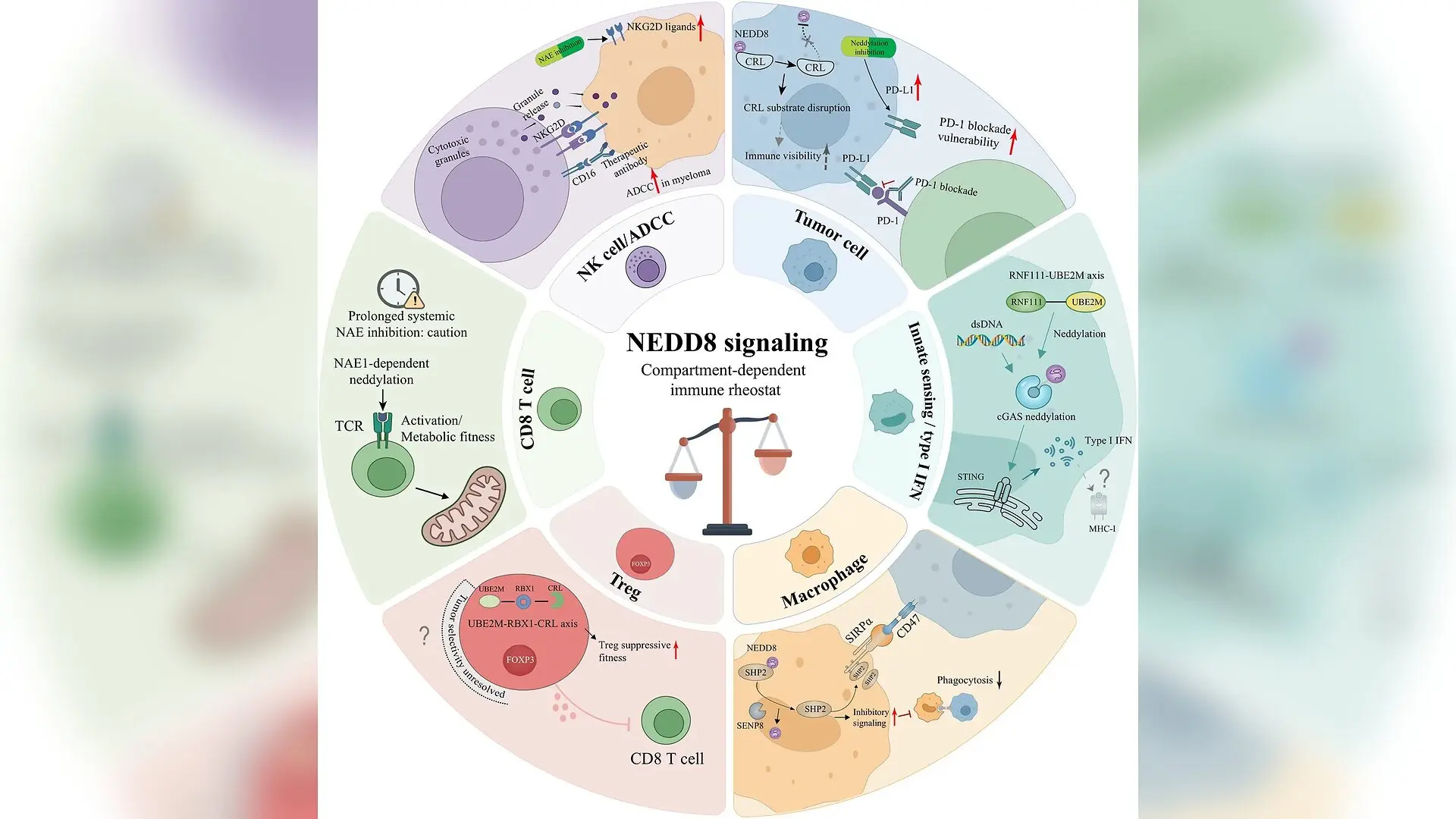
Researchers at the Second Hospital of Jilin University discovered that NEDD8 protein signaling acts as an immune rheostat that produces opposite effects across different cellular compartments, revealing why broad drug inhibition fails while compartment-specific treatments hold promise.
For years, scientists viewed cellular neddylation, the attachment of a small protein called neural precursor cell expressed developmentally downregulated protein 8 to target molecules, purely as a tumor-supportive mechanism. Inhibiting this pathway with drugs like pevonedistat suppresses cancer cell growth in laboratory models. However, these broad treatments often miss how the pathway simultaneously governs immune cells, leading to mixed results in clinical trials.
How Tumor Cells and T Cells Respond Differently to Pathway Changes
When cancer cells lose NEDD8, they often become more visible to the immune system and show increased vulnerability to immunotherapy drugs. Specifically, research in triple-negative breast cancer models demonstrated that genetic loss of tumor neddylation sensitizes malignant growths to programmed cell death protein 1 blockade. Conversely, immune cells require active neddylation to function properly. A study published in ImmunoTargets and Therapy explains that the NEDD8-activating enzyme subunit 1 is essential for CD8 T-cell activation, metabolic fitness, and direct cytotoxicity against tumors.
Systemic drug inhibition can therefore create a biological conflict. While a drug might induce stress in tumor cells, it can simultaneously impair the vital expansion and metabolic adaptation of protective T cells if exposure is not carefully timed. This explains why unselected clinical trials of enzyme inhibitors face hurdles, as whole-body suppression affects both malignant and immune compartments.
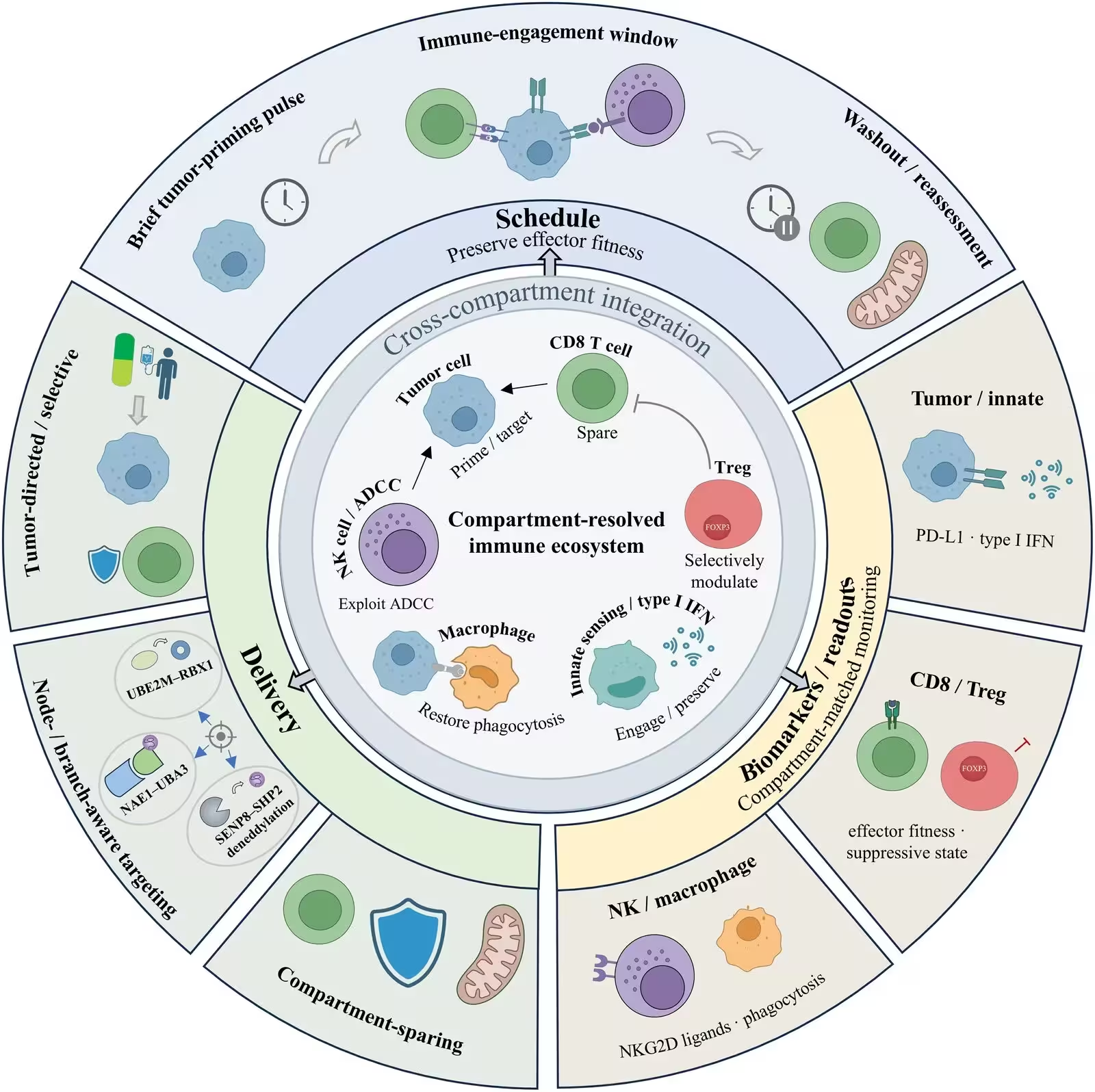
What Happens in Regulatory T Cells and Natural Killer Cells
Regulatory T cells, which normally dampen immune responses within tumors, depend on specific ubiquitin-conjugating enzymes and ring-box 1 proteins for their suppressive fitness. Genetic models show that disrupting these components alters regulatory T-cell homeostasis, but whole-body drug treatments do not necessarily target these tumor-resident cells selectively. At the same time, short-duration drug exposure can benefit specific blood cancers by increasing natural killer group 2 member D ligands on myeloma cells, enhancing natural killer cell recognition and antibody-dependent cellular cytotoxicity.
Why Macrophage Checkpoints Complicate Treatment Strategies
Macrophages rely on intricate signaling networks to determine whether to engulf tumor cells or spare them. In colorectal cancer models, researchers found that sentrin-specific protease 8 mediates the deneddylation of Src homology 2 domain-containing phosphatase 2, reinforcing the adverse cluster of differentiation 47 signal regulatory protein alpha macrophage checkpoint. Maintaining this specific modification state suppresses tumor engulfment, pointing to the need for highly targeted interventions rather than blunt, pathway-wide inhibition.
What Next Steps Mean for Future Clinical Trial Design
To overcome past clinical trial limitations, future therapeutic strategies must move away from unselected systemic dosing toward compartment-matched schedules and biomarker-guided patient selection. Researchers propose using brief priming pulses followed by drug washouts to protect effector T cells, alongside rigorous pharmacodynamic monitoring of target engagement in both malignant tissues and immune compartments.
The research was published in ImmunoTargets and therapy on November 21, 2026.
This article has been fact checked for accuracy, with information verified against reputable sources. Learn more about us and our editorial process.
Last reviewed on .
Article history
- Latest version
Reference(s)
- Zhao, Zhipeng., et al. “NEDD8 Signaling as a Compartment-Resolved Immune Rheostat in Cancer Immunity.” ImmunoTargets and Therapy, vol. Volume 15, November 1, 2026, pp. 1-18. Informa UK Limited, doi: 10.2147/ITT.S645810. <https://doi.org/10.2147/ITT.S645810>.
Cite this page:
- Posted by Raj Joshi