Liverpool Bike Lanes Cut Traffic Delays and Emissions in New Study
Computer simulations of a busy city corridor show that adding physical cycle tracks accelerates vehicle speeds while saving roughly two tons of carbon annually.
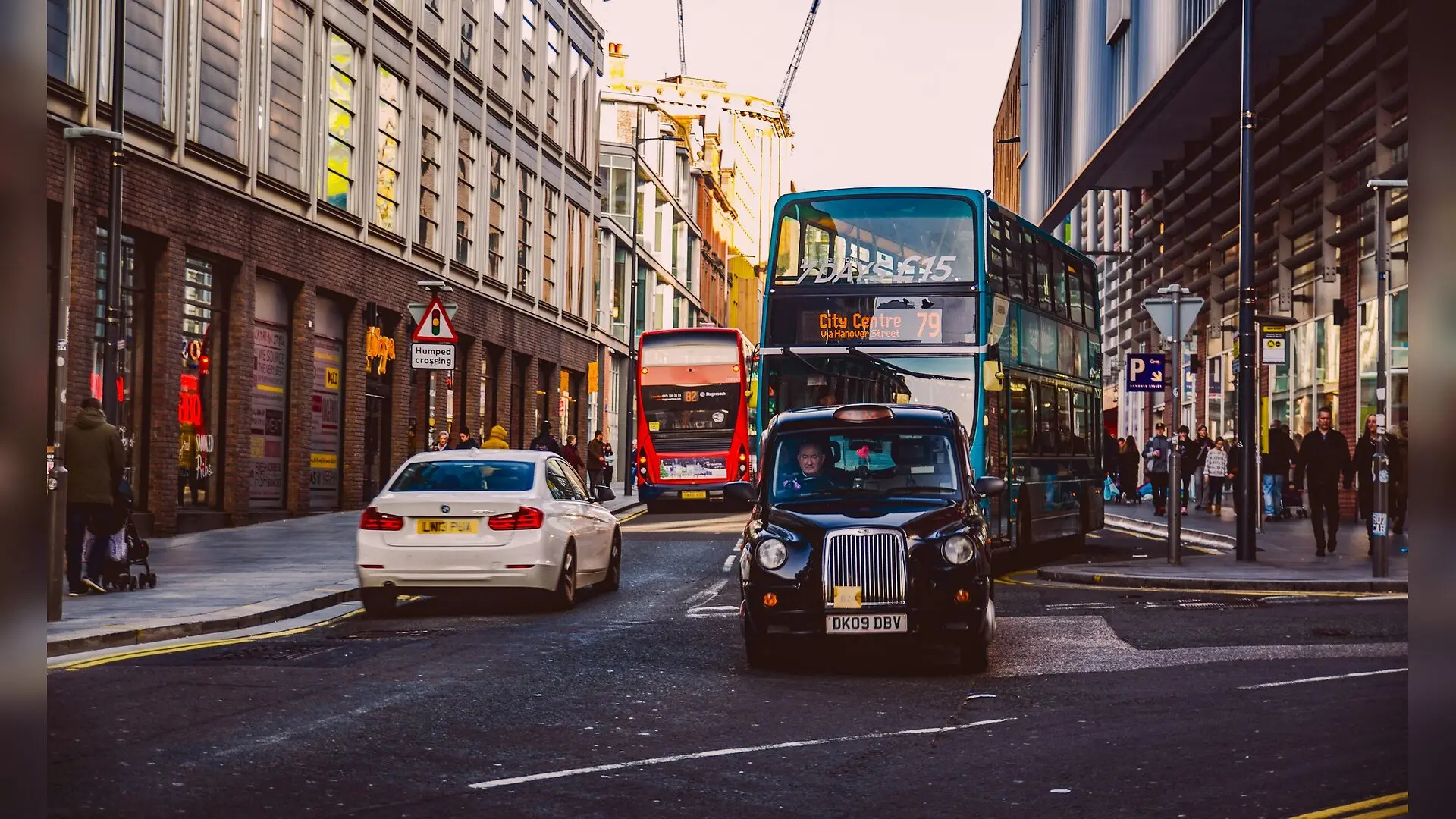
Converting regular road lanes into dedicated bicycle paths on a busy urban corridor in Liverpool cuts average travel times by roughly 10 percent while clearing up major vehicle bottlenecks. The traffic simulation study, published in Re-Generation in Transport, demonstrates that reallocating space for active travel can simultaneously boost vehicle speeds and reduce carbon emissions on crowded city streets.
How Traffic Flow Surged Despite Narrower Car Lanes
Researchers Jed Sarjant, Charly, and Anna focused their computer modeling on Dale Street, which serves as a vital one-way route connecting the financial district in Liverpool to major landmarks. This thoroughfare typically experiences heavy congestion during peak hours, accommodating a mix of passenger cars, buses, heavy goods vehicles, and light commercial vans, with motor vehicles historically occupying the entire right-of-way. Using the VISSIM traffic microsimulation platform, the team evaluated the baseline conditions against a revised scenario featuring physical bike lanes.
To design the layout, planners reallocated space previously occupied by on-street parking spots, loading zones, and central concrete islands. This provided 1.8-meter wide bicycle tracks on single-lane sections at the eastern end and a 2.0-meter wide lane along the main two-way portion without shrinking the space reserved for motor vehicles. Signal timings were also adjusted so that bicycle signals cleared junctions two to three seconds ahead of general traffic.
Measuring the Environmental and Commuting Payoffs
When the simulation incorporated a projected 350 percent increase in cycling uptake alongside a 5 percent drop in car volume, overall network performance improved significantly. Average travel time across the corridor dropped from 69.25 seconds down to 62.56 seconds. At the same time, average vehicle speeds climbed 13 percent from 19.49 kilometers per hour to 21.94 kilometers per hour, total vehicle delay plunged 39 percent, and stop frequency fell by 25 percent.
The transition of commuters from motor vehicles to bicycles also yielded measurable environmental benefits. The reduction in car mileage translated to saving approximately 38 kilometers of car travel daily during peak hour. Based on standard UK carbon emission factors for passenger cars, this amounts to a daily saving of 5 kilograms of carbon dioxide, totaling roughly 1.8 metric tons of carbon dioxide prevented annually along this single corridor.
Potential Bottlenecks and Questions for Future Urban Planning
While the computer models point to widespread efficiency gains, the authors acknowledged several methodological limitations. The simulation assumed an ambitious rise in cycling participation, though the team noted that cycling levels in Liverpool have already grown by 800 percent over the past 23 years. Furthermore, the model focused strictly on Dale Street and its immediate feeder roads, leaving potential spillover congestion on parallel unmodeled streets as an open question for subsequent research.
The research was published in Re-Generation in Transport on January 1, 2027.
This article has been fact checked for accuracy, with information verified against reputable sources. Learn more about us and our editorial process.
Last reviewed on .
Article history
- Latest version
Reference(s)
- Sarjant, Jed., et al. “Evaluating the Effectiveness of Dedicated Cycle Lanes for Sustainable Transport in Urban City Centres Using Microsimulation.” Lecture Notes in Mobility, October 29, 2026, pp. 577-584. Springer Nature Switzerland, doi: 10.1007/978-3-032-37192-8_69. <https://doi.org/10.1007/978-3-032-37192-8_69>.
Cite this page:
- Posted by Raj Joshi