China Terrestrial Taxa Reveal Multidimensional Biodiversity Mismatches That Challenge Traditional Conservation Priorities
Mapping six biodiversity dimensions across nearly 400,000 grid cells shows that genetic diversity follows different geographic rules than species richness.
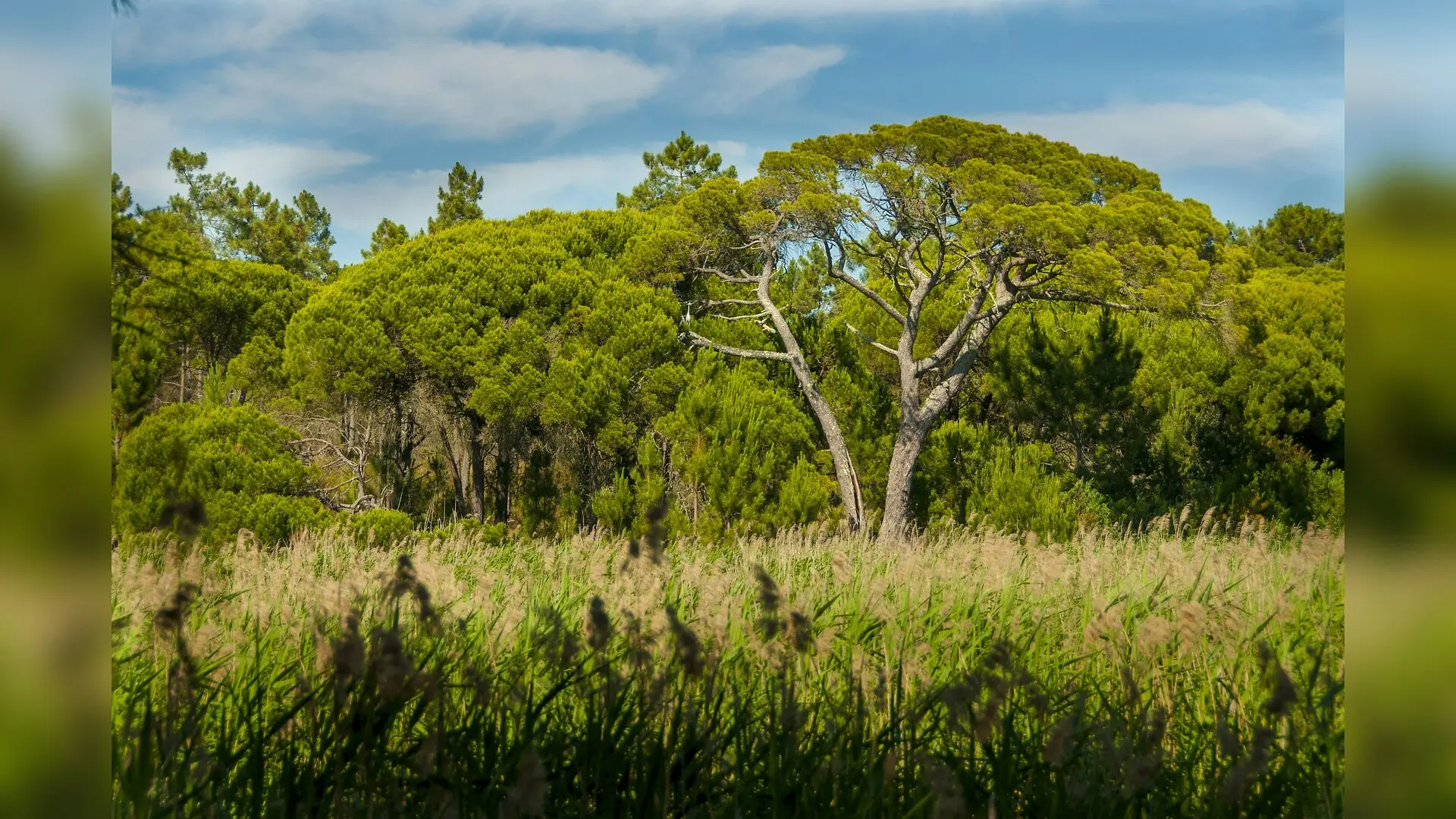
China harbors 28,894 insect species, 15,963 vascular plant species, and 2,105 terrestrial vertebrate species, revealing major mismatches in how different dimensions of biodiversity align across the landscape. Researchers mapped six biodiversity metrics across 379,676 grid cells to show that while taxonomic and phylogenetic diversity are tightly coupled, genetic diversity often follows entirely different geographic rules.
Understanding where species live is essential for conservation, but traditional counts of species richness ignore evolutionary history and genetic variation. Taxonomic diversity simply counts species equivalents, whereas phylogenetic diversity measures the evolutionary branch lengths connecting them, and genetic diversity reflects the molecular variation within populations. Weighted endemism and phylogenetic endemism highlight regions rich in geographically restricted lineages, while genetic endemism measures where unique DNA variants concentrate. For years, major conservation initiatives have protected habitats based solely on species richness, assuming that protecting one group or dimension automatically safeguards all others.
How Plants and Insects Share Spatial Patterns
The analysis revealed strong spatial coupling between vascular plants and insects across China, with correlation coefficients ranging from 0.77 to 0.86. Terrestrial vertebrates showed weaker congruence with both plants and insects, pointing to distinct physiological requirements and evolutionary histories among major taxonomic groups. This widespread study was published in Advanced Science, providing an unprecedented view of large-scale biogeography. Among vertebrates, birds displayed the highest spatial correlation with overall vertebrate patterns, while mammals showed the lowest.
Why Genetic Diversity Defies Standard Expectations
While taxonomic and phylogenetic measures aligned closely within individual taxa, genetic diversity and genetic endemism exhibited decoupled patterns. The correlation between genetic diversity and genetic endemism reached 0.68 in terrestrial vertebrates, but dropped to 0.33 in vascular plants and an insignificant 0.09 in insects. Genetic metrics also displayed much higher unexplained variation in statistical models, suggesting that localized evolutionary pressures and historical isolation shape gene pools differently than broad-scale species richness.
What Drives Large-Scale Biodiversity Patterns
Hierarchical partitioning of environmental factors showed that contemporary climate variables, including energy availability, water availability, and climatic seasonality, serve as the primary independent drivers of taxonomic and phylogenetic diversity. These climatic factors accounted for up to 42.1% of explained variation in vascular plants and 35.3% in insects. In contrast, human activity and historical climate stability made relatively small independent contributions in models of widespread species.
Where New Conservation Hotspots Emerge
In addition to confirming known hotspots in the Hengduan Mountain Range and southwestern Yunnan, the multi-metric mapping identified previously overlooked priority areas. Regions such as the Zhejiang-Fujian Hill and the Middle-Lower Yangtze Plain Mountains emerged as important centers for taxonomic and phylogenetic diversity, while northern and western mountain systems concentrated unique genetic endemism. These findings indicate that conservation strategies focused exclusively on traditional richness hotspots risk leaving critical evolutionary lineages unprotected.
The research was published in Advanced science (Weinheim, Baden-Wurttemberg, Germany) on November 25, 2026.
This article has been fact checked for accuracy, with information verified against reputable sources. Learn more about us and our editorial process.
Last reviewed on .
Article history
- Latest version
Reference(s)
- Liao, Ziyan., et al. “Spatial Synchronization and Determinants of Multidimensional Biodiversity and Endemism Across Multiple Taxa in China.” Advanced Science, November 25, 2026 Wiley, doi: 10.1002/advs.78914. <https://doi.org/10.1002/advs.78914>.
Cite this page:
- Posted by Linda Wilson