Hidden Avian Malaria Parasite Found Infecting Diverse Thai Birds With Strict Geographic Boundaries
Genetic analysis reveals a parasite that jumps freely between bird families but stays rigidly locked to specific provinces.
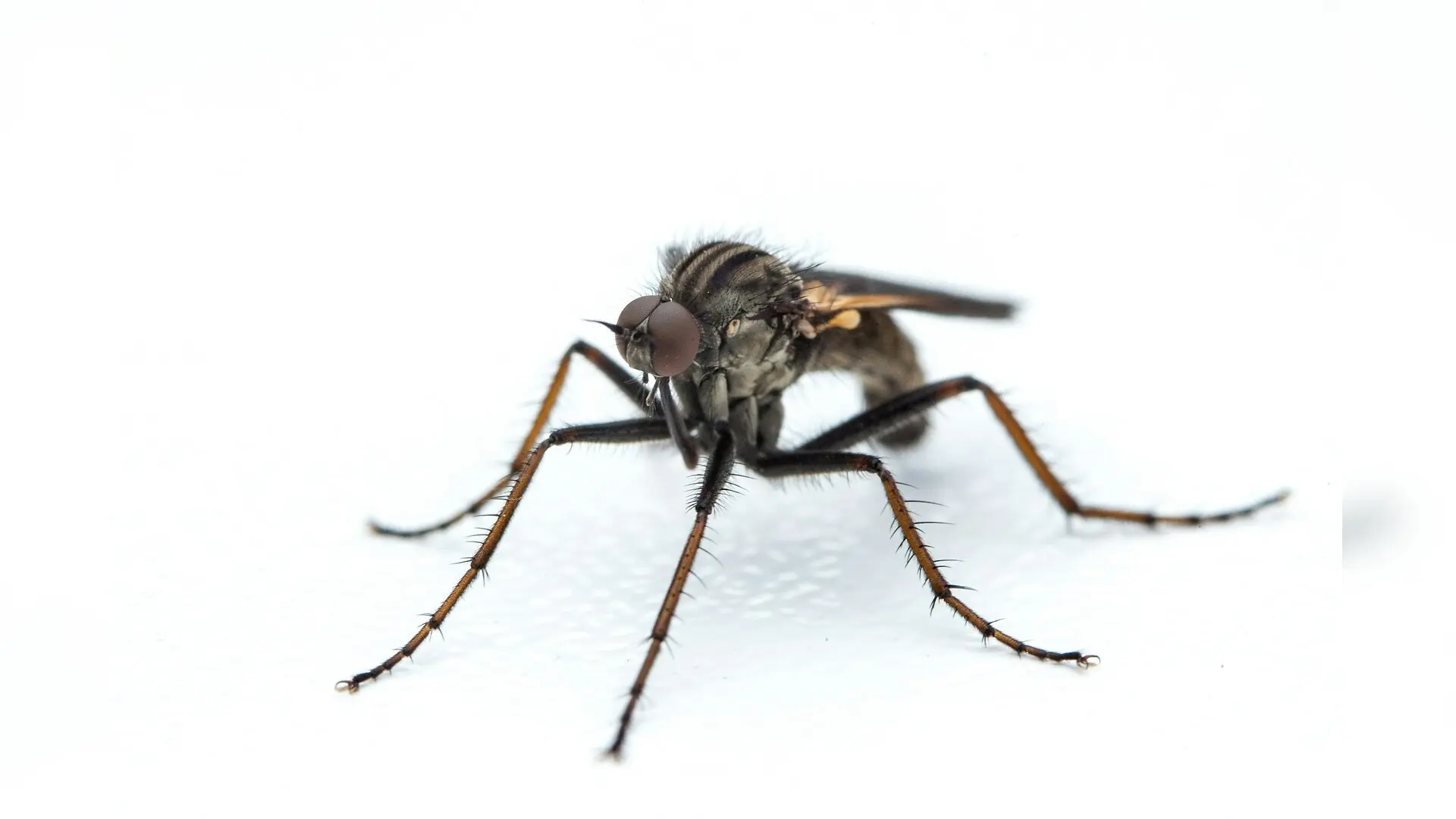
A cryptic avian malaria parasite infecting birds across Thailand reveals a surprising evolutionary contradiction, operating as a broad host generalist while remaining rigidly locked to specific geographic regions. Researchers analyzing mitochondrial DNA found that while the pathogen jumps between wildly different bird families, local populations stay strictly isolated from one another across short distances.
The study, published in Ecology and Evolution, was led by Phirom Prompiram and colleagues at Mahidol University in Thailand. They investigated Plasmodium collidatum, a blood parasite belonging to a subgenus of single-celled organisms that target birds. Previous work showed that experimental infections of this lineage can cause up to twenty-five percent mortality and damage critical organs in vulnerable species, yet the parasite often goes undetected due to its tiny size in blood smears.
How Does One Parasite Infect Such Different Birds?
To untangle the evolutionary history of the pathogen, the researchers examined archived blood samples collected from wild and captive birds between 2018 and 2025. The dataset included five complete mitochondrial genomes spanning three distinct provinces in Thailand. These samples came from five diverse bird hosts, including the kalij pheasant, Siamese fireback, white-breasted waterhen, spotted dove, and feral pigeon.
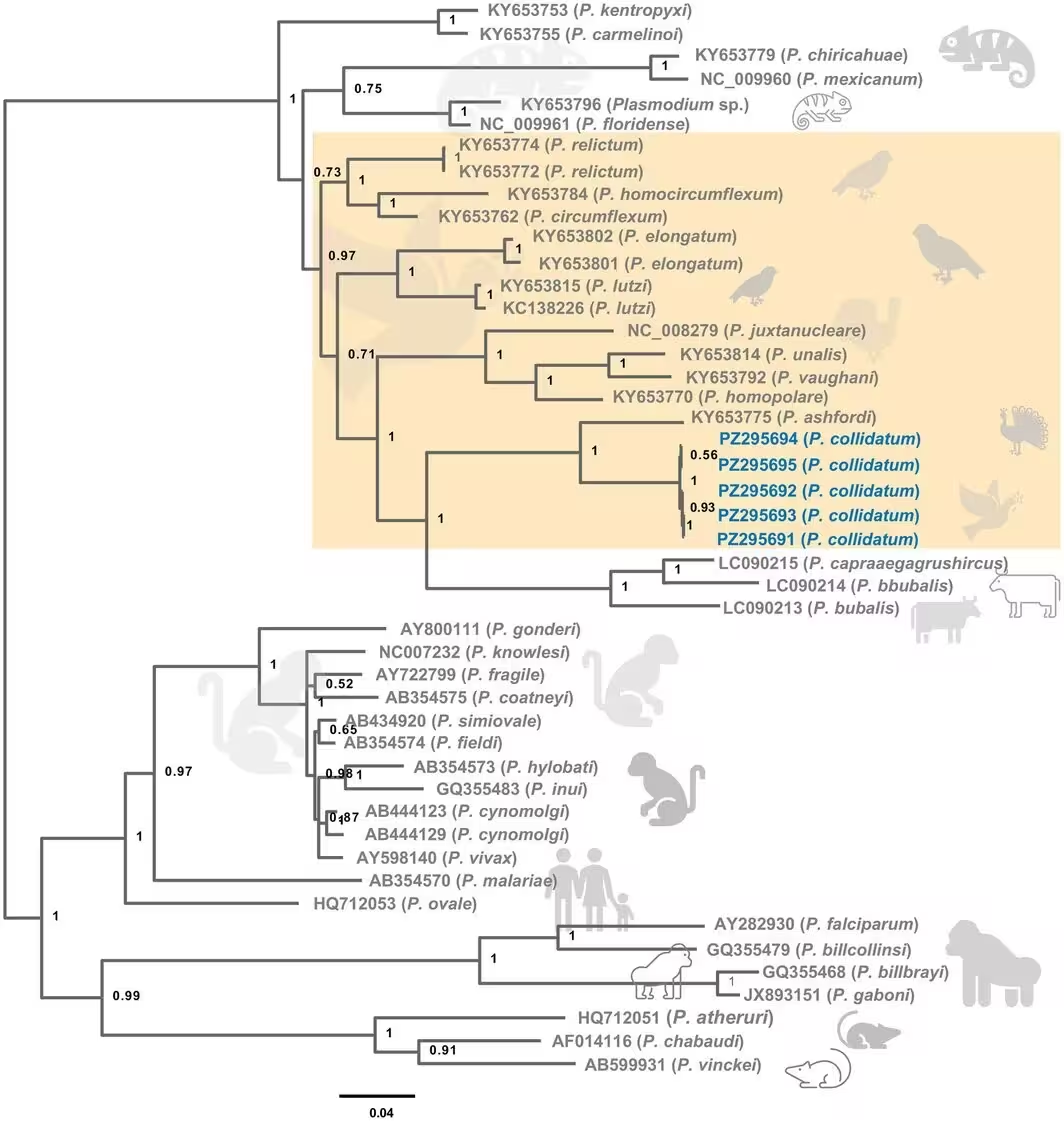
By sequencing a concatenated dataset of three protein-coding mitochondrial genes spanning thirty-three hundred base pairs, the team built a detailed family tree. The phylogenetic reconstruction confirmed that the Thai isolates form a robust monophyletic clade, meaning they share a single common ancestor. This group showed a divergence of about five percent from its closest known sister taxon, cementing its distinct taxonomic identity.
Why Are Regional Gene Pools Separated by Provincial Boundaries?
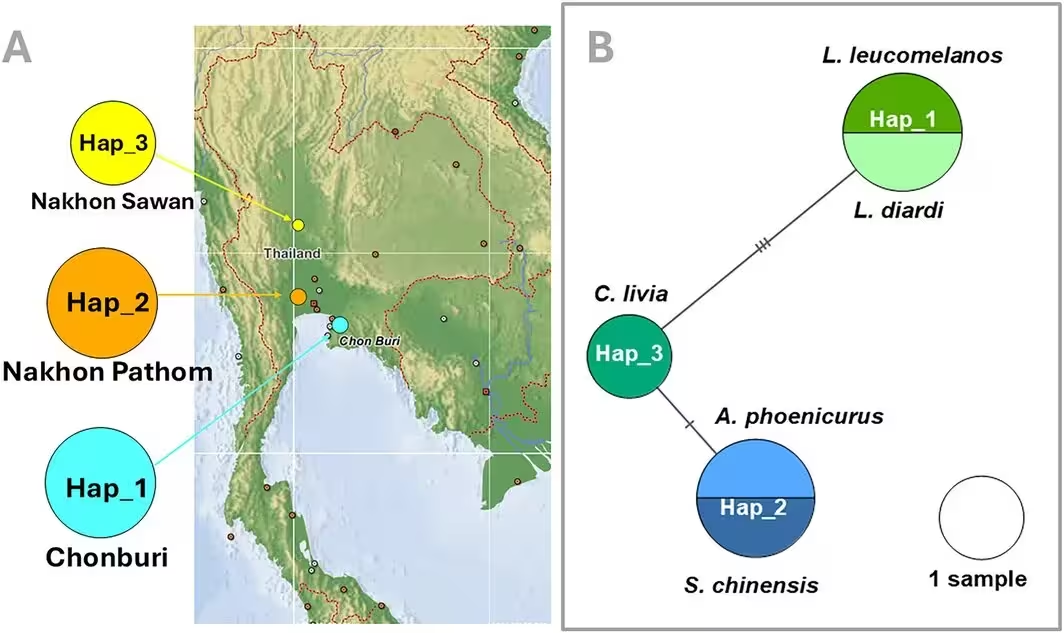
When the researchers mapped out the genetic variations using a network analysis, they discovered three distinct haplotypes, which are groups of genes inherited together from a single parent. Each haplotype corresponded strictly to a specific geographic province. Hap_1 was found exclusively in Chonburi Province in the east, Hap_2 in Nakhon Pathom Province in the center, and Hap_3 in Nakhon Sawan Province in the north.
This geographic partitioning occurred despite the fact that the parasite infects completely different bird orders, such as gamebirds, doves, and rails. The authors suggest that transmission is constrained not by whether a bird species is suitable, but by physical distance and localized vector communities. Because mosquitoes carry the parasite, local breeding habitats and microclimates likely restrict the movement of infected insects between provinces.
What Does Genetic Diversity Reveal About Demographic Stability?
The genetic analysis revealed high haplotype diversity paired with very low nucleotide diversity, alongside non-significant neutrality tests. This specific combination points to a state of neutral equilibrium, meaning the parasite population has maintained long-term stability without undergoing massive booms or severe population crashes. The team notes that the modest sample size of five isolates means these metrics serve as an initial baseline rather than definitive proof of population-wide stability.
Understanding these dynamics provides essential data for wildlife conservation. If environmental shifts or climate change alter local mosquito habits, this stable endemic balance could be disrupted, posing new risks to immunologically naive bird populations across Southeast Asia.
The research was published in Ecology and evolution on November 23, 2026.
This article has been fact checked for accuracy, with information verified against reputable sources. Learn more about us and our editorial process.
Last reviewed on .
Article history
- Latest version
Reference(s)
- Prompiram, Phirom., et al. “Mitogenomic Evidence of Host Plasticity and Strict Phylogeographic Restriction in the Avian Malaria Parasite Plasmodium collidatum.” Ecology and Evolution, vol. 16, no. 11, November 23, 2026 Wiley, doi: 10.1002/ece3.74821. <https://doi.org/10.1002/ece3.74821>.
Cite this page:
- Posted by Linda Wilson