Soursop Seedlings Maintain Leaf Count Under Salt Stress When Treated With Foliar Sprays, But Growth Remains Impaired
Salicylic acid and proline increased leaf retention by up to 24 percent in salt-stressed soursop trees, yet failed to restore overall biomass or photosynthesis.
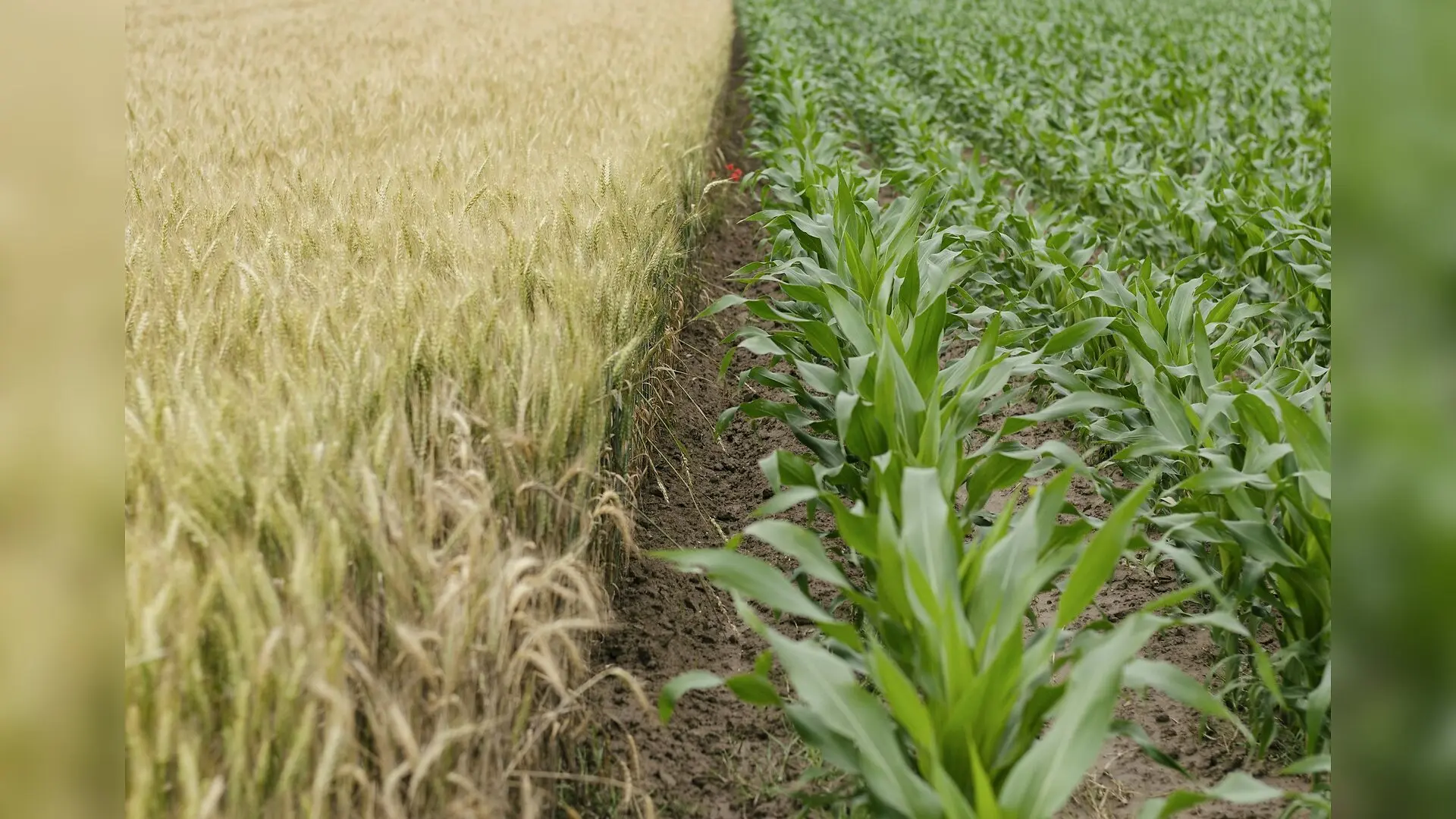
Researchers at the Federal University of Recôncavo da Bahia discovered that spraying soursop seedlings with salicylic acid and proline preserved leaf numbers by up to 24 percent under salt stress, but failed to restore overall plant growth or gas exchange.
Soil and water salinity present major challenges for crop production in arid and semiarid agricultural regions across the globe. When irrigation water contains high levels of dissolved salts, crops typically experience osmotic stress followed by toxic ion accumulation, which severely hinders development during early growth stages. To counteract these effects, agricultural scientists often test plant growth regulators and amino acids as protective foliar treatments. Toshik Iarley da Silva and colleagues evaluated whether applying salicylic acid and proline, either alone or in combination, could mitigate salt damage in young fruit trees.
The research team conducted a 125-day greenhouse experiment using soursop seedlings of the cultivar Morada Nova. The study, published in Plants, tested two levels of sodium chloride in the irrigation water, specifically 0 millimolar and 50 millimolar. These salinity treatments were combined with four different foliar spray treatments consisting of water, 1.5 millimolar salicylic acid, 10 millimolar proline, or a combination of both compounds, delivered through 5 weekly applications.
How Salt Stress Impacts Soursop Growth
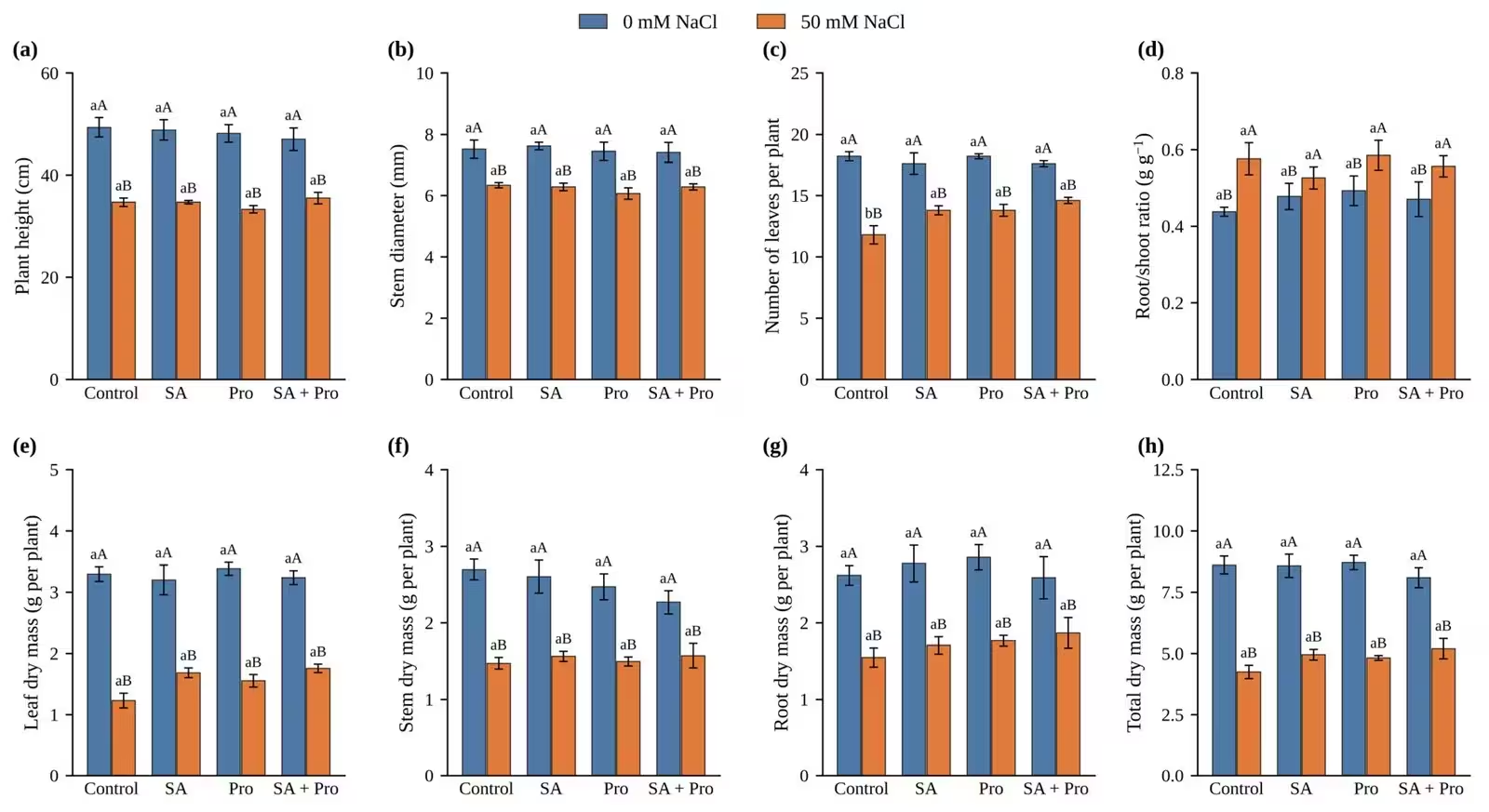
Irrigation with 50 millimolar sodium chloride reduced total dry mass by 36 to 51 percent across the experimental groups. Salinized plants also exhibited height reductions of 25 to 31 percent and stem diameter decreases of 15 to 19 percent compared to non-salinized controls. Leaf tissue proved particularly vulnerable, experiencing dry mass losses between 46 and 63 percent under saline conditions. This disproportionate leaf loss caused an increase in the root-to-shoot biomass ratio as the plants prioritized root preservation over canopy expansion.
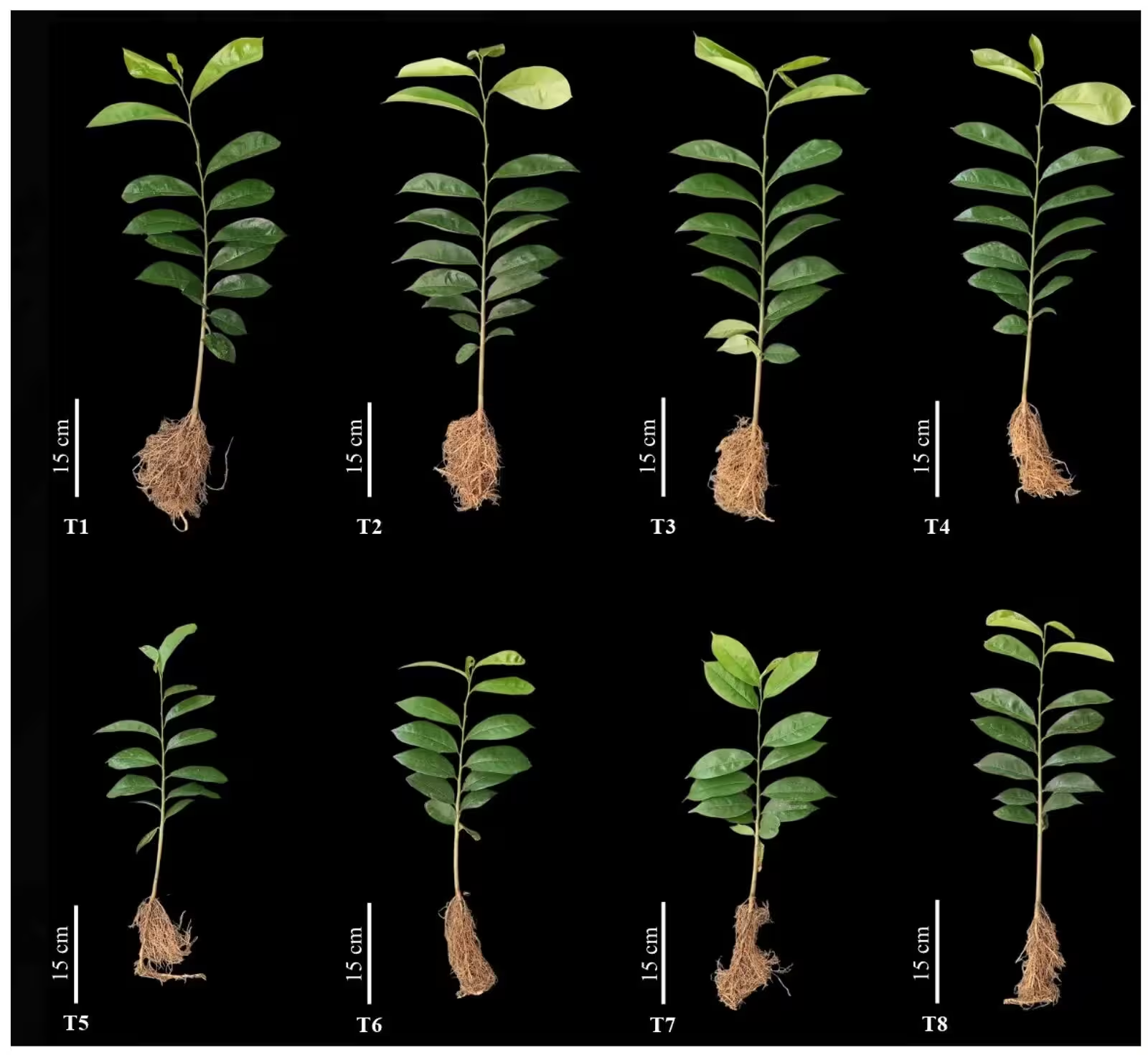
Gas exchange measurements revealed that salt stress severely compromised photosynthetic capacity. Net carbon dioxide assimilation dropped by 53 to 73 percent, while stomatal conductance fell by 64 to 79 percent. These declines demonstrated that physical stomatal closure heavily restricted carbon dioxide intake during the osmotic phase of the stress response.
Do Foliar Sprays Protect Plant Tissues
Under saline conditions, all three foliar treatments successfully increased leaf retention by 17 to 24 percent compared to unsprayed control plants. The combination of salicylic acid and proline raised the salt tolerance index for total dry mass from 49 percent up to 64 percent. However, the foliar applications did not restore overall biomass production, net photosynthesis, or transpiration rates back to normal non-stressed levels.
Analysis of leaf ion content showed that salinity increased sodium and chloride accumulation while decreasing beneficial potassium levels by 41 to 56 percent. Surprisingly, the foliar sprays did not lower leaf sodium concentrations as initially hypothesized. Instead, treated plants showed higher leaf sodium levels regardless of whether they received saline irrigation, suggesting that the sprays did not prevent toxic ion uptake under these experimental conditions.
Why Plant Recovery Remained Limited
The absence of full recovery highlights the complex nature of salinity damage in woody fruit crops. While the foliar sprays delayed leaf shedding and preserved foliage counts, they could not overcome the underlying ionic imbalance and stomatal limitations caused by the saline water. The authors noted that higher concentrations of growth regulators can sometimes induce inhibitory oxidative stress or fail to trigger synergistic responses depending on the plant species and developmental stage.
Further investigations will be required to determine whether adjusting spray concentrations, altering application timing, or implementing water-management practices such as blending saline and fresh water can achieve better protection. Nursery operators currently cannot rely on these specific foliar treatments alone to render high-salinity irrigation viable for commercial soursop production.
The research was published in Plants (Basel, Switzerland) on November 20, 2026.
This article has been fact checked for accuracy, with information verified against reputable sources. Learn more about us and our editorial process.
Last reviewed on .
Article history
- Latest version
Reference(s)
- Bedra, Beatriz Meurer., et al. “Foliar Salicylic Acid and Proline Partly Maintain Leaf Number and Dry Mass but Not Gas Exchange or Ion Balance in Salt-Stressed Soursop (Annona muricata L.) Seedlings.” Plants, vol. 15, no. 22, November 20, 2026, pp. 3645 MDPI AG, doi: 10.3390/plants15223645. <https://doi.org/10.3390/plants15223645>.
Cite this page:
- Posted by Michael Ellison