Amazonian Illegal Copper Mining Leaves Toxic Legacy of Reactive Metal Hazards
Analysis of mining residues in the Brazilian Amazon reveals that uncontained tailings release mobile copper fractions capable of driving child health hazards at local hotspots.
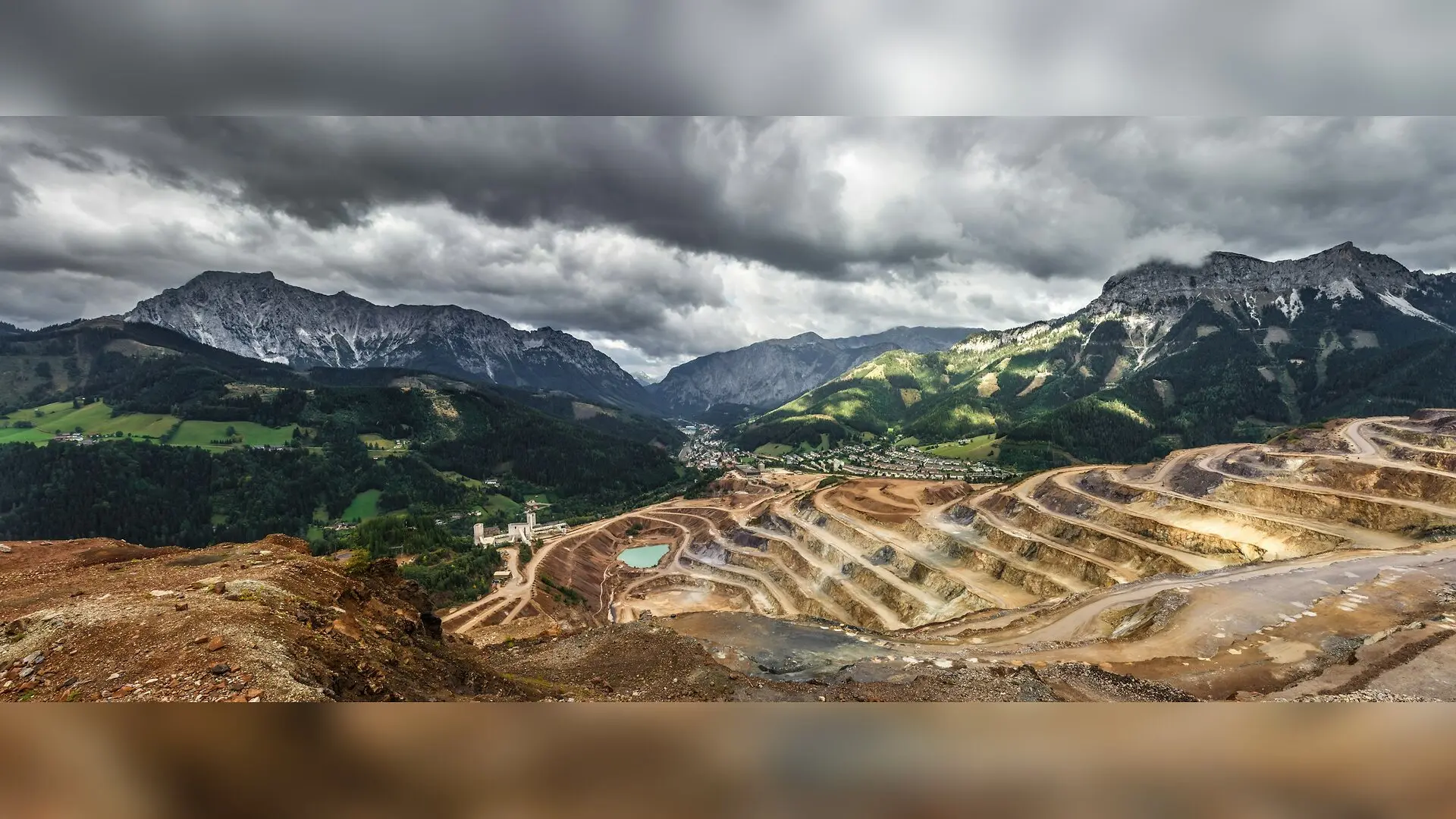
Illegal copper and gold mining operations in the Brazilian Amazon have expanded drastically over the past four decades, leaving behind uncontained waste residues that alter regional landscapes and pose environmental risks. A team of researchers led by Milton M. J. C. de Figueiredo investigated one hundred eleven tailings residues and sixty-five adjacent native soils across thirty-nine illegal mining sites in the Verde River and Araras Stream watersheds of southeastern Pará, revealing that copper behaves as a major mobility and toxicity driver in these disturbed environments. The investigation is published in Environmental geochemistry and health, highlighting the hidden chemical legacy left behind when unauthorized mineral extraction outpaces regulatory oversight.
How Do Illegal Mining Tailings Alter Regional Geochemistry?
The study area sits within the Carajás Mineral Province, an internationally recognized mineral district dominated by iron oxide-copper-gold geological systems. Researchers collected soil and residue samples between 2023 and 2024 to evaluate aqua-regia extractable element concentrations, operational binding pools, and physiological bioaccessibility. While mercury typically commands public attention due to its direct use in small-scale gold recovery, the findings indicate that base metals such as copper and nickel reach levels that frequently exceed industrial guideline values established by the Brazilian National Environment Council.
Laboratory analyses revealed that median copper concentrations in tailings residues reached about five hundred twenty-seven milligrams per kilogram, compared to two hundred fifty-three milligrams per kilogram in adjacent native soils. Nickel concentrations similarly elevated in the waste materials, registering a median of one hundred one milligrams per kilogram versus forty milligrams per kilogram in untouched soils. The physical fragmentation of ore during extraction exposes sulfide minerals to weathering, triggering oxidative dissolution that transfers copper into more reactive and mobile chemical fractions.
Which Metal Fractions Drive Potential Health Risks?
Total metal concentrations alone do not determine true environmental danger, prompting the authors to deploy sequential extraction techniques and simulated physiological fluid tests. Sequential extractions separated the elements into acid-soluble, reducible, oxidizable, and residual pools to identify how tightly the metals are bound to the soil matrix. In the tailings residues, copper showed significantly higher proportions in the mobile acid-soluble and reducible fractions than it did in natural soils, indicating a greater readiness to dissolve under changing environmental conditions.
Simulated gastrointestinal and pulmonary extraction tests further demonstrated that a fraction of this copper dissolves easily in body fluids. When the researchers translated these bioaccessible concentrations into human health screening calculations, child hazard indices exceeded the safety threshold of one at three specific mining hotspots. These elevated hazard values were driven almost entirely by copper ingestion rather than inhalation, with maximum hazard indices reaching up to ten point twenty-four in the intestinal phase simulation.
What Limits This Environmental Assessment?
The authors noted important limitations in their screening-level approach, emphasizing that the health risk estimates rely on hypothetical residential scenarios rather than direct physiological measurements of local residents. Furthermore, the elevated background concentrations observed in native soils stem from natural hydrothermal alteration halos rather than human activity alone, demonstrating that geological inheritance plays a major role in the region’s baseline chemistry. The multivariate analyses also showed substantial overlap between tailings and native soils, pointing to a continuous geochemical gradient rather than a complete compositional split.
What Are the Next Steps for Amazonian Environmental Management?
The findings point to the urgent need for targeted remediation strategies that prioritize uncontained tailings hotspots over broad regional monitoring. Because illegal mining residues lack the engineered containment liners, leachate collection systems, and stabilization protocols of formal industrial operations, they remain loose and chemically active. The authors conclude that effective management must focus on stabilizing fine-grained residues, suppressing dust resuspension, and restricting access around active or abandoned extraction sites to protect vulnerable populations in the southeastern Amazon.
The research was published in Environmental geochemistry and health on November 24, 2026.
This article has been fact checked for accuracy, with information verified against reputable sources. Learn more about us and our editorial process.
Last reviewed on .
Article history
- Latest version
Reference(s)
- de Figueiredo, Mariana Maha Jana Costa., et al. “Bioaccessible copper hotspots and localized child hazard in illegal mining tailings of the Southeastern Amazon.” Environmental Geochemistry and Health, vol. 48, no. 18, November 24, 2026 Springer Science and Business Media LLC, doi: 10.1007/s10653-026-03583-0. <https://doi.org/10.1007/s10653-026-03583-0>.
Cite this page:
- Posted by Michael Ellison