Specialized Pressing Technique Stretches Stainless Steel 250 Percent But Triggers Hidden Corrosion
Processing stainless steel into an ultrafine grain structure unlocks extreme ductility at high temperatures, yet microscopic cavity formation leaves the metal vulnerable to chemical decay.
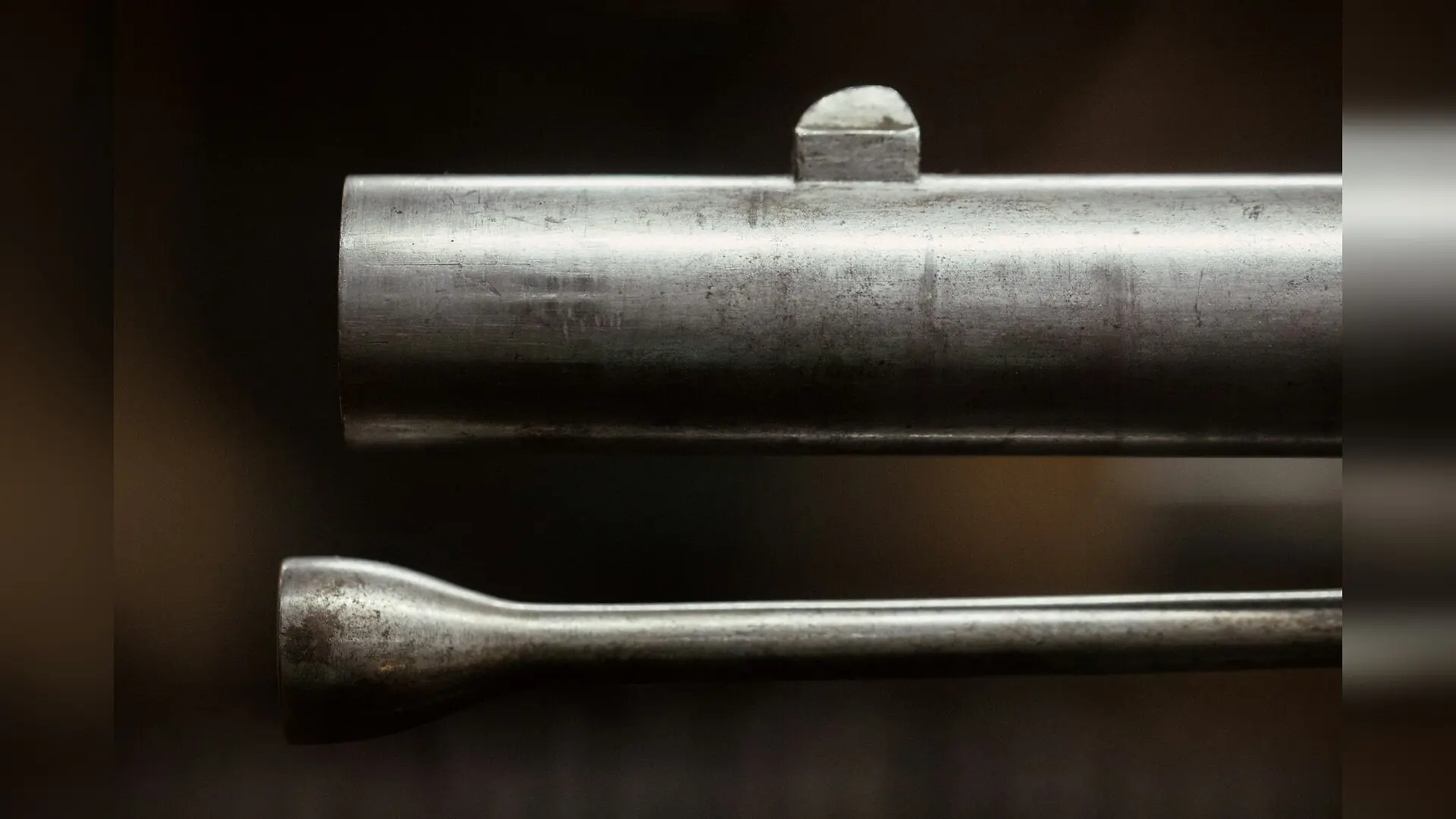
A specialized processing technique can stretch stainless steel to 250 percent of its original length, but the extreme heat required introduces a hidden corrosion vulnerability. Researchers discovered that while reshaping ultrafine-grained metal alloys at elevated temperatures unlocks remarkable ductility, it triggers microstructural changes that compromise resistance to internal decay.
The study, available as a preprint on arXiv, was led by A. V. Nokhrin and a team of materials scientists from Lobachevsky State University of Nizhny Novgorod in Russia. They investigated the mechanical performance and chemical stability of AISI 321L austenitic stainless steel after altering its internal architecture using a high-strain metalworking process known as Equal Channel Angular Pressing.
How Metal Architecture Changes Under Pressure
Stainless steel grades like AISI 321L are widely utilized in harsh industrial environments, including nuclear power engineering and petrochemical plants, where components face elevated temperatures and corrosive media. However, conventional coarse-grained versions of these alloys possess relatively low mechanical strength. To overcome this limitation, metallurgists apply severe plastic deformation to break down the internal grain structure into ultrafine dimensions.
During Equal Channel Angular Pressing, metal rods are forced through a die where two channels intersect at a 90-degree angle. By varying the processing temperature between 150 degrees Celsius and 450 degrees Celsius and repeating the pressing cycle up to four times, the researchers modified the degree of microstructural homogeneity. This mechanical pounding fragments the original grain boundaries and produces localized shear bands packed with martensite, a hard microstructural phase.
The Unexpected Trade-Off Between Stretch and Decay
When the team tested the tensile properties of the processed metal at high temperatures, they observed extreme superplastic behavior. The maximum elongation to failure reached approximately 250 percent when tested at 800 degrees Celsius. Mathematical modeling confirmed that this high-temperature deformation is primarily governed by power law creep rather than standard grain boundary sliding, driven by the refinement of delta-ferrite particles that normally block atomic movement.
However, corrosion resistance tests revealed a significant downside. Using the double loop electrochemical potentiodynamic reactivation method to measure susceptibility to intergranular corrosion, the authors found that superplastic deformation at 900 degrees Celsius caused the material’s corrosion vulnerability index to exceed critical safety thresholds. High-temperature heating accelerates the precipitation of brittle sigma-phase nanoparticles and promotes microscopic cavity formation, creating an enlarged internal surface area that invites chemical attack.
Balancing Strength and Durability for Future Manufacturing
The findings indicate that fabricating complex industrial shapes through warm superplastic stamping requires careful optimization. While keeping deformation temperatures around 700 to 750 degrees Celsius maintains a safer balance of mechanical hardness and corrosion resistance, pushing temperatures higher creates dangerous porosity.
The authors conclude that future manufacturing protocols must avoid excessive microstructural cavitation if these high-strength steels are to survive aggressive chemical environments. By refining processing routes to prevent the clustering of secondary phases, engineers may eventually harness superplasticity without sacrificing long-term material integrity.
The study was posted to the arXiv preprint server on November 17, 2026.
This article has been fact checked for accuracy, with information verified against reputable sources. Learn more about us and our editorial process.
Last reviewed on .
Article history
- Latest version
Reference(s)
- Nokhrin, A.. “Effect of superplastic deformation on the intergranular corrosion resistance of austenitic steel 321 with different types of UFG structure: A case of homogeneous and heterogeneous microstructure obtained by ECAP.” arXiv.org <http://arxiv.org/abs/2611.23183v1>.
Cite this page:
- Posted by Anjali Singh