University Researchers Track 120 Young Adults In 2-Year Dairy Trial To See If Milk Or Yogurt Strengthens Bones
A Canadian clinical trial investigates whether daily milk or yogurt supplementation can improve bone density and reshape the gut microbiome in young adults.
University of Saskatchewan researchers launched a rigorous 2-year clinical trial involving 120 young adults to test whether daily consumption of milk or yogurt can strengthen bones and reshape the gut microbiome before peak skeletal mass declines.
Osteoporosis remains a major public health challenge globally, accounting for millions of fractures every year. While the condition is typically diagnosed in older individuals, its roots lie in early adulthood when the human skeleton stops growing and reaches maximum density. Modest gains in bone mineral content during this formative window can significantly lower fracture risks later in life. However, population surveys show that ordinary dairy consumption has declined steadily over the past decade, leaving many young people with suboptimal calcium intakes.
How Do Fermented and Nonfermented Dairy Products Affect Human Bone Density?
To investigate these effects, the research team designed a prospective, randomized, 3-arm controlled trial that follows participants aged 19 to 30 years over an extended period. The study protocol was published in JMIR Research Protocols, detailing how participants were allocated in equal proportions to receive either nonfermented milk, fermented yogurt, or no dietary intervention as a control group.
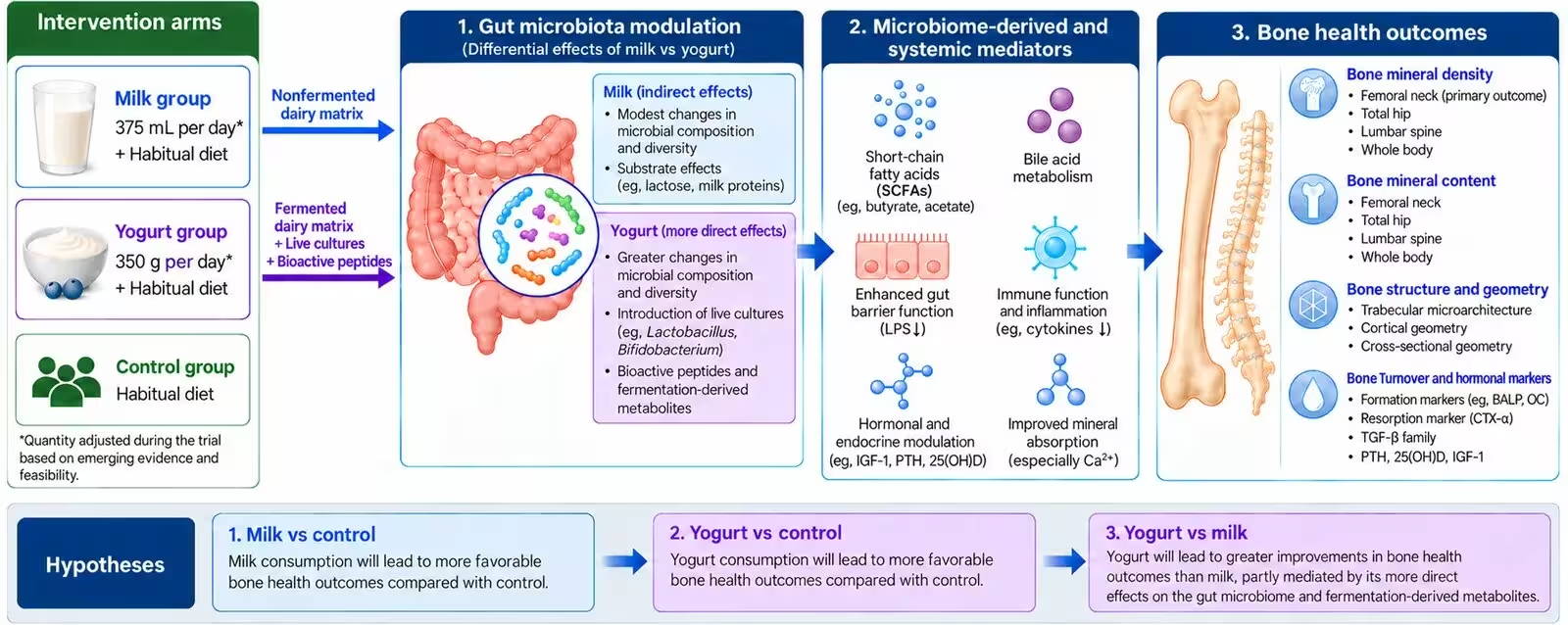
Both dairy interventions provide roughly 500 mg of calcium per day, matching specific nutritional guidelines. Participants in the yogurt group receive fermented dairy, which contains live bacterial cultures and modified protein structures that could influence digestion and metabolic signaling far beyond simple calcium delivery.
What Role Does the Gut Microbiome Play in Human Skeletal Strength?
Scientists are paying increasing attention to the gut-bone axis, a conceptual framework linking intestinal microbes to immune function and bone remodeling. Fermented foods like yogurt introduce live microorganisms that may generate short-chain fatty acids, potentially enhancing mineral absorption and altering systemic inflammation. By analyzing stool samples through bacterial sequencing alongside advanced bone scans, the investigators hope to uncover mechanisms that traditional nutrient models miss.
Body composition also plays a vital role in skeletal health. Lean muscle tissue exerts mechanical loading forces that stimulate bone growth, whereas excess visceral fat can release inflammatory cytokines that accelerate bone resorption. The trial tracks whole-body composition changes using dual-energy X-ray absorptiometry to ensure that dairy supplementation supports lean mass without driving unwanted increases in fat mass.
What Specific Clinical Measurements Track Skeletal Microarchitecture?
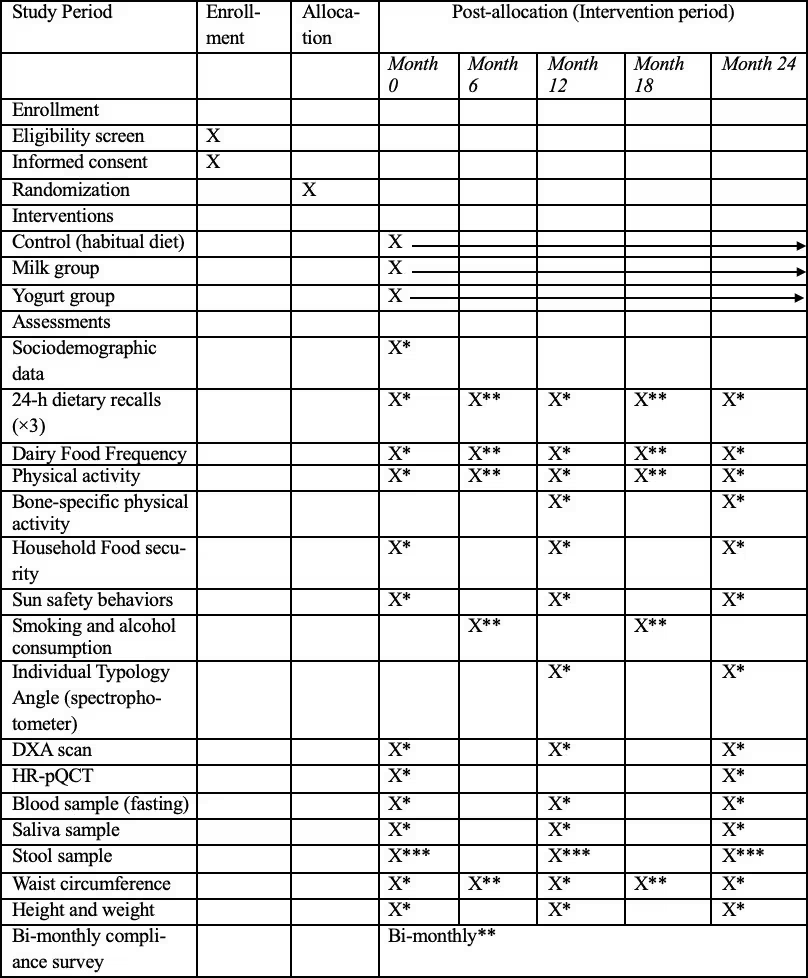
The primary clinical endpoint centers on changes in femoral neck bone mineral density, a key predictor of future osteoporotic fractures. Researchers are measuring this site using specialized dual-energy X-ray absorptiometry scans at baseline, month 12, and month 24. Secondary evaluations examine the lumbar spine, total hip, and whole-body mineral content.
Beyond standard density measurements, the study uses high-resolution peripheral quantitative computed tomography to image the microarchitecture of the distal radius and distal tibia. This advanced imaging technology provides detailed 3D maps of trabecular and cortical bone compartments, allowing scientists to detect subtle shifts in structural geometry that standard scans cannot resolve.
What Operational Adjustments Were Made During the Trial?
Participant retention and product tolerance prompted several protocol modifications as the project progressed. Early feedback revealed that some individuals struggled to consume the initial daily dose of 350 g of yogurt. To improve long-term adherence and maintain equal dairy exposure across arms, the research team reduced the daily yogurt dose to 250 g and adjusted the milk portion to 250 mL.
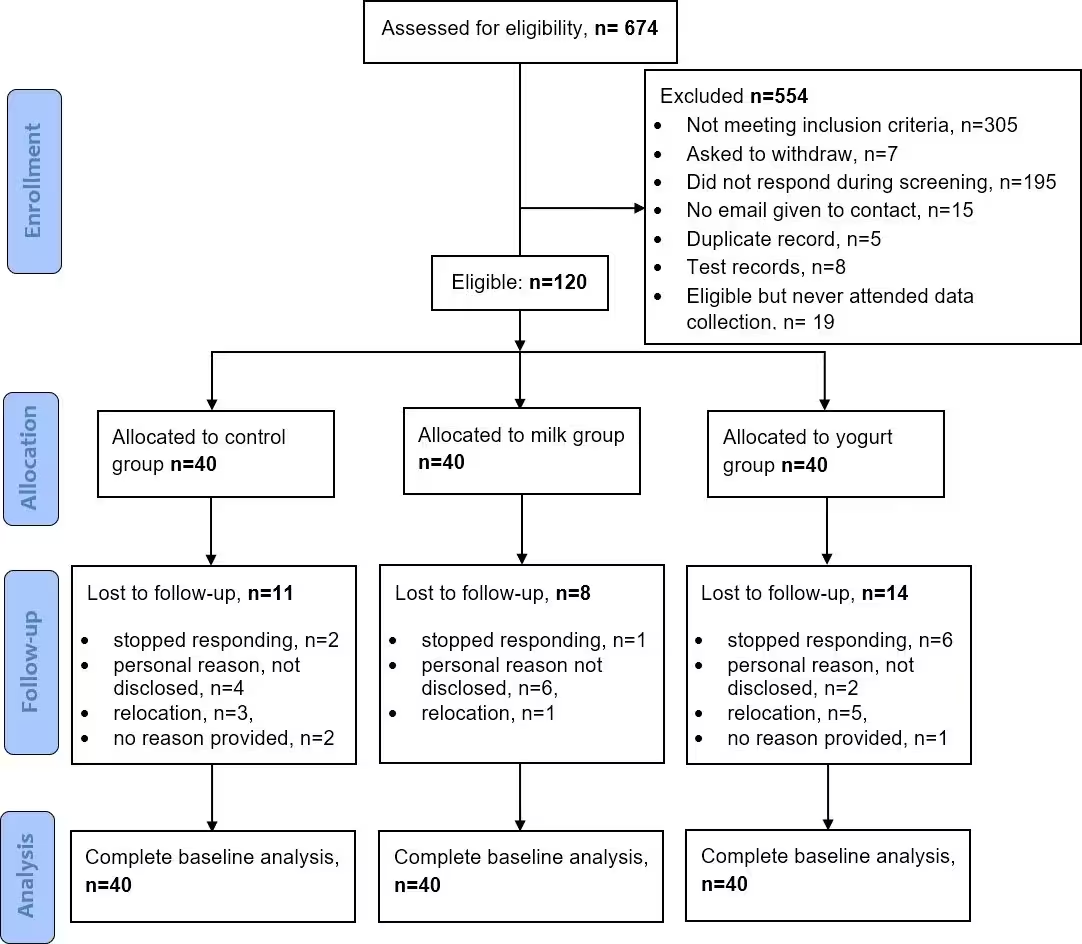
The investigators also expanded the initial screening criteria to include individuals with habitual calcium intakes up to 1,500 mg per day, up from the original cutoff of 800 mg. These adjustments, approved by the institutional research ethics board, helped secure a robust sample size of 120 participants despite normal rates of attrition.
The research was published in JMIR research protocols on November 25, 2026.
This article has been fact checked for accuracy, with information verified against reputable sources. Learn more about us and our editorial process.
Last reviewed on .
Article history
- Latest version
Reference(s)
- Uzair, Sidra Aftab., et al. “Effects of Milk or Yogurt Supplementation on Bone Health, Body Composition, and Gut Microbiota in Canadian Young Adults: Protocol for a Three-Arm Parallel-Group Randomized Controlled Trial.” JMIR Research Protocols, vol. 15, November 25, 2026, pp. e101497-e101497. JMIR Publications Inc., doi: 10.2196/101497. <https://doi.org/10.2196/101497>.
Cite this page:
- Posted by Robert Brown