Can You Actually Travel Through Time By Moving Faster Than Light
Can faster-than-light travel really send us into the past? We examine the science behind warp drives and wormholes to separate fact from speculation.
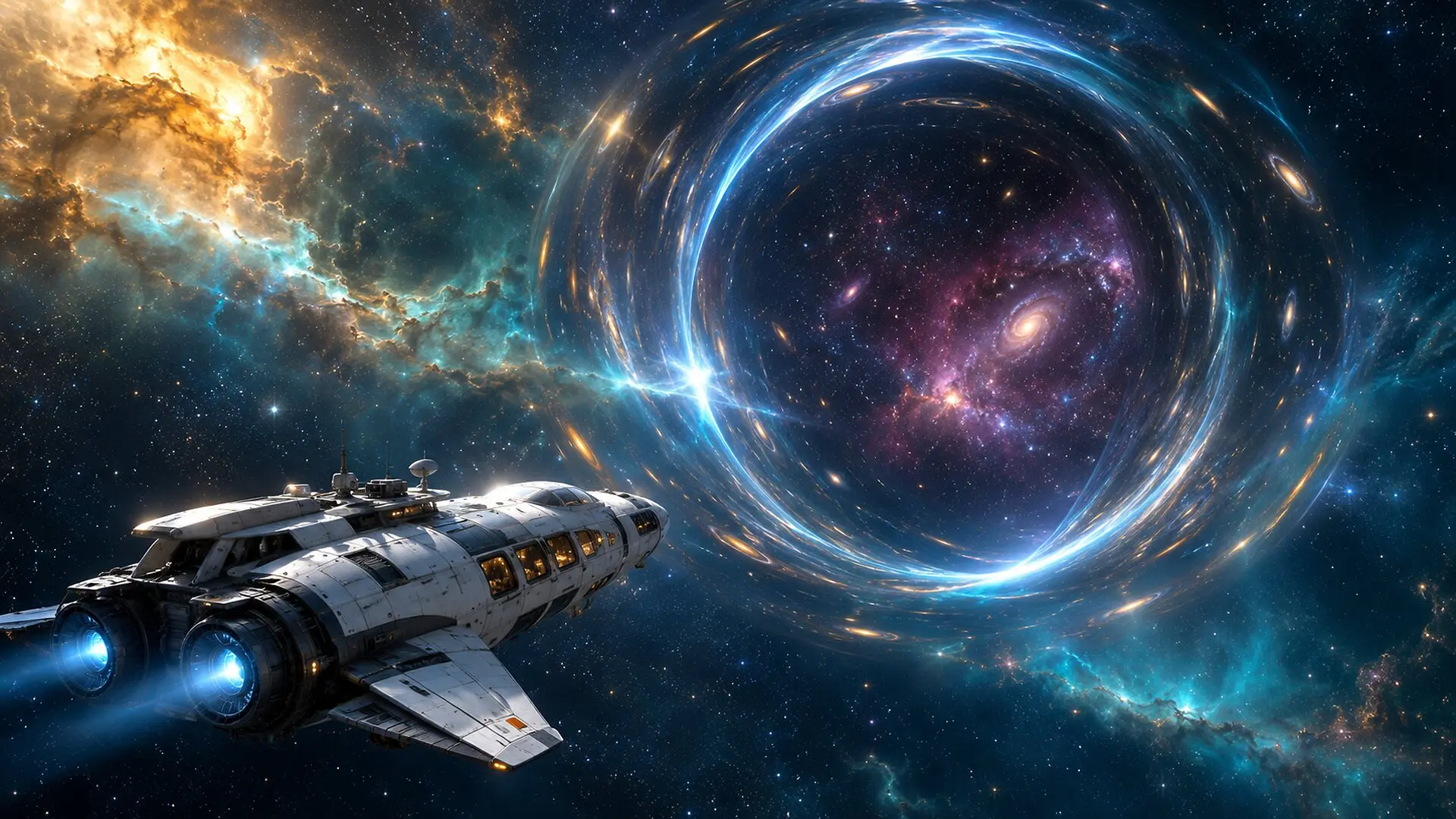
The persistent allure of breaking the light-speed barrier to reverse the flow of time remains a staple of science fiction, but physics presents a much more complex reality. While the idea of accelerating a rocket until its clock begins to run backward is a compelling narrative, it clashes with the fundamental laws of nature as we currently understand them. Modern research separates the proven phenomenon of time dilation from the purely speculative—and often paradoxical—notion of traveling into the past.
Relativity and the One-Way Trip to the Future
Traveling into the future is not merely possible, it is an experimentally verified fact. Through time dilation—a consequence of Einstein’s theory of special relativity—an individual traveling at a significant fraction of the speed of light will experience time more slowly compared to an observer remaining at a stationary location. If you were to embark on a high-speed journey, you would return to find that more time had elapsed for your peers than for yourself. This effect is not limited to high-velocity motion; gravity also influences the pace of time, as demonstrated by the National Institute of Standards and Technology, which has measured time discrepancies caused by both gravitational fields and velocity.
The Immovable Barrier of Light Speed
The concept of “breaking” the speed of light to travel backward encounters a hard limit: mass. According to special relativity, as an object with mass accelerates toward 300,000 kilometers per second, its energy requirements trend toward infinity, making the light-speed barrier impossible to breach. Furthermore, light itself does not possess a valid rest frame, meaning there is no physical basis for the idea that a clock could stop and reverse if it were to travel alongside a photon.
Theoretical constructs like tachyons—hypothetical particles that exist only on the faster-than-light side of the spectrum—remain entirely unproven. While some researchers have proposed quantum field theories to incorporate them, these ideas face rigorous academic scrutiny and remain speculative at best. Even if such particles existed, their use in signaling would introduce severe causal paradoxes, where a message could theoretically be received before it was sent, effectively dismantling the linear nature of cause and effect.
Warp Drives and Spacetime Geometry
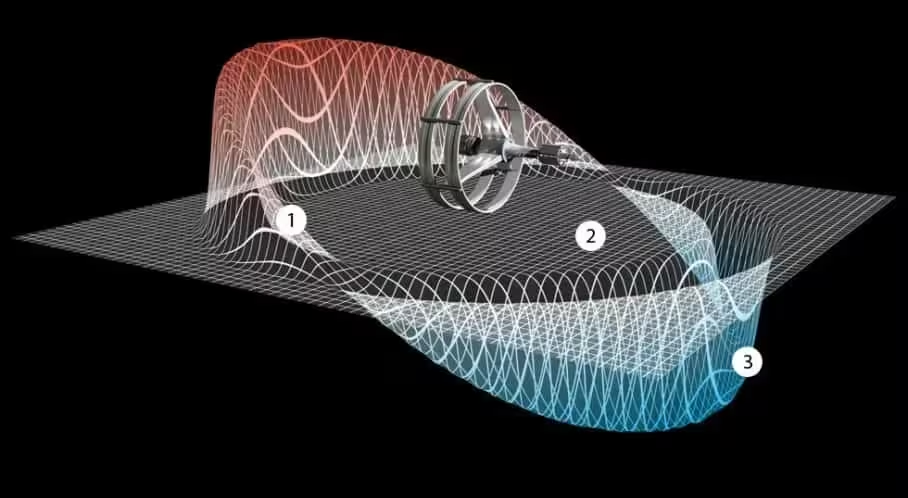
Instead of pushing a vessel through space, some theoretical models suggest manipulating the geometry of spacetime itself. Proposals for “warp drives” generally rely on negative energy—a substance that remains entirely theoretical and potentially impossible to harvest in the necessary quantities. Recent advancements in positive-energy models have surfaced, but these designs are strictly bound by the speed of light, failing to offer the “shortcut” required for superluminal travel or temporal displacement.
Similarly, the study of wormholes—theoretical shortcuts through spacetime—often involves configurations that violate energy conditions or remain mathematically abstract. While researchers like Valeri Frolov, Pavel Krtouš, and Andrei Zelnikov have modeled ring wormholes, these represent purely theoretical investigations into the behavior of spacetime rather than a blueprint for building an actual traversable gateway.
Quantum Effects and Information Limits
Experiments involving quantum mechanics often appear to defy classical constraints, but they do not facilitate time travel. For instance, quantum time reversal can restore a previous quantum state, but this process does not allow for the transmission of information back in time. Similarly, while researchers have observed optical phenomena where certain wave points move at superluminal speeds, these points carry no information, thereby preserving the universal speed limit.
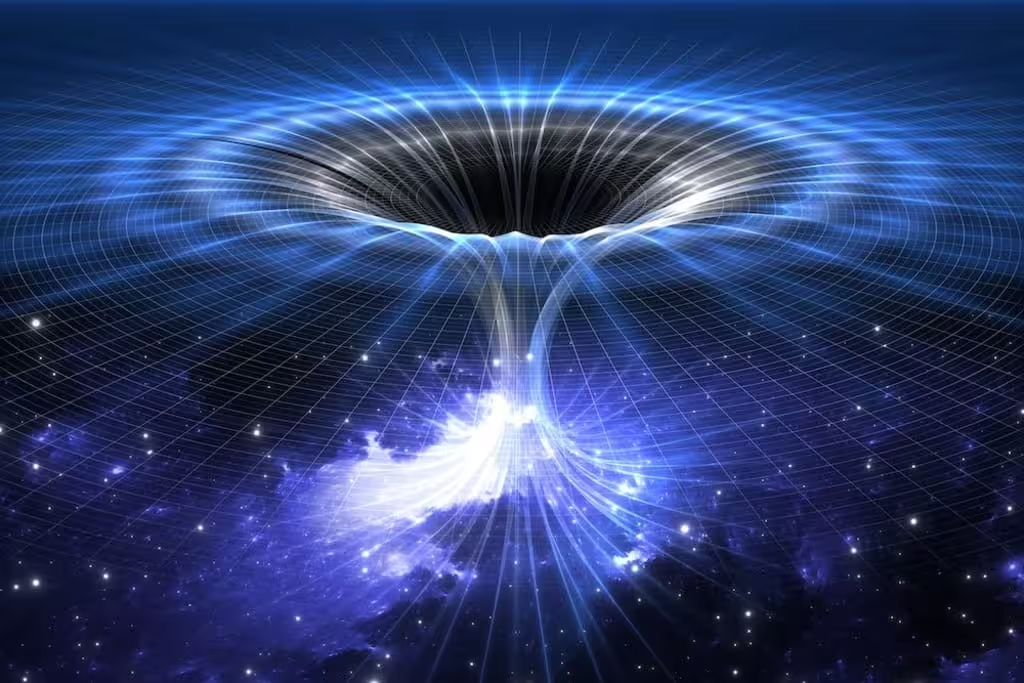
Ultimately, while physics continues to push the boundaries of what is known, the distinction between mathematical possibility and physical capability is absolute. We can navigate the future through the mechanics of relativity, but the past remains firmly out of reach.

Further Reading
- Retrocausal Capacity of a Quantum Channel: Communicating through Noisy Closed Timelike Curves, Physical Review Letters
- Superluminal quantum reference frames, New Journal of Physics
- Superluminal correlations in ensembles of optical phase singularities, Nature
- Looping back to the past through free fall in a controlled warp drive spacetime, Physical Review D
- Constant velocity physical warp drive solution, Classical and Quantum Gravity
This article has been fact checked for accuracy, with information verified against reputable sources. Learn more about us and our editorial process.
Last reviewed on .
Article history
- Latest version
Reference(s)
- Chou, C. W.., et al. “Optical Clocks and Relativity.” Science, vol. 329, no. 5999, September 24, 2010, pp. 1630-1633. American Association for the Advancement of Science (AAAS), doi: 10.1126/science.1192720. <https://doi.org/10.1126/science.1192720>.
- Paczos, Jerzy., et al. “Covariant quantum field theory of tachyons.” Physical Review D, vol. 110, no. 1, July 9, 2024 American Physical Society (APS), doi: 10.1103/PhysRevD.110.015006. <https://doi.org/10.1103/PhysRevD.110.015006>.
- Jodłowski, Krzysztof. “Covariant quantum field theory of tachyons is unphysical.” Physical Review D, vol. 110, no. 11, December 30, 2024 American Physical Society (APS), doi: 10.1103/PhysRevD.110.115042. <https://doi.org/10.1103/PhysRevD.110.115042>.
- Fuchs, Jared., et al. “Constant velocity physical warp drive solution.” Classical and Quantum Gravity, vol. 41, no. 9, April 29, 2024, pp. 095013 IOP Publishing, doi: 10.1088/1361-6382/ad26aa. <https://doi.org/10.1088/1361-6382/ad26aa>.
- Frolov, Valeri P.., et al. “Ring wormholes and time machines.” Physical Review D, vol. 108, no. 2, July 14, 2023 American Physical Society (APS), doi: 10.1103/PhysRevD.108.024034. <https://doi.org/10.1103/PhysRevD.108.024034>.
- Schiansky, P.., et al. “Demonstration of universal time-reversal for qubit processes.” Optica, vol. 10, no. 2, January 26, 2023, pp. 200 Optica Publishing Group, doi: 10.1364/OPTICA.469109. <https://doi.org/10.1364/OPTICA.469109>.
- Ji, Kaiyuan., et al. “Retrocausal Capacity of a Quantum Channel: Communicating through Noisy Closed Timelike Curves.” Physical Review Letters, vol. 136, no. 23, June 11, 2026 American Physical Society (APS), doi: 10.1103/znyd-npk5. <https://doi.org/10.1103/znyd-npk5>.
- Sen, Amrapali., et al. “Superluminal quantum reference frames.” New Journal of Physics, vol. 28, no. 4, April 9, 2026, pp. 044505 IOP Publishing, doi: 10.1088/1367-2630/ae5a52. <https://doi.org/10.1088/1367-2630/ae5a52>.
- Bucher, T.., et al. “Superluminal correlations in ensembles of optical phase singularities.” Nature, vol. 651, no. 8107, March 25, 2026, pp. 920-926. Springer Science and Business Media LLC, doi: 10.1038/s41586-026-10209-z. <https://doi.org/10.1038/s41586-026-10209-z>.
- Sajeendran, Achintya., et al. “Looping back to the past through free fall in a controlled warp drive spacetime.” Physical Review D, vol. 111, no. 12, June 18, 2025 American Physical Society (APS), doi: 10.1103/1gmk-3zdq. <https://doi.org/10.1103/1gmk-3zdq>.
Cite this page:
- Posted by Nida Rehman