Urban Butterflies Drop in Number While Species Count Stays Steady
A two-year study in Kunming reveals how human disturbance reshapes urban insect communities through species turnover rather than extinction.
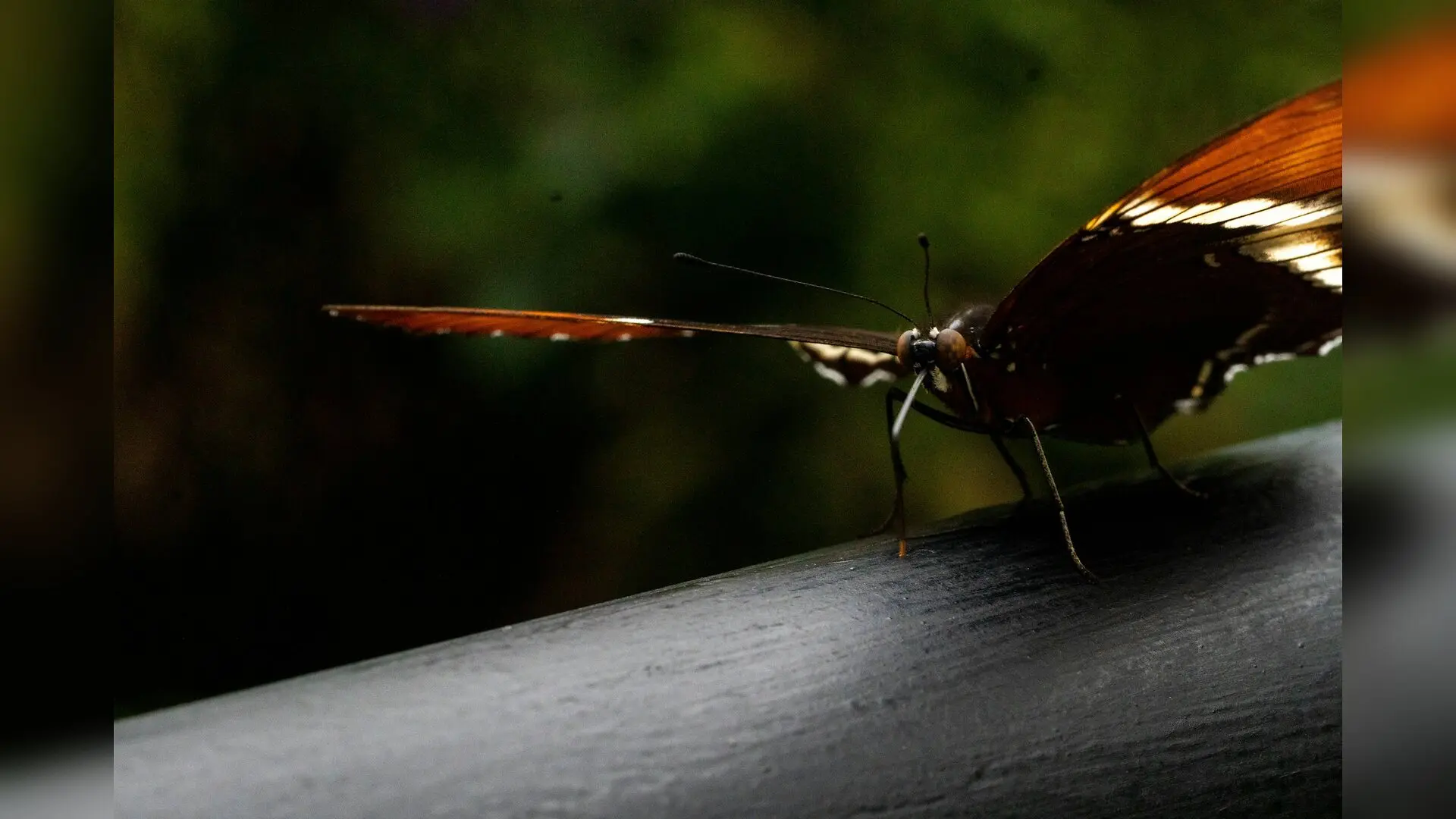
When human development alters natural landscapes, local butterfly populations experience a sharp drop in overall numbers even as total species counts remain surprisingly stable. A two-year field investigation carried out from 2022 to 2024 across the subtropical plateau of Kunming, China, tracked 4,097 individual butterflies belonging to 48 distinct species across 24 separate monitoring transects. The research team evaluated how varying degrees of human disruption reshape urban insect communities, discovering that overall butterfly abundance drops significantly in heavily modified environments while species richness refuses to budge. The findings are published in Ecology and Evolution, shedding light on how delicate winged pollinators navigate the expanding concrete landscapes of modern cities.
How Human Disruption Trims Insect Populations Without Eradicating Entire Species
To understand the fine details of how urbanization alters insect life, the investigators set up 24 transects measuring 1 kilometer long and 5 meters wide, conducting monthly visual surveys and specimen collections. They classified surrounding land use types into seven distinct interference levels, grouping them into low, medium, and high disturbance categories. While basic alpha diversity metrics such as the Shannon-Wiener and Simpson indices showed no statistically significant differences across the gradient, regression analysis revealed a clear negative correlation between disturbance intensity and total butterfly abundance.
This means that while the total number of individual insects declines as human disturbance rises, the total number of distinct species lingering in those spaces stays roughly the same. Generalist species with broad dietary habits and high mobility manage to hold their ground, whereas specialized insects disappear. The data showed that 29 species persisted across all three disturbance intensities, demonstrating a broad ecological tolerance to human-altered surroundings.
Which Butterfly Families Thrive and Which Ones Struggle Under Urban Stress?
Different butterfly families displayed strikingly different responses when exposed to varying levels of human activity. The family Pieridae, which includes common white butterflies, registered the highest total number of individuals with 2,257 sightings, thriving in both low and high disturbance zones thanks to their reliance on widely distributed cruciferous plants like cabbage and canola. In contrast, fragile groups such as Papilionidae and Hesperiidae showed high richness only in low and moderate disturbance areas, dropping off sharply in heavily impacted locations.
Specialized inhabitants like the butterfly species Gonepteryx amintha and Polytremis discreta were found exclusively in low disturbance habitats where microclimates remain stable and native host plants are undisturbed. Meanwhile, species such as Aglais urticae adapted to high disturbance sites, and others like Parnara guttata favored medium disturbance zones. This shifting cast of characters highlights how human activity acts as an environmental filter, selecting for adaptable generalists while squeezing out habitat specialists.
Why Species Replacement Drives Urban Ecosystem Changes
Beta diversity partitioning revealed that species turnover, rather than nestedness or sheer species loss, is the primary driver of community variation across the disturbance gradient. The average species turnover score reached 0.34, outpacing the nestedness score of 0.32. This indicates that differences in butterfly communities stem from the replacement of one set of species with another as environments change, rather than a simple downward spiral of species disappearing.
Moderate disturbance zones often function as transitional overlap areas where both generalist invaders and lingering specialists can occasionally cross paths. Because complex urban topographies create a mosaic of microhabitats, different zones favor distinct physiological traits. The authors note that these patterns demonstrate how human influence reshapes community structure through gradual compositional shifts rather than sudden mass extinctions.
What These Insights Mean for Future Urban Conservation Strategies
The authors emphasize that conservation efforts in rapidly growing cities must evolve beyond simply locking away pristine nature reserves. Because moderate and high disturbance zones host unique assemblages of adaptable species, urban greening initiatives should embrace a network management paradigm that maintains habitat heterogeneity across all development gradients. Preserving small patches of native vegetation and protecting host plants within city parks can help sustain vital insect populations and maintain essential pollination services for urban plants.
The research was published in Ecology and evolution on November 19, 2026.
This article has been fact checked for accuracy, with information verified against reputable sources. Learn more about us and our editorial process.
Last reviewed on .
Article history
- Latest version
Reference(s)
- Zhu, Mi., et al. “Anthropogenic Disturbance Significantly Affects the Abundance and Distribution Patterns of Butterflies, Not Species Richness: A Case Study in Kunming, China.” Ecology and Evolution, vol. 16, no. 11, November 19, 2026 Wiley, doi: 10.1002/ece3.74754. <https://doi.org/10.1002/ece3.74754>.
Cite this page:
- Posted by Omar Mirza