New Evidence Suggests Supermassive Black Holes Are Being Kicked Out Of Their Galaxies
A massive study of over 100,000 quasars has uncovered statistical evidence that supermassive black holes are being ejected from the centers of galaxies.
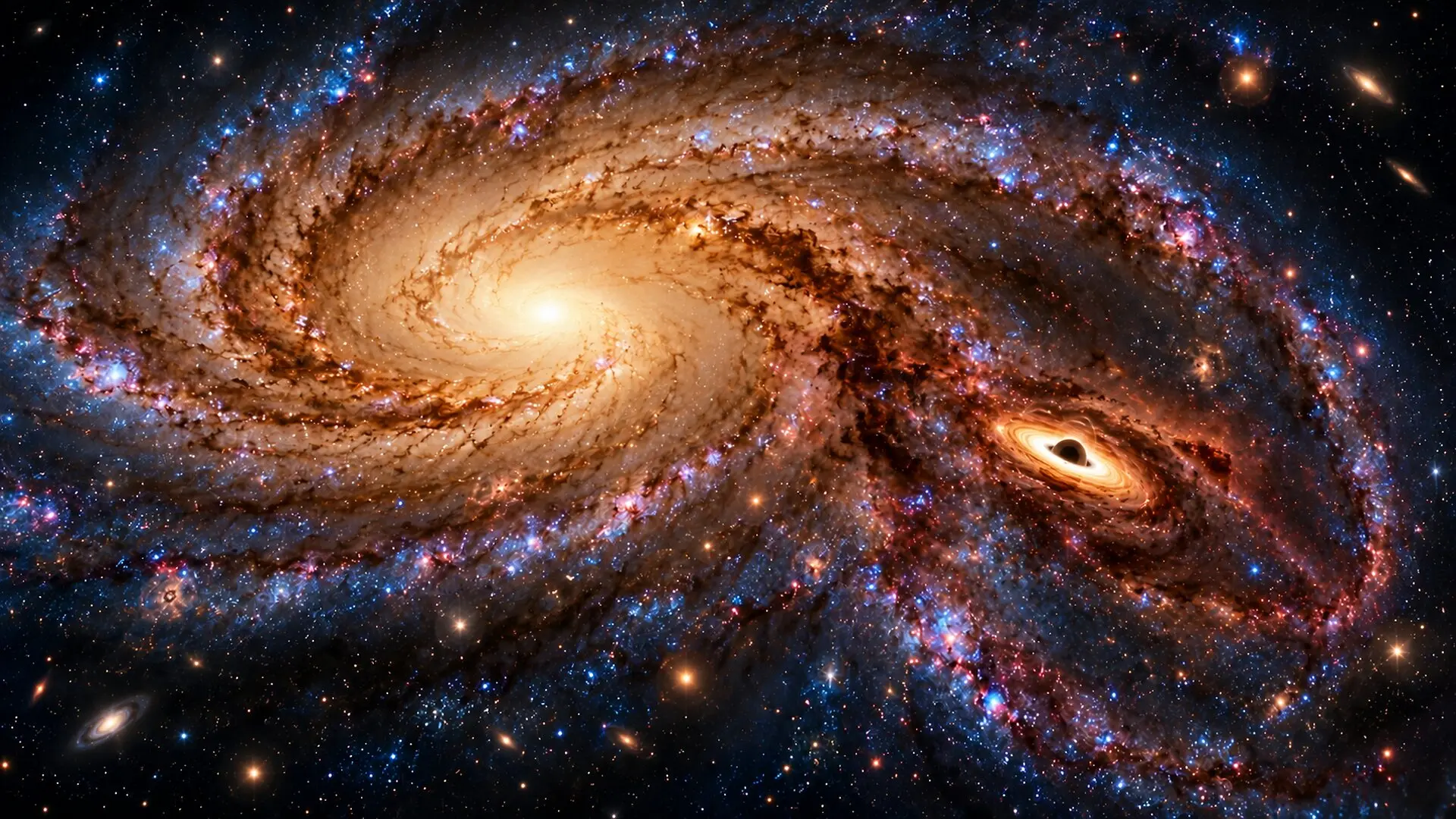
New evidence suggests that supermassive black holes may be physically displaced from the hearts of their galaxies following violent cosmic collisions. By analyzing data from over 100,000 quasars, researchers have identified a distinct pattern in light emissions that aligns with theoretical predictions of black holes undergoing a “recoil” effect triggered by gravitational waves.
The study, published in the Monthly Notices of the Royal Astronomical Society, was led by Bence Bécsy of the University of Birmingham and a team from Eötvös Loránd University. Rather than attempting to pinpoint a single, rare runaway black hole, the researchers examined a vast population of quasars to detect a consistent, underlying physical signature.
The Physics of Galactic Recoil
When two galaxies merge, their central supermassive black holes eventually find one another and form a binary system. As they spiral inward to coalesce, they emit powerful gravitational waves. If these waves carry momentum asymmetrically, the resulting merger remnant receives a “kick,” displacing it from the galactic center. Depending on the mass and spin of the original black holes, this recoil can potentially send the object hurtling through its host galaxy.
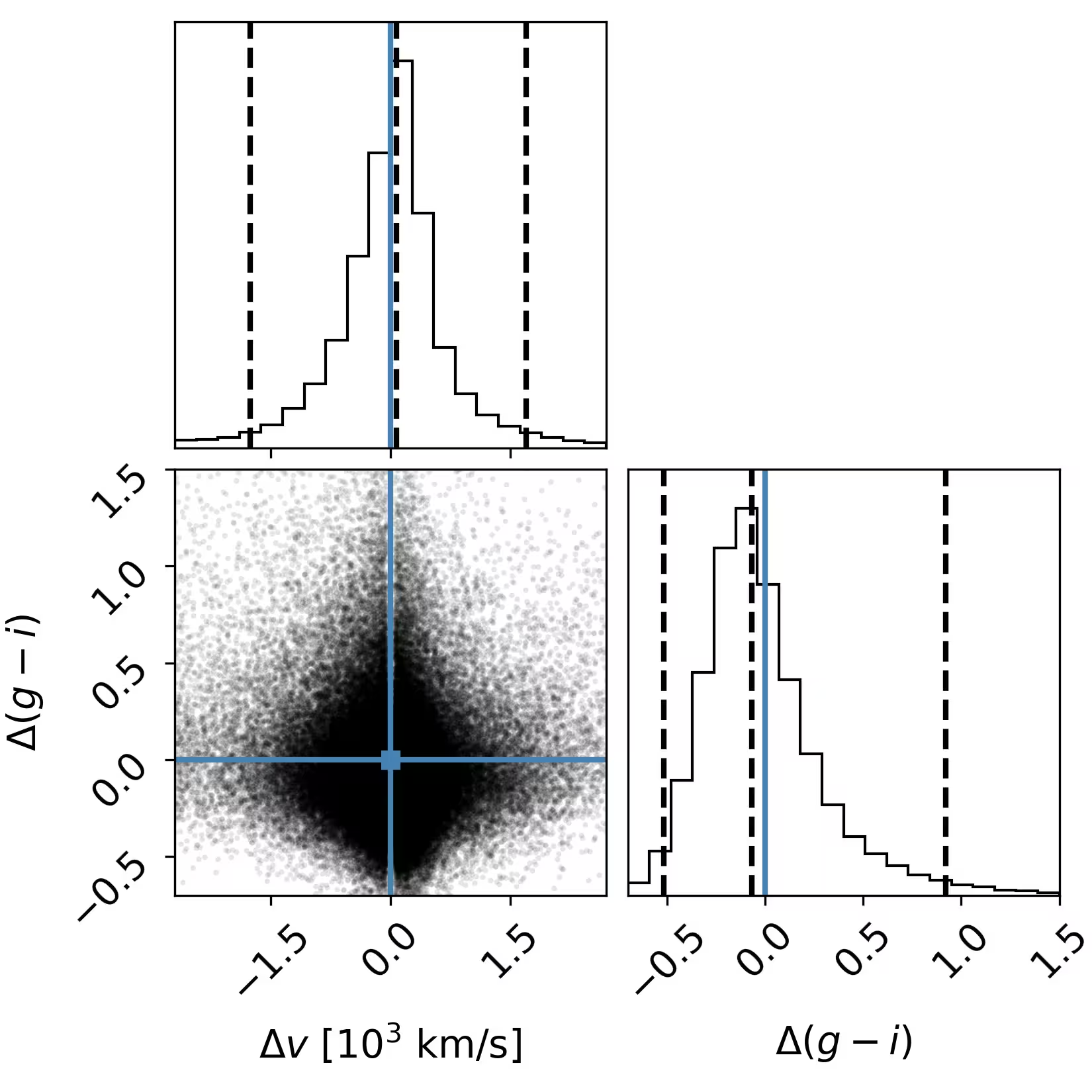
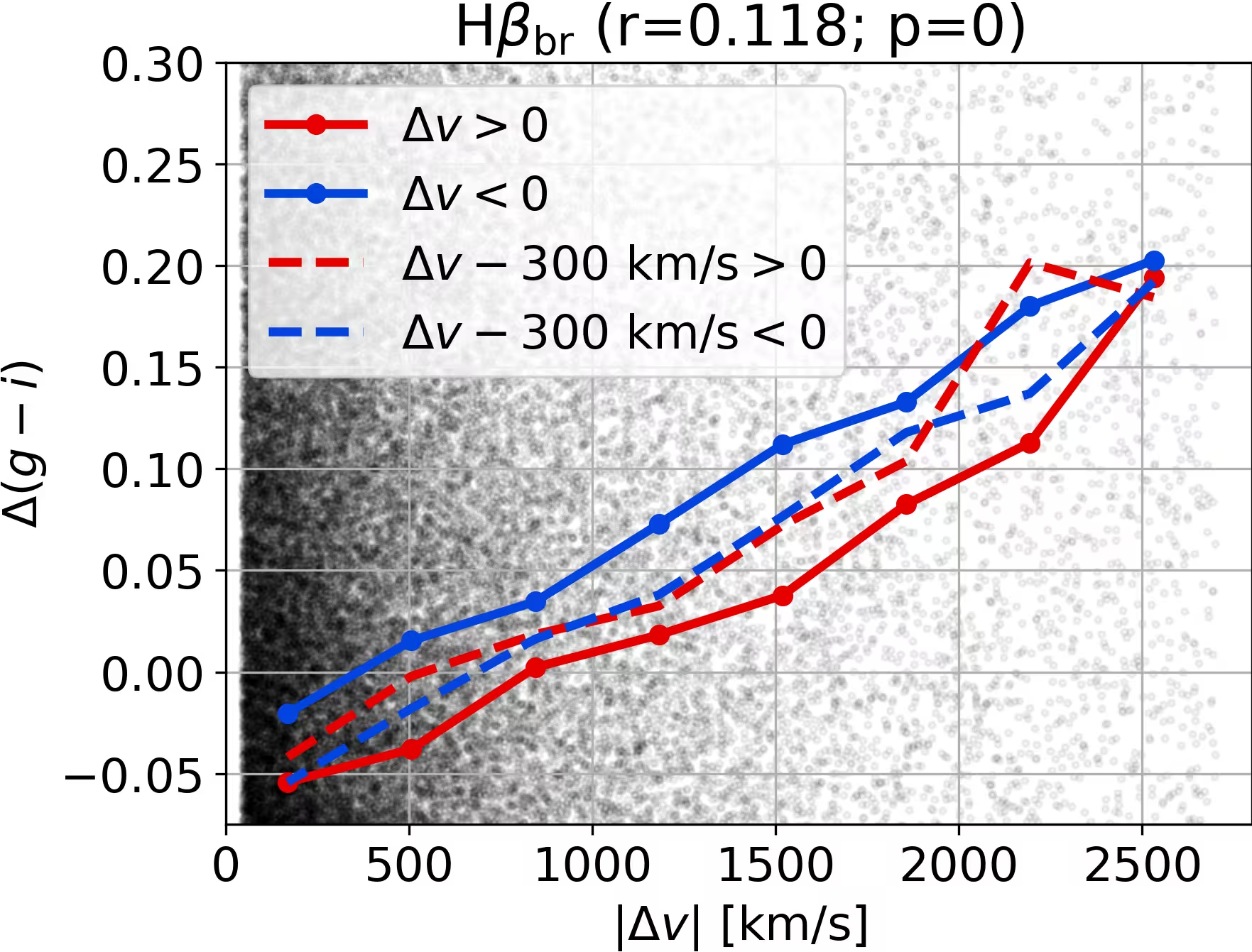
Theoretical work led by researchers including Peter Raffai, Zoltán Haiman, and Zsolt Frei in 2015 predicted that if a displaced black hole remained bound to its host, it would oscillate near the center. Because the black hole moves fastest in the denser, dust-rich environment of the galactic core, its light should appear increasingly reddened by this surrounding material. The new study sought to confirm this specific correlation between velocity offset and dust-driven color changes.
Deciphering Quasar Light
Quasars serve as ideal laboratories for this study because they are powered by gas swirling into supermassive black holes. The team used the broad hydrogen-beta emission line from the gas near the black hole to estimate its velocity, comparing this to reference features from more distant gas to measure the relative motion.
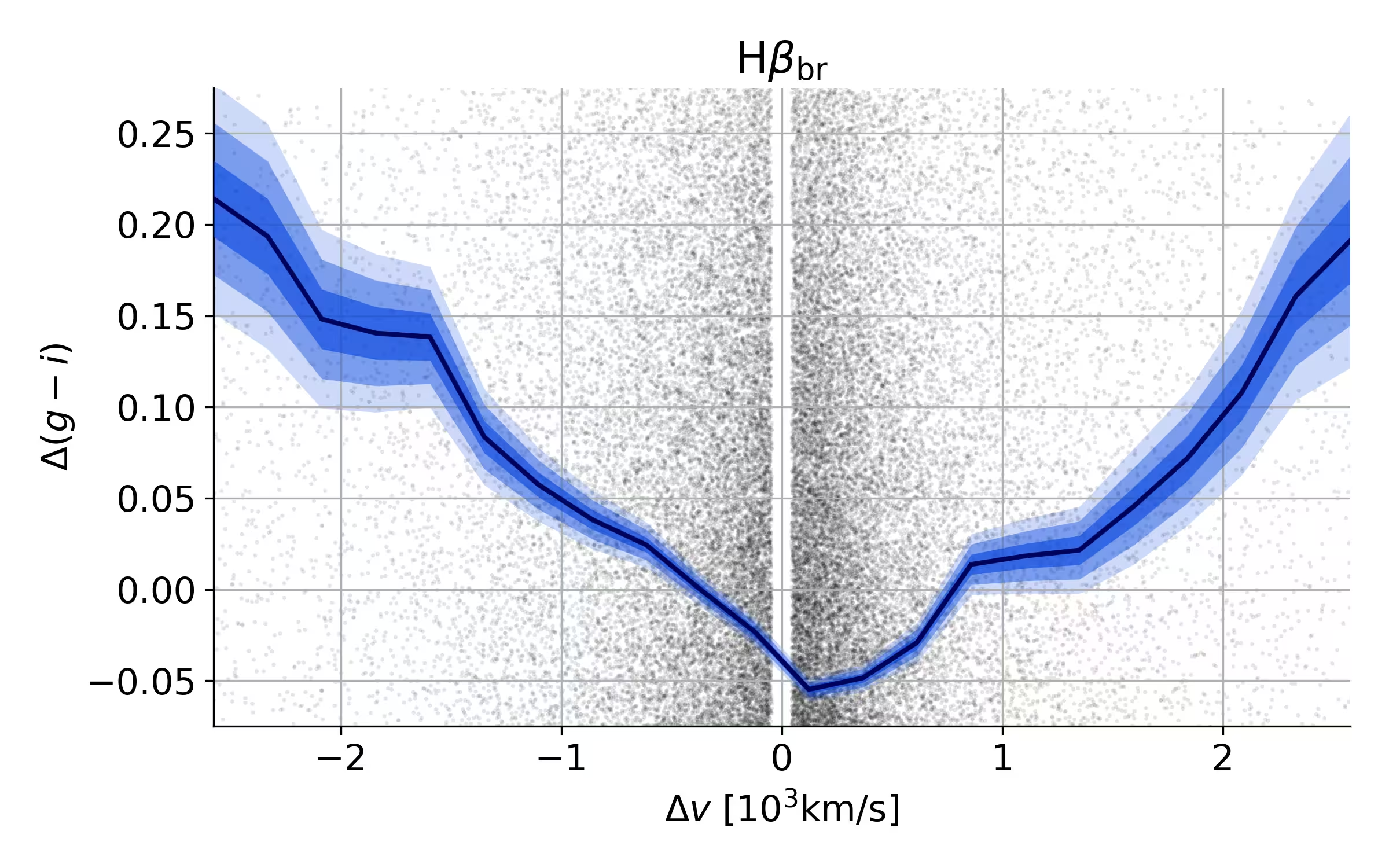
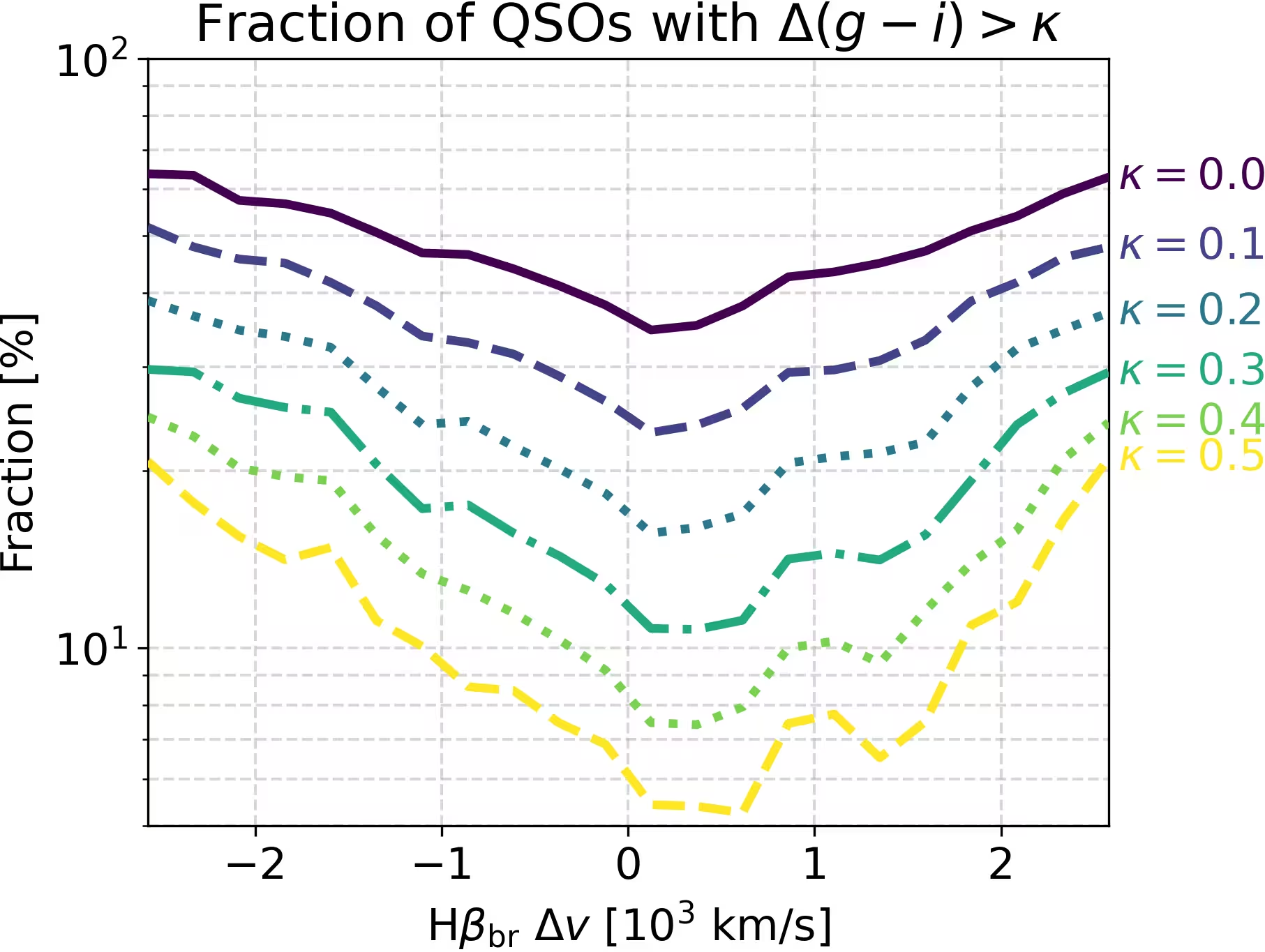
After filtering 750,414 quasars from the Sloan Digital Sky Survey, the researchers focused on a refined sample of 104,688 objects. They discovered that as the estimated velocity offset increased, so did the level of dust reddening. Specifically, the fraction of significantly reddened quasars climbed from roughly 6% near zero velocity to approximately 20% at higher velocity offsets, providing a statistical trend that mirrors long-standing theoretical models.
Caution Amidst Discovery
While the findings are statistically significant, the researchers emphasize that this is not definitive proof of ejection. Other astrophysical processes, such as complex gas winds, inflows, or internal orbital motions, could mimic these signals. Furthermore, the correlation coefficient of 0.118 indicates a subtle relationship rather than a dominant, easily observed effect in every individual case.
“It is very difficult to prove that the black hole in a single quasar has been ejected, because other phenomena can produce similar signatures,” Bécsy noted. “What is new about our research is that, rather than looking for individual candidates, we searched statistically for traces of an entire population.”
Future Directions
If these findings hold under further scrutiny, they could eventually provide a mechanism for estimating how often black hole mergers occur across the cosmos. The research team plans to continue refining their methods by analyzing additional spectral features and improving dust-correction models.
This work complements upcoming gravitational-wave observatories like the Laser Interferometer Space Antenna (LISA), which will eventually track these merger events in real-time. For now, the statistical link uncovered by Bécsy and his colleagues offers a compelling, if preliminary, look at the aftermath of the most violent events in the universe.
Recommended Resources
- ESA’s LISA Mission Updates: Details on the upcoming space-based gravitational wave observatory.
- Sloan Digital Sky Survey (DR16): Technical documentation on the quasar catalog used in this research.
- Theoretical Foundations: The original 2015 study modeling the link between dust obscuration and recoiling black holes.
- Gravitational Recoil Signatures: Research on the visibility of black holes following merger-induced ejections.
This article has been fact checked for accuracy, with information verified against reputable sources. Learn more about us and our editorial process.
Last reviewed on .
Article history
- Latest version
Reference(s)
- <https://academic.oup.com/mnras/article/550/4/stag1367/8739452>.
- <https://www.esa.int/Science_Exploration/Space_Science/LISA/Construction_of_ESA_s_ambitious_LISA_mission_begins>.
- Lyke, Brad W.., et al. “The Sloan Digital Sky Survey Quasar Catalog: Sixteenth Data Release.” The Astrophysical Journal Supplement Series, vol. 250, no. 1, August 27, 2020, pp. 8 American Astronomical Society, doi: 10.3847/1538-4365/aba623. <https://iopscience.iop.org/article/10.3847/1538-4365/aba623>.
- <https://academic.oup.com/mnras/article/455/1/484/986688>.
- Loeb, Abraham. “Observable Signatures of a Black Hole Ejected by Gravitational-Radiation Recoil in a Galaxy Merger.” Physical Review Letters, vol. 99, no. 4, July 27, 2007 American Physical Society (APS), doi: 10.1103/PhysRevLett.99.041103. <https://journals.aps.org/prl/abstract/10.1103/PhysRevLett.99.041103>.
Cite this page:
- Posted by Aisha Ahmed