New AI Architecture Enables Multimodal Models to Generate Images Without Losing Comprehension
By sharing visual representations across tasks, a new framework overcomes the traditional trade-off between semantic reasoning and high-fidelity image generation.

A new artificial intelligence architecture lets vision-language models generate high-quality images without losing their ability to understand text and pictures, overcoming a long-standing trade-off in multimodal computing. By building a shared visual representation space, the system bridges the gap between the semantic reasoning required for comprehension and the fine-grained pixel details needed for image generation.
Combining visual understanding and generation inside a single model has historically created severe interference, where training for one capability degrades the other. To solve this bottleneck, the research team developed a method called Integral, which is available on the arXiv preprint server. Led by researchers including JB Kim from NAVER Cloud and the Korea Advanced Institute of Science and Technology, the study introduces two primary technical innovations designed to share information efficiently.
How Does Abstraction Fusion Preserve Fine-Grained Image Details?
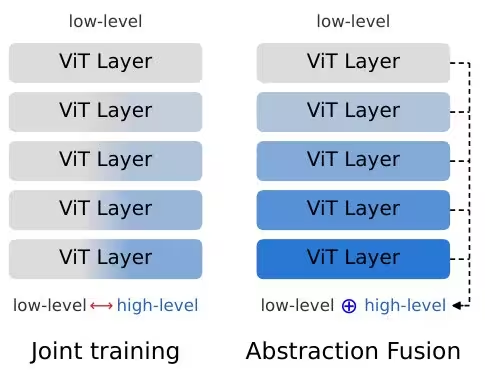
The first core component, Abstraction Fusion, addresses what the authors identify as a propagation bottleneck in standard vision encoders. Traditional models rely solely on the final layer of a vision encoder to handle image reconstruction, which forces deeper layers to sacrifice abstract semantic meaning in order to retain low-level visual details. Abstraction Fusion avoids this compromise by aggregating hierarchical representations across multiple encoder layers, from shallow feature maps to deep semantic outputs, without altering the underlying network structure.
Using per-layer normalization, self-attention across layer dimensions, and a linear pooler, the module constructs unified visual tokens that support both comprehension and image reconstruction simultaneously. When applied to the nine-billion-parameter Qwen3.5 model, the Abstraction Fusion tokenizer achieved a peak signal-to-noise ratio of thirty-two decibels on standard image reconstruction benchmarks while retaining roughly ninety-nine percent of the model’s original understanding performance.
Why Is Block-Wise Mixture-of-Transformers More Efficient Than Full Interaction?
To handle conditional image generation without adding excessive computational overhead, the researchers introduced Block-wise Mixture-of-Transformers. Traditional multi-modal architectures couple every single layer of a language model with a dedicated generation expert, introducing massive parameter costs and latency. By contrast, Block-wise MoT groups consecutive transformer layers into blocks and restricts generative interaction to block boundaries.
This sparse interaction strategy relies on approximately eight hundred ninety million generation-specific parameters. Controlled experiments revealed that Block-wise MoT reduces denoising compute by roughly two and a half times and cuts inference latency by more than three times compared with full-layer coupling, while matching or exceeding generation quality across multiple benchmarks.
What Results Did the Model Achieve Across Understanding and Generation Benchmarks?
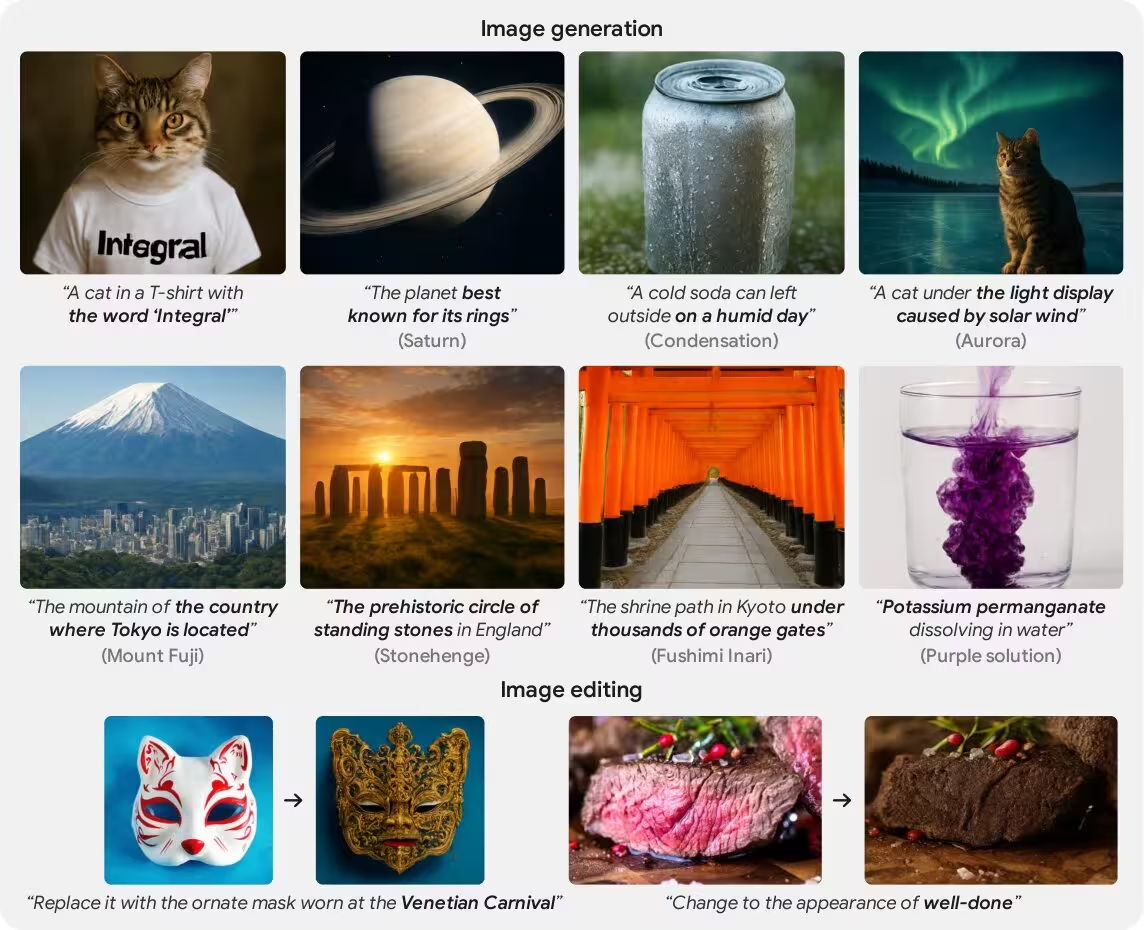
The researchers evaluated Integral across a wide array of standardized evaluations covering multimodal reasoning, text-to-image synthesis, and instruction-based image editing. On the GenEval text-to-image benchmark, the model scored zero-point-eighty-eight, outperforming several larger unified multimodal systems. Furthermore, it achieved an overall score of three-point-fifty on image editing tasks and demonstrated robust performance on knowledge-intensive generation challenges requiring complex world knowledge.
The authors note that sharing visual representations provides generative benefits that go far beyond raw reconstruction fidelity alone. When compared against alternative tokenizers that achieve similar reconstruction scores, the shared representation space consistently yielded superior generative learning outcomes. The approach also scaled effectively when applied to smaller model backbones, suggesting a versatile foundation for future multimodal architectures.
The study was posted to the arXiv preprint server on November 23, 2026.
This article has been fact checked for accuracy, with information verified against reputable sources. Learn more about us and our editorial process.
Last reviewed on .
Article history
- Latest version
Reference(s)
- Kim, JB. “Let Vision-Language Models Generate Images through Their Representations.” arXiv.org <http://arxiv.org/abs/2611.31237v1>.
Cite this page:
- Posted by Asif Iqbal