How Loneliness and Group Dynamics Rewrite Neural Synchrony During Real Social Exchanges
Recent studies using simultaneous brain imaging reveal how isolation, digital meetings, and face-to-face talks shape our neural connections.
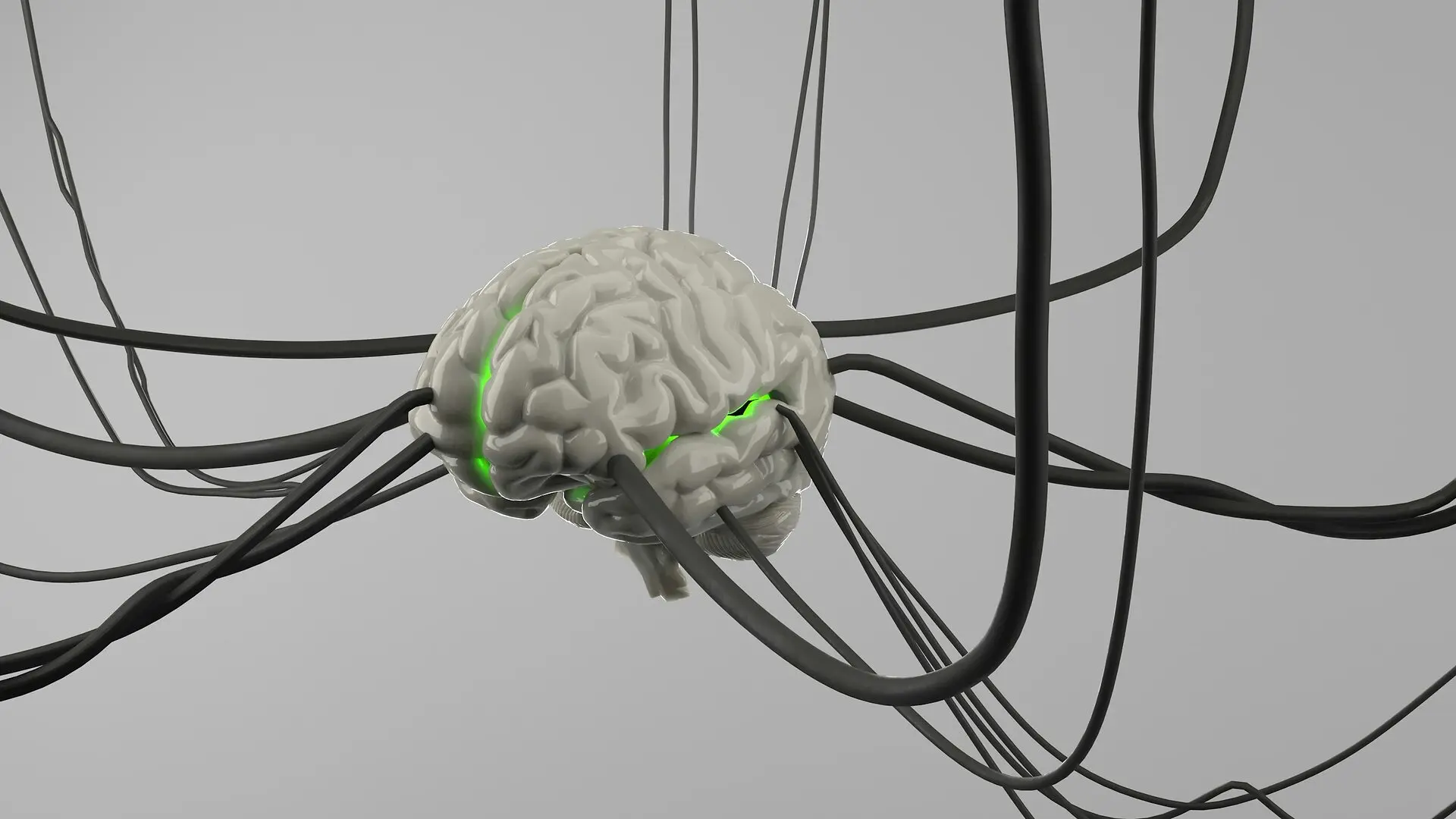
When two people connect in real time, their brains begin to sync up in ways science is only beginning to understand, moving far beyond the traditional view of studying individuals in isolation. Social interactions shape our daily lives, influencing everything from how we handle stress to how we negotiate in high-stakes environments. Researchers are now looking at dynamic social exchanges where multiple brains and bodies interact simultaneously. This shift in perspective is highlighted in a collection of studies published in Frontiers in Neuroscience, offering a fresh window into human connection and its breakdowns.
How Does Loneliness Change the Way Brains Process Rejection?
Feeling isolated does more than cause emotional distress, as it fundamentally alters how the brain reacts to social cues. Arioli and colleagues used electroencephalography, a technique that measures electrical activity in the brain through the scalp, to examine individuals experiencing varying degrees of loneliness. They discovered that higher levels of loneliness were tied to a greater neural differentiation in a specific brain wave component known as the N450 when people viewed negative social words compared to neutral ones. This heightened brain response suggests that lonely individuals develop a state of hypervigilance, making them acutely sensitive to signals of social exclusion and rejection.
Other interpersonal stressors leave similarly distinct marks on emotional processing. Graham-Engeland and colleagues found significant links between perceived discrimination, which involves stigmatization and threat, and the ways people express anger. They demonstrated that tendencies to either suppress anger or express it outwardly were partially driven by cognitive processes like rumination and social vigilance.
Can Shared Group Emotions Impair Critical Thinking?
While negative exchanges like discrimination test emotional resilience, group dynamics can introduce entirely different cognitive hurdles. Haag introduced the concept of Groupfeel syndrome, a dysfunctional emotional condition characterized by intense shared feelings, pressure to maintain relentless positivity, and a lack of emotionally intelligent regulation within aggregated groups. Unlike traditional group pressure, this syndrome locks members into rigid affective trajectories, impairing critical thinking and biasing collective decision-making. Although this theoretical framework is still in its early stages, it highlights how group emotional states can override individual reasoning.
In clinical settings, understanding these interactive dynamics can improve therapeutic interventions. Akinwumi and colleagues leveraged a dataset designed to analyze social exchanges between children diagnosed with autism spectrum disorder and their clinicians. By introducing an unsupervised deep-learning framework, which uses advanced computer algorithms to find patterns without human guidance, they successfully characterized the fine-grained dynamics of these therapeutic sessions. This computational approach helps researchers build interpretable analytics to evaluate and refine behavioral therapies.
Why Do Brains Couple Up During Negotiations?
To capture these fast-paced exchanges as they happen, scientists increasingly rely on hyperscanning, a technique that records neural activity from two or more people at the same time. Balconi and colleagues used an electroencephalography hyperscanning paradigm to study pairs of participants during negotiation tasks. They found that participants’ prior roles significantly shaped their later neural patterns. Speakers showed enhanced alpha wave activity in left frontal areas when adopting a more passive stance during collaborative negotiations, while both partners displayed increased beta wave power in temporo-central and parieto-occipital regions when listening to a receiver, pointing to heightened cognitive control and social engagement.
Pushing this methodology further, Goldstein and colleagues introduced cross-recurrence quantification analysis, a sophisticated mathematical method that treats coupled signals as a dynamic system, examining pairs using functional near-infrared spectroscopy, a non-invasive optical imaging method that measures blood oxygen changes in the brain. While traditional synchrony measures showed no relationship with negotiation outcomes, this new approach revealed systematic links between dynamic coupling patterns in the temporo-parietal junction and medial prefrontal cortex and successful budget negotiations during a simulated public health crisis. The findings suggest that researchers must look beyond simple moment-to-moment brain covariation and instead study how neural coupling evolves over time.
What Happens to Inter-Brain Synchrony on Zoom?
As remote communication becomes more common, researchers are questioning how virtual platforms alter neural alignment. Azhari and colleagues used functional near-infrared spectroscopy hyperscanning to study pairs of undergraduate students participating in a naturalistic Zoom seminar that included lectures, interactive discussions, and presentations. Inter-brain synchrony in the prefrontal cortex spiked primarily during active discussions and presentations, demonstrating that reciprocal engagement drives neural alignment, which in turn predicted greater seminar satisfaction and better performance.
Despite the success of virtual platforms, face-to-face communication retains a rich sensorimotor depth that technology often flattens. Tao and friends showed that face-to-face emotional storytelling elicited higher emotion perception and greater inter-brain synchrony in the right superior frontal gyrus among friends compared to strangers. Wang and colleagues demonstrated that face-to-face social exclusion accelerated defection decisions in cooperation games by disrupting subjective experiences and prefrontal coordination patterns. Magni and colleagues argued that digital contexts destabilize embodied metaphors, rendering social engagement cognitively demanding and less intuitive unless platforms are redesigned to incorporate multisensory and rhythmic dimensions.
Can Interacting With a Dog Mirror Human Social Engagement?
Social cognition is not limited to human-to-human interaction, as non-human animals can also evoke strong neural responses. Carbone and colleagues investigated cortical oscillatory dynamics during human-dog engagement compared to interactions with a plant or an inanimate replica. Interacting with a dog produced distinct suppression of alpha and theta waves in occipital brain regions, indicating heightened attentional engagement and arousal, alongside beta modulation in frontal and central areas associated with anticipatory processing. These results show that social interaction retains powerful emotional salience even across species boundaries, underscoring the broad adaptive roots of human social behavior.
The research was published in Frontiers in neuroscience on November 26, 2026.
This article has been fact checked for accuracy, with information verified against reputable sources. Learn more about us and our editorial process.
Last reviewed on .
Article history
- Latest version
- Posted by Zubair Ali