Scientists On The ISS Investigate A Hidden Health Threat That Could Affect Future Moon Missions
ISS astronauts investigate microgravity’s impact on blood clotting and immunity, paving the way for safer deep‑space missions.
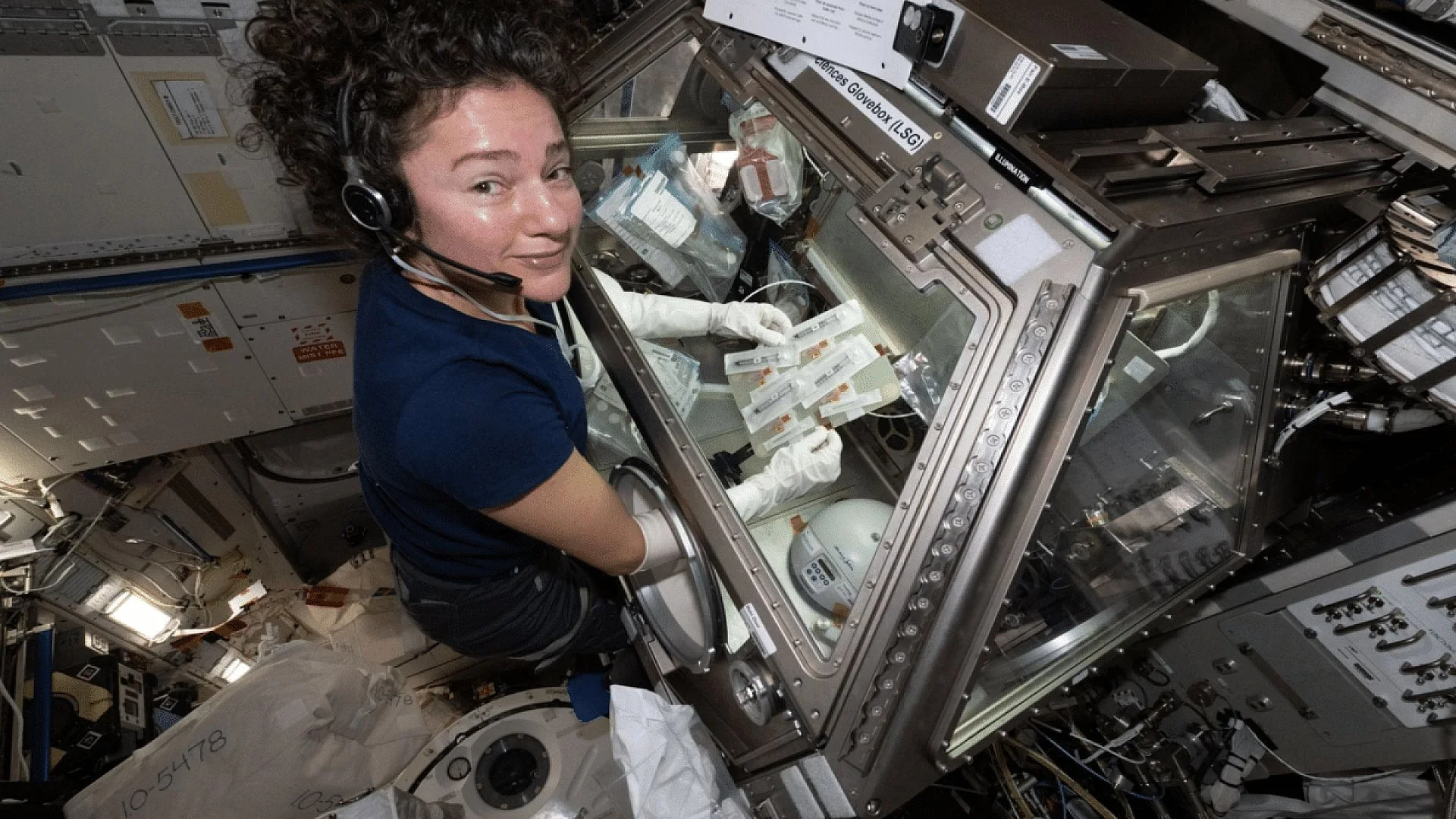
Aboard the International Space Station, crew members are tackling a critical medical question for upcoming deep‑space journeys: how does living in microgravity modify the human body’s ability to form blood clots and mount immune defenses? NASA says that members of Expedition 74 spent Friday conducting a suite of biological experiments centered on platelets and immune function, work that could help keep astronauts safe on future missions to the Moon, Mars and beyond.
Investigating Microgravity’s Impact on Platelet Dynamics
The latest research focus is on blood platelets, the microscopic fragments that stop bleeding and build clots. While these mechanisms operate normally on Earth, scientists have observed that extended exposure to weightlessness can disrupt several physiological systems, raising concerns about irregular clot formation during long‑duration flights.
NASA astronauts Chris Williams and Jessica Meir worked alongside Sophie Adenot of the European Space Agency (ESA) to process platelet samples inside the station’s Life Science Glovebox located in the Japanese Kibo laboratory module. Conducting the analysis in orbit provides a unique window on cellular behavior that cannot be fully duplicated on the ground.
The project aims to clarify how weightlessness influences platelet activity, inflammation and immune responses—issues that grow in importance as agencies plan missions that will keep crews farther from Earth for longer periods. A clot‑related medical emergency on a deep‑space voyage could pose challenges far greater than anything encountered in low‑Earth orbit.
Scientists hope the data collected aboard the ISS will pinpoint the biological pathways altered by microgravity and eventually guide the creation of countermeasures that reduce health risks for space travelers while also informing treatments for patients on Earth.
Expedition 74 explored how microgravity alters blood platelets to protect astronaut health and cleaned spacesuits at the end of the week. More… https://t.co/OJgMqqLuflpic.twitter.com/TuKshehy6L
— International Space Station (@Space_Station) May 29, 2026
High‑Resolution Imaging Captures Cellular Shifts in Space
The experiment required tight coordination among several crew members. NASA flight engineer Jack Hathaway assisted by drawing blood samples and preparing them for study. The specimens were then placed in the KERMIT fluorescent microscope, an imaging system designed to reveal subtle cellular alterations that may arise during flight.
By examining the samples at microscopic detail, researchers can track how platelets adapt to the prolonged space environment. These observations could uncover previously unknown variations in clot formation, cell signaling and immune regulation.
The work adds to a growing body of evidence that spaceflight influences nearly every major physiological system. From bone loss and muscle wasting to visual changes and immune shifts, astronauts undergo a wide range of adaptations while in orbit. Understanding these effects is now a top priority as human spaceflight moves toward sustained lunar presence and eventual Mars exploration.
Insights gained from these investigations may shape onboard medical protocols, astronaut training curricula and future biomedical research conducted both in orbit and on the ground.
Botanical, Vision and Suit Tests Complement Medical Research
The station’s science agenda extended well beyond clotting studies. Crew members balanced medical work with experiments aimed at improving life‑support systems and human performance in space.
Earlier in the day, Jessica Meir captured images of growing microgreens and alfalfa as part of ongoing agricultural trials. Researchers are probing how crops develop in microgravity because future missions will likely depend on reliable food production away from Earth.
Chris Williams performed water‑transfer tasks between American and Russian systems before joining Meir for visual assessments. The duo measured both horizontal and vertical sight ranges, including peripheral vision, a key metric since some astronauts experience eye‑related changes after extended stays in space.
Sophie Adenot evaluated a prototype internal spacesuit engineered by ESA. The new design seeks to boost comfort and streamline suit donning and doffing inside spacecraft—an advantage that could prove vital when crew time and operational flexibility are at a premium during exploration missions.
Jack Hathaway also operated the Advanced Space Experiment Sample Processor‑4, studying how microgravity affects drug crystal formation. Findings could open avenues for novel pharmaceutical formulations and more effective medications.
NASA Emphasizes the Station’s Role as a Space‑Based Laboratory
According to NASA, the breadth of experiments conducted aboard the ISS underscores its function as a testbed for future human exploration. The orbital outpost continues to offer scientists the chance to examine biological, technological and environmental processes under conditions that cannot be reproduced on Earth.
Medical investigations remain especially valuable because crew health will be a decisive factor in the success of missions beyond low‑Earth orbit. Studies of clotting, immune function, vision, nutrition and drug development all contribute to constructing a safer framework for long‑duration space travel.
The station’s unique microgravity environment enables researchers to observe how the human body adapts when gravity is largely removed from the equation. Each experiment adds another piece to the puzzle of keeping astronauts healthy on voyages that may last months or even years.
This article has been fact checked for accuracy, with information verified against reputable sources. Learn more about us and our editorial process.
Last reviewed on .
Article history
- Latest version
Reference(s)
- “https://go.nasa.gov/4uXKp6B.” <https://t.co/OJgMqqLufl>.
- “https://twitter.com/Space_Station/status/2060414554522214754/photo/1.” <https://t.co/TuKshehy6L>.
- Garcia, Mark. “Blood-Clotting Research, Spacewalk Cleanup Wrap Up Week on Space Station - NASA.”, May 29, 2026 NASA <https://www.nasa.gov/blogs/spacestation/2026/05/29/blood-clotting-research-spacewalk-cleanup-wrap-up-week-on-space-station/>.
Cite this page:
- Posted by Tariq Hassan