Juvenile Hawksbill Turtle Swims 3,500 Kilometers Across Indian Ocean
Satellite tracking of a young hawksbill reveals a massive oceanic journey shaped by ocean currents and guided by scent.
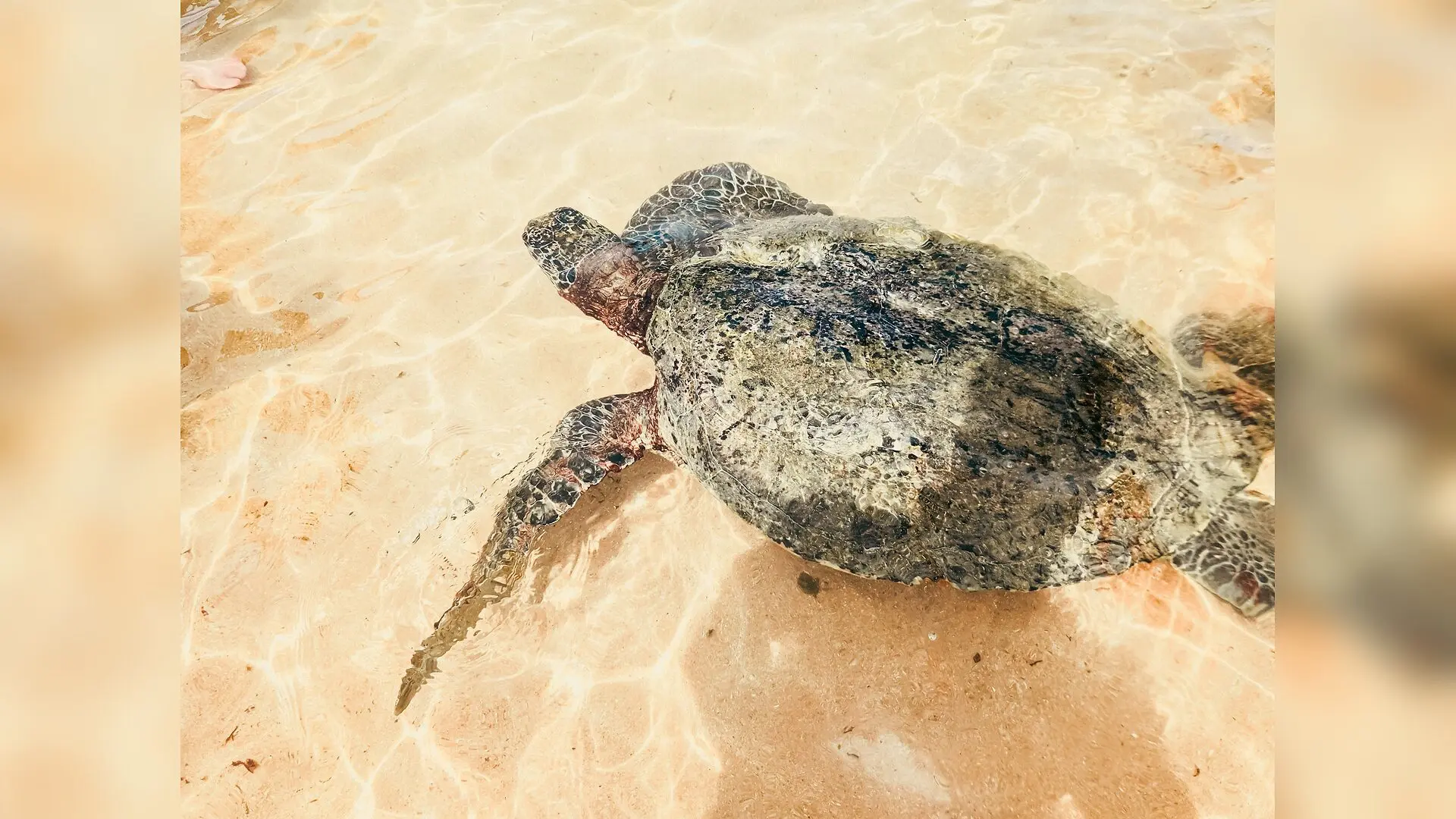
A juvenile hawksbill turtle named Naty traveled a massive straight-line distance of 3,545 kilometers across the Indian Ocean before settling in the Maldives. Researchers tracked the 38-centimeter-long turtle using a satellite tag after it was accidentally captured by a Spanish purse seiner south of Mayotte in May 2010. The journey lasted 201 days, during which the animal covered a total accumulated distance of 9,129 kilometers.
How Ocean Currents Carried the Turtle Across Thousands of Kilometers
By pairing the satellite tracking data with surface current models, researchers found that ocean drift did most of the heavy lifting. The study, published in Ecology and Evolution, reveals that roughly 6,747 kilometers, or 74 percent of Naty’s total track, resulted from passive transport by regional currents. The turtle experienced an average current speed of 1.6 kilometers per hour, with peaks reaching 9.2 kilometers per hour.
Antoine Laforge and colleagues noted that the juvenile started its trip by moving north through the Mozambique Channel. It stopped for seven days at the Banc du Geyser, a submerged rocky reef sitting 5 to 30 meters deep. After exploring this shallow bank, the turtle continued northward past the Glorieuses and Aldabra islands before turning southward in the open ocean and heading toward the Horn of Africa.
When Active Swimming Took Over From Passive Drift
Despite being largely pushed by ocean circulation, the final leg of the journey showed clear signs of purposeful navigation. As Naty approached the Maldives, it initially bypassed Huvadhu Atoll by about 50 kilometers to the east. On October 21, 2010, the turtle abruptly changed direction and swam westward against local conditions to settle in the southern part of the atoll for 37 days.
Because coral atolls rise only about 1 meter above sea level, visual cues are not enough to spot them from 50 kilometers away. Instead, scientists point to chemoreception, or the sense of smell, as the most likely guiding mechanism. Sea turtles possess a well-developed olfactory system that allows them to detect airborne volatiles and waterborne chemical signatures, such as dimethyl sulfide, which is released by biologically productive coral reefs.
What This Exceptional Journey Means for Marine Conservation
This tracking data supports a two-step navigation model in sea turtles. In this framework, large-scale ocean currents bring a juvenile into the general vicinity of a suitable home, while short-range chemical cues trigger active swimming and final settlement. While adult sea turtles use smell to find nesting beaches, this observation suggests that olfactory navigation also guides juveniles looking for their first coastal developmental habitats.
However, researchers caution that luck and regional circulation still play a major role in where young turtles end up. If ocean currents push a juvenile past a potential home before it detects chemical cues, it may miss the opportunity to settle. Catching and tracking small oceanic-phase turtles is notoriously difficult, making records like Naty’s journey a rare window into a hidden stage of marine life.
The research was published in Ecology and evolution on October 30, 2026.
This article has been fact checked for accuracy, with information verified against reputable sources. Learn more about us and our editorial process.
Last reviewed on .
Article history
- Latest version
Cite this page:
- Posted by Kamran Akhtar