Digital Nursing Technologies in Home Care Face Hurdles, But New Framework Offers a Roadmap
A scoping review of 18 digital nursing tools reveals which implementation strategies work best for bringing telehealth and smart devices into private homes.
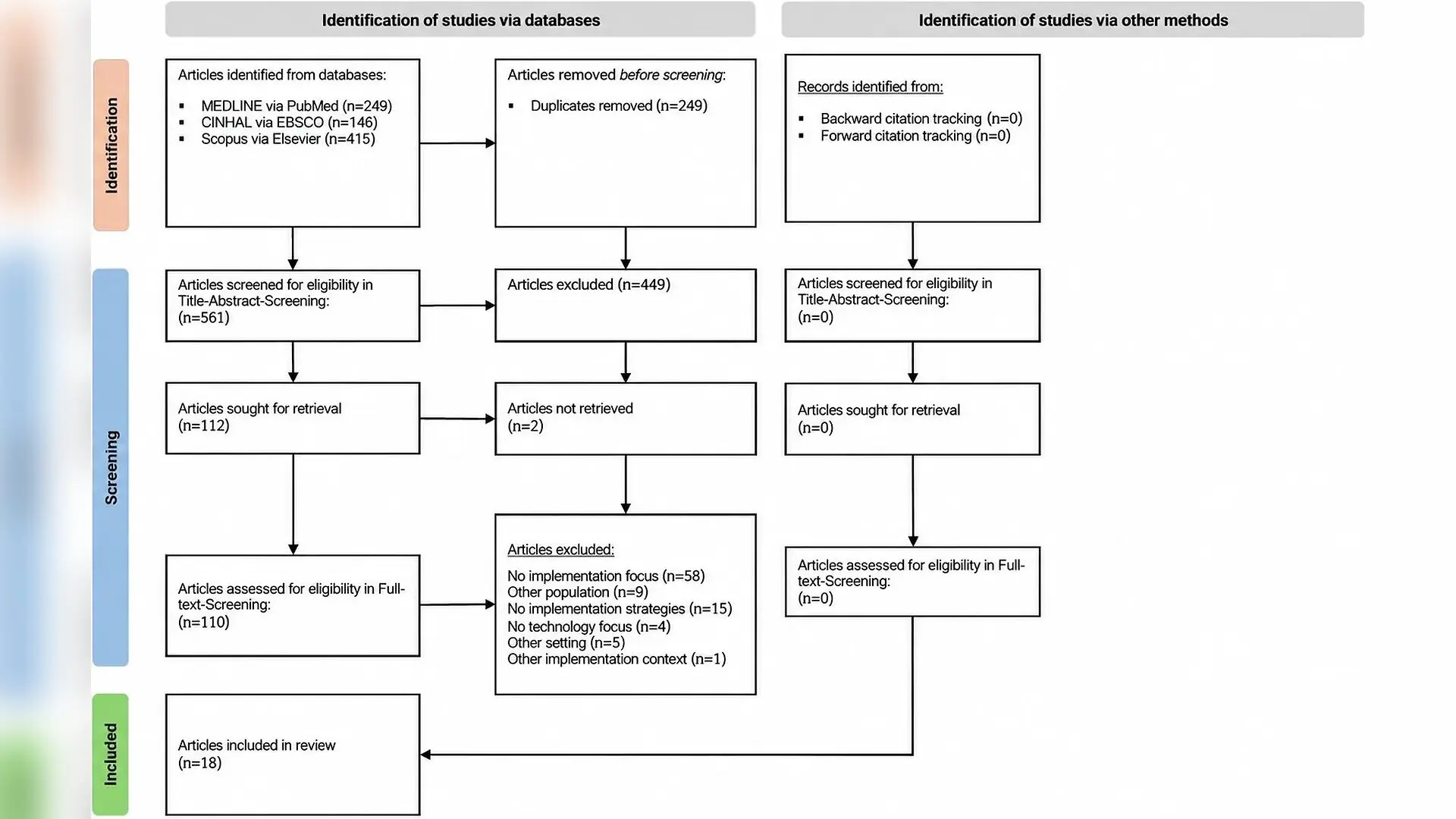
Integrating digital technologies into home nursing care often stumbles because health services lack structured plans, yet a comprehensive new review maps out the exact implementation tactics used across eighteen different devices and software platforms. The scoping review highlights that while tools ranging from sensor vests to medication-dispensing robots hold immense potential for aging populations, translating them into private living spaces requires deliberate organizational steps rather than just handing out gadgets.
Led by researcher Deliah Katzmarzyk-Sauerwald and colleagues at Hannover Medical School, the analysis examined 22 peer-reviewed articles covering 18 distinct digital nursing technologies. The work was published in the Journal of Medical Internet Research in November 2026. The authors utilized a recognized implementation science framework known as the Expert Recommendations for Implementing Change, or ERIC, to systematically categorize the methods researchers and nurses used to introduce these innovations into home settings.
Which implementation methods appeared most often in home nursing care studies?
Out of seventy-three possible implementation strategies defined in the ERIC framework, the review identified forty-four being utilized across various studies. However, four specific tactics stood out by appearing in at least half of the evaluated digital interventions. These most common approaches included conducting educational meetings, promoting adaptability of the technology, providing ongoing training, and utilizing a train-the-trainer model where primary nurses are taught so they can instruct others.
For instance, educational meetings were documented in fourteen out of the eighteen technologies examined. These sessions typically brought together nurses, technicians, and care recipients in private homes prior to launching a device to clarify operational steps and individual responsibilities. Similarly, promoting adaptability occurred in fourteen instances, allowing care teams to modify either the device setup or the workflow to better match a patient’s specific household environment or personal capabilities.
Why is introducing technology into private homes uniquely challenging?
Unlike structured hospital wards, private homes represent highly dynamic and individualized care environments. Technologies evaluated in the review included remote monitoring systems for patients with chronic conditions or dementia, telehealth video platforms for palliative support, mobile applications for symptom tracking, and automated medication management robots. Implementing these tools means navigating domestic spaces, varying digital literacy levels among older adults, and established daily routines.
The study authors note that inadequate preparation or sudden technological changes can cause frustration among formal nursing staff and informal family caregivers. Because home care resources are often severely constrained, unstructured rollouts frequently result in low adoption rates or devices being abandoned altogether. Structured strategies such as ongoing training sessions, which were identified in nine of the reviewed technologies, help maintain long-term user confidence and ensure the tools are used safely.
What do these findings mean for future healthcare practice and research?
The research points out a significant gap in how implementation processes are reported in scientific literature, with many studies offering only descriptive accounts rather than structured frameworks. The team suggests that combining the most frequently reported tactics into a single multifaceted implementation bundle could provide practical guidance for nursing services. Such a bundle would pair initial educational outreach with customized local training and flexible device adaptation during the preparation phase, followed by continuous technical support during active use.
The authors emphasize that this synthesized implementation bundle has not yet been formally tested or evaluated for real-world clinical effectiveness. Future research will need to examine whether applying these specific standardized strategies directly improves patient safety, reduces caregiver burden, and eases the integration of new healthcare technologies into daily nursing routines.
The research was published in Journal of medical Internet research on November 20, 2026.
This article has been fact checked for accuracy, with information verified against reputable sources. Learn more about us and our editorial process.
Last reviewed on .
Article history
- Latest version
Reference(s)
- Katzmarzyk-Sauerwald, Deliah., et al. “Implementation Strategies for Digital Nursing Technologies in Home Care: Scoping Review.” Journal of Medical Internet Research, vol. 28, November 20, 2026, pp. e94803-e94803. JMIR Publications Inc., doi: 10.2196/94803. <https://doi.org/10.2196/94803>.
Cite this page:
- Posted by Tariq Hassan