Gene Editing Unlocks Dormant X Chromosome Genes in Living Human Liver Cells
Disrupting the XIST silencing RNA with CRISPR tools successfully reactivated a dormant healthy allele in human liver cells.
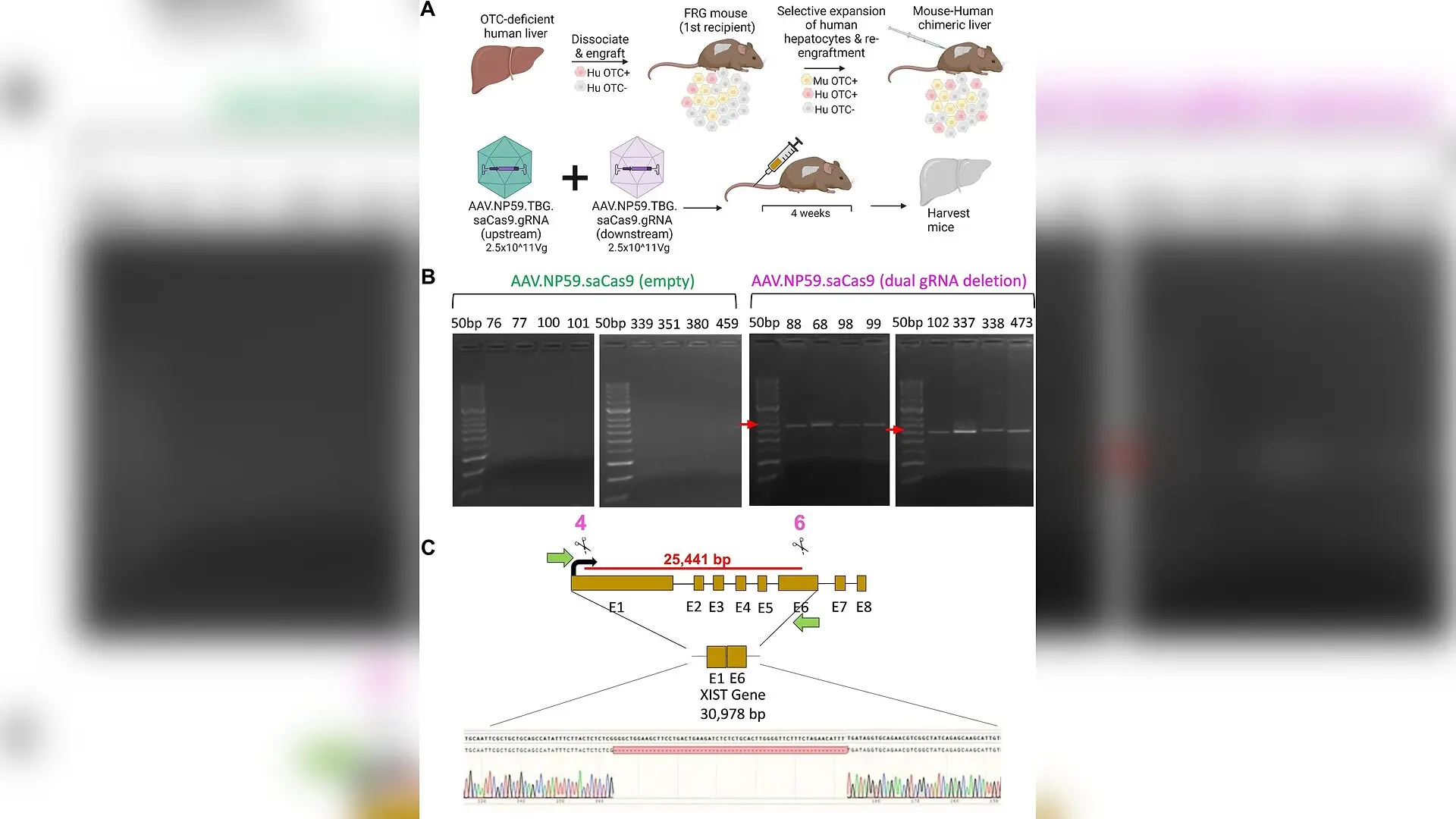
Scientists have successfully targeted and edited a master regulatory region on the inactive X chromosome inside living human cells, opening a potential new path for treating inherited genetic disorders in women.
In a study published in Nucleic Acids Research, researchers from the Children’s Medical Research Institute in Australia and their collaborators investigated whether disabling a key silencing RNA molecule could reactivate dormant healthy genes on the silenced X chromosome. The team focused on ornithine transcarbamylase deficiency, a severe metabolic liver disorder that primarily affects males but can manifest in females who inherit skewed X-chromosome inactivation patterns.
How Does the Inactive X Chromosome Respond to Gene Editing?
Healthy biological females inherit two X chromosomes, but one is randomly shut down during early embryonic development to prevent a double dose of gene products. This shutdown is orchestrated and maintained by a long non-coding RNA molecule known as XIST, which wraps around the chromosome and packs it into a dense, transcriptionally silent structure called a Barr body. Because the healthy allele in patients with ornithine transcarbamylase deficiency is trapped on this inactive chromosome, researchers have long wondered if disrupting the XIST molecule could unlock the dormant gene.
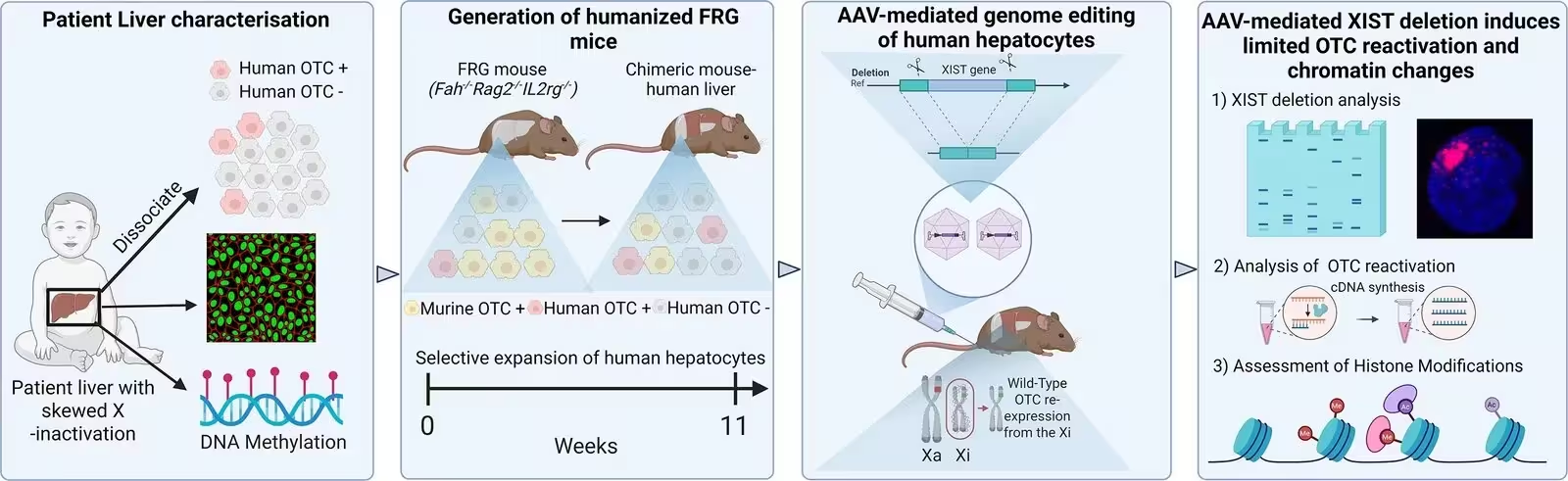
Led by senior author Ian Alexander and first author Mawj Mandwie, the research team tested this hypothesis using specialized laboratory mice engrafted with primary human hepatocytes taken from an infant patient with ornithine transcarbamylase deficiency. These chimeric mouse-human models allowed the scientists to evaluate genome and epigenome editing directly within primary human liver cells residing in a living organism. Using engineered adeno-associated virus vectors, which are common viral vehicles used to deliver genetic therapies safely, the team deployed the CRISPR-Cas9 genome editing system to cut and delete segments of the human XIST gene.
Can Cutting the XIST Molecule Reactivate Dormant Genes?
Despite heavy chemical modifications known as DNA methylation that naturally coat the inactive X chromosome, the researchers discovered that both the active and inactive X chromosomes were equally accessible to the CRISPR-Cas9 machinery. When the team targeted the XIST gene with dual guide ribonucleic acids, they achieved successful segmental deletions and eliminated the XIST RNA transcript in approximately seven out of ten human liver cells.
Subsequent molecular analyses revealed that this targeted XIST deletion triggered a limited but detectable reactivation of the healthy wild-type ornithine transcarbamylase allele. Specifically, allele-specific sequencing demonstrated a small increase of about two percent in normal messenger ribonucleic acid transcripts coming from the previously silenced chromosome. Sanger sequencing validation further confirmed an increased proportion of the healthy allele in treated cell populations.
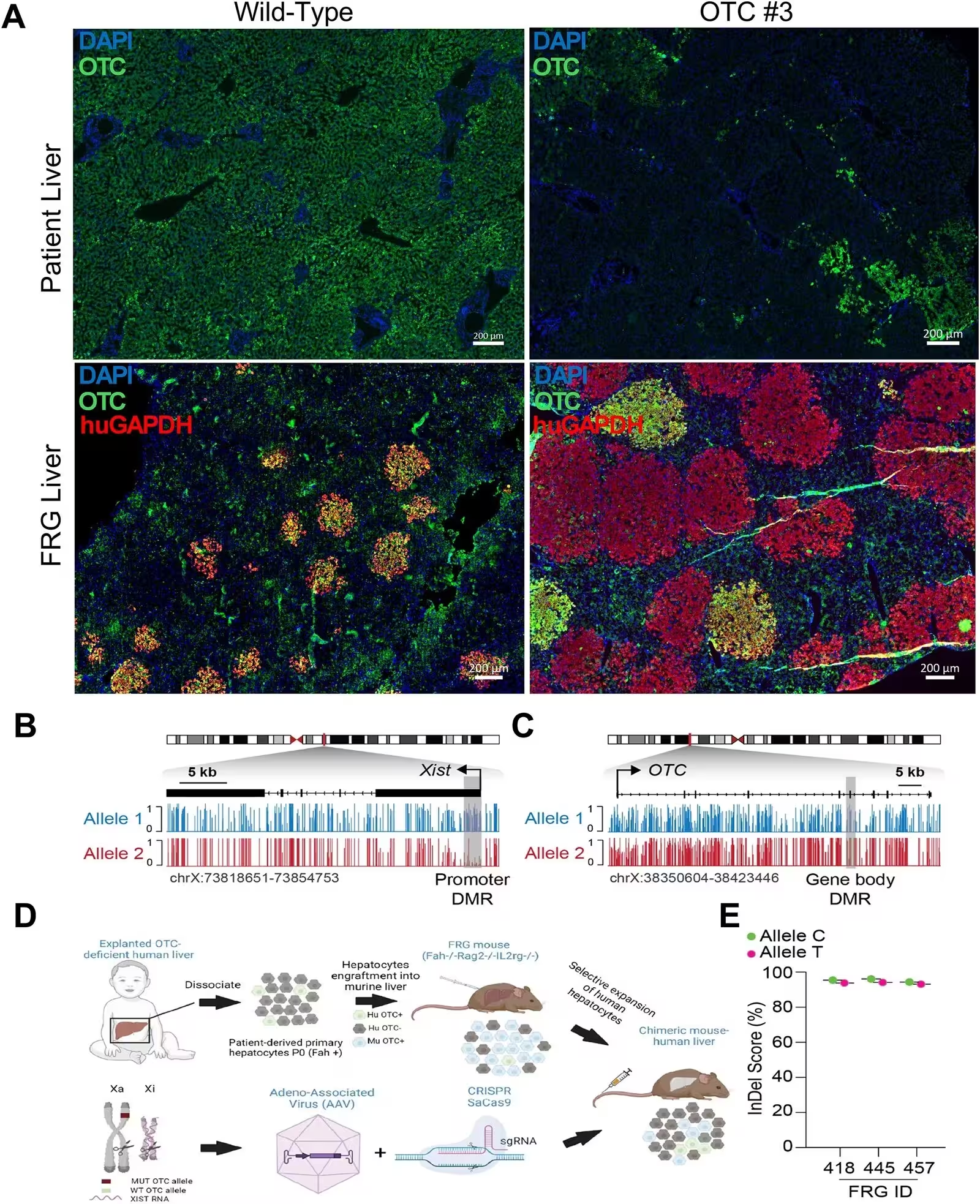
What Are the Broader Epigenetic Consequences of Viral Delivery and XIST Loss?
While the reactivation of the dormant gene offers a promising proof of concept, the study also uncovered complex, widespread alterations in the broader cellular landscape. Detailed chromatin profiling using specialized cleavage under targets and release assays revealed that viral vector delivery alone caused a global reduction in active promoter histone marks across both the X chromosomes and control autosomes. Furthermore, XIST deletion reduced repressive histone marks specifically on the X chromosome while simultaneously decreasing active enhancer marks more globally, pointing toward hepatocellular stress associated with vector exposure and genome cutting.
The authors note that these wider chromatin shifts emphasize the need to carefully distinguish between vector-induced side effects and the intended consequences of gene editing. Because a modest restoration of enzyme activity of just a few percent can provide clinical benefit for ornithine transcarbamylase deficiency, this work establishes a vital foundation for developing safer, more precise genetic therapies for women affected by X-linked conditions.
The research was published in Nucleic acids research on November 23, 2026.
This article has been fact checked for accuracy, with information verified against reputable sources. Learn more about us and our editorial process.
Last reviewed on .
Article history
- Latest version
Reference(s)
- Mandwie, Mawj., et al. “AAV-mediated XIST deletion in female human hepatocytes with skewed X-inactivation induces limited reactivation of the X-linked OTC gene in vivo.” Nucleic Acids Research, vol. 54, no. 22, November 23, 2026 Oxford University Press (OUP), doi: 10.1093/nar/gkag1237. <https://doi.org/10.1093/nar/gkag1237>.
Cite this page:
- Posted by David Anderson