Smartphone Macro Lenses Can Identify Invasive Mosquitoes By Their Wings Nearly As Well As Laboratory Microscopes
Testing low-cost phone cameras for vector surveillance reveals high accuracy, though human measurement errors require careful data collection.
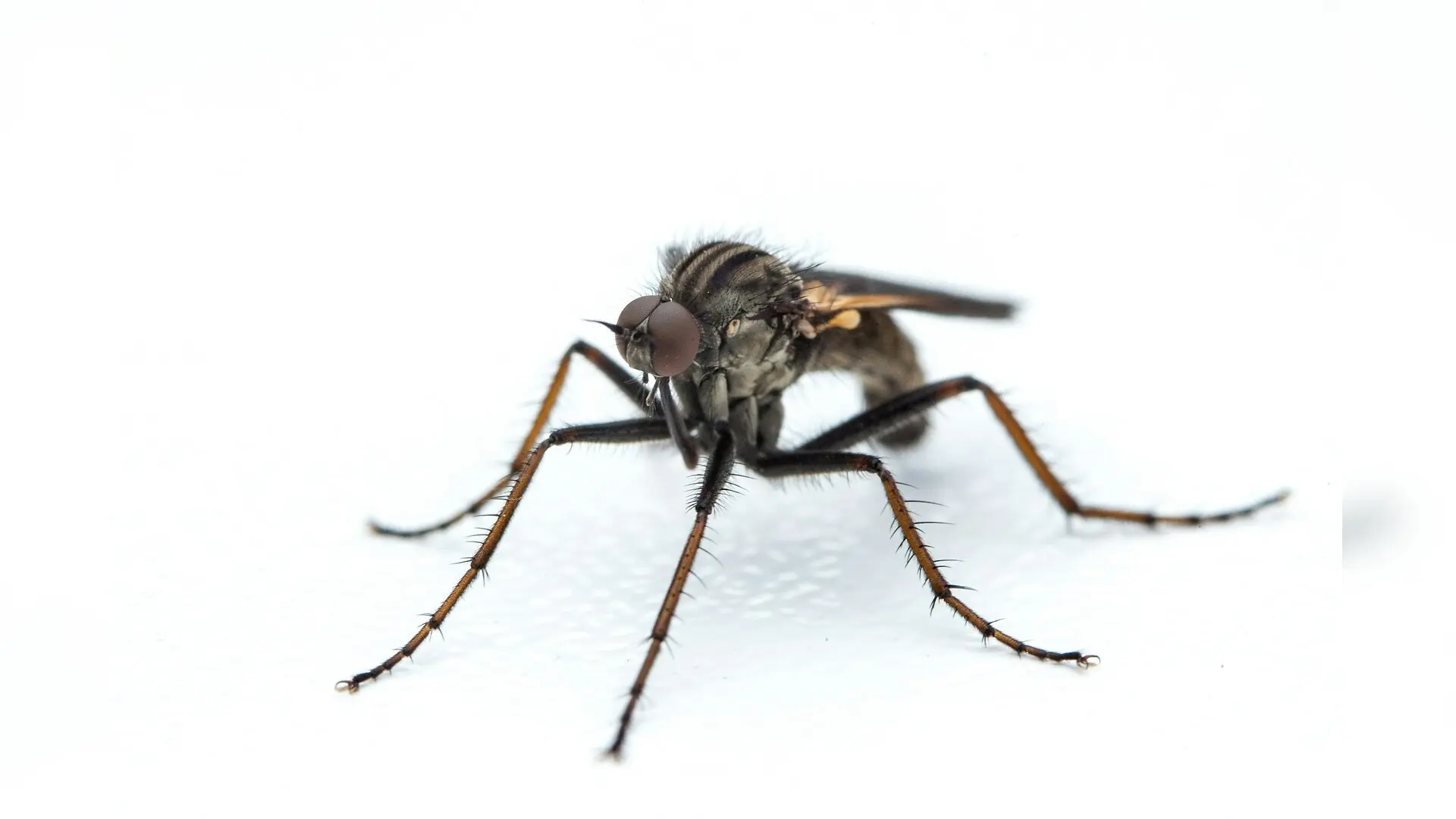
A smartphone equipped with a simple macro lens can accurately identify four invasive mosquito species by their wings nearly as well as an expensive laboratory microscope, but only if a single person handles all the image measurements. The research, published in PeerJ, addresses a major bottleneck in tracking insects that carry dangerous tropical illnesses across Europe.
Invasive mosquitoes such as Aedes aegypti and Aedes albopictus have expanded their geographic range rapidly over recent years, bringing risks of dengue, chikungunya, and Zika viruses. Rapid detection of these disease vectors normally requires either complex genetic testing or professional taxonomic experts who can spot tiny anatomical differences. Because traditional physical identification demands specialized training and well-equipped laboratories, researchers have increasingly turned to geometric wing morphometrics, a technique that analyzes the geometric shapes and vein intersections of insect wings.
How Did the Research Team Test Smartphone Identification?
Felix Gregor Sauer and his colleagues at the Bernhard Nocht Institute for Tropical Medicine set out to test whether low-cost hardware could replace expensive optical setups. The team examined the right wings of 670 female mosquito specimens covering four major invasive species found in Europe: 184 specimens of Aedes aegypti, 156 specimens of Aedes albopictus, 166 specimens of Aedes japonicus, and 164 specimens of Aedes koreicus.
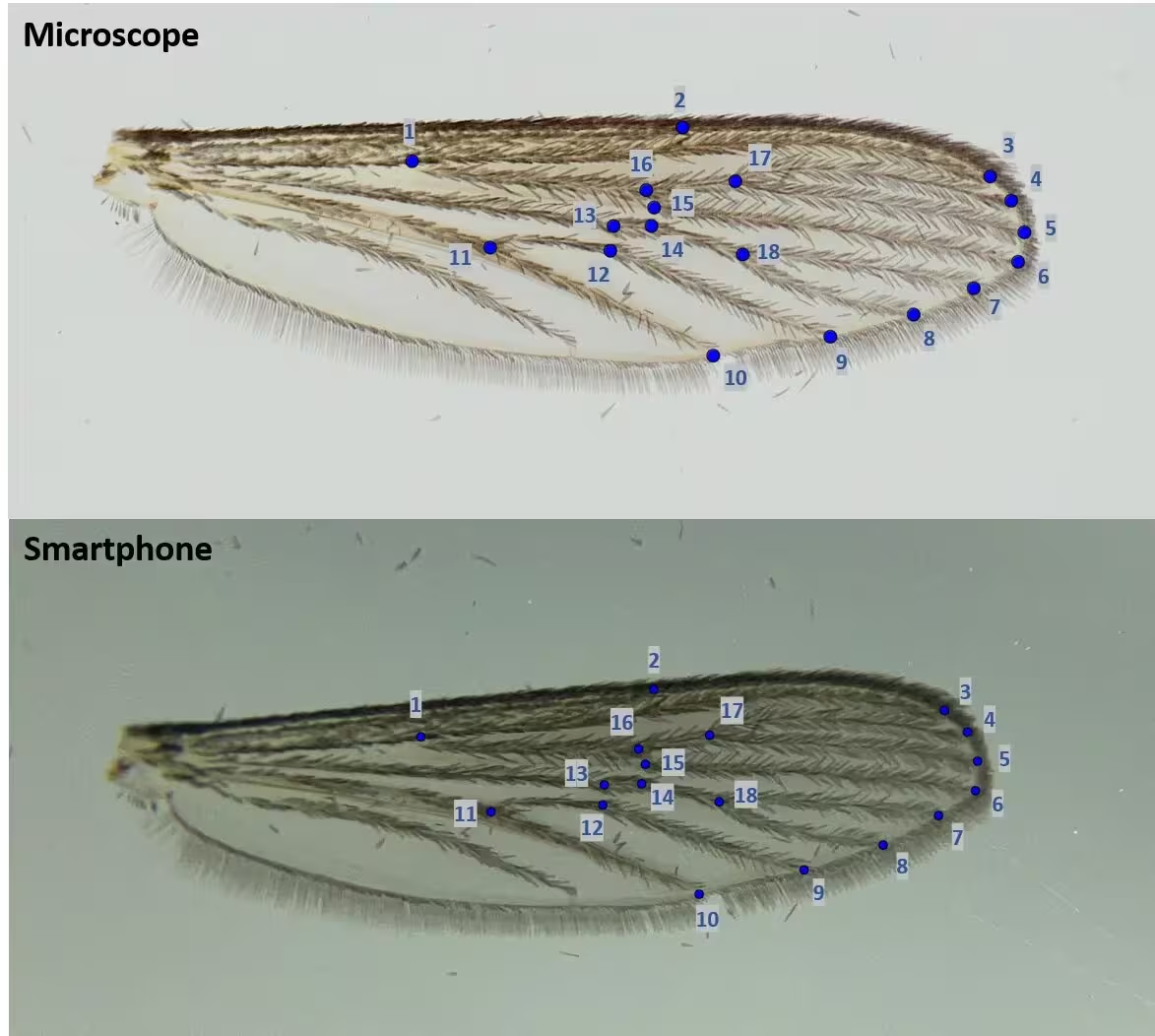
The researchers dissected and mounted each wing on a glass slide. They then captured digital images using two distinct setups, namely a professional stereomicroscope paired with a high-end laboratory camera, and a consumer smartphone attached to a low-cost macro lens. For every resulting digital photograph, an experienced operator recorded eighteen specific anatomical landmarks located at the junctions of the wing veins using specialized image analysis software.
Which Species Proved Hardest to Tell Apart?
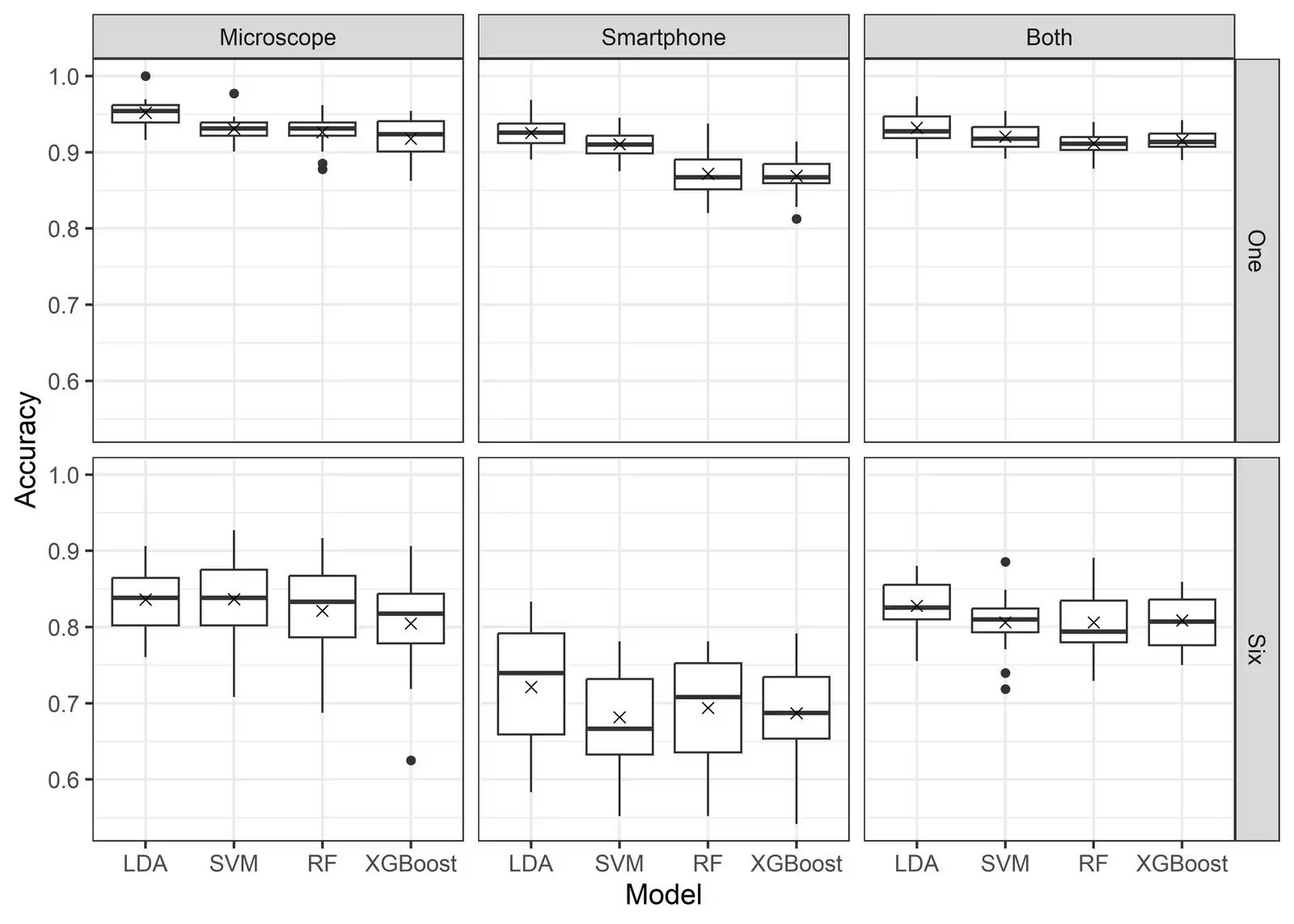
To evaluate how well computer algorithms could separate the species based on wing geometry, the authors tested four different statistical and machine learning classifiers, including linear discriminant analysis, support vector machines, Random Forest, and XGBoost. When a single experienced observer digitized all the landmarks, linear discriminant analysis achieved the highest overall classification success, reaching an average accuracy of ninety-five percent for microscope photographs and ninety-two percent for smartphone pictures.
The analysis revealed that most classification mistakes happened between the two closely related species Aedes japonicus and Aedes koreicus, where accuracy ranged from eighty to ninety-two percent. By contrast, Aedes aegypti and Aedes albopictus were distinguished with high precision, achieving success rates between ninety-two and ninety-nine percent.
Why Does Having Multiple Observers Change the Accuracy?
A critical test of the method involved having six different people analyze a shared subset of one hundred sixty wing images to measure human error. When multiple observers placed the eighteen landmarks, classification accuracy dropped more severely for smartphone photographs than for microscope images. Statistical modeling using Procrustes analysis of variance showed that human observer variation accounted for nearly eight percent of total wing shape variation, with certain vein junctions proving especially tricky to pinpoint consistently.
Specifically, landmark number thirteen, where a pale cross vein connects two main longitudinal veins, showed the highest variability among different observers because the intersection is difficult to see clearly. Landmark number two, marking where the costa and subcosta veins meet near the edge of the wing, displayed the highest variation across repeated measurements of the same image due to dense overlapping scales.
What Are the Practical Limits for Field Monitoring?
The findings indicate that while smartphone-based imaging offers an affordable and accessible alternative for field stations with limited budgets, human consistency is paramount. Because different operators introduce subtle placement biases that skew the geometric data, the authors recommend that any monitoring program relying on smartphone photos should have all landmark coordinates collected by a single trained individual. Bypassing expensive microscopes could greatly accelerate local vector surveillance, helping public health agencies monitor invasive disease carriers before local populations become firmly established.
The research was published in PeerJ on November 19, 2026.
This article has been fact checked for accuracy, with information verified against reputable sources. Learn more about us and our editorial process.
Last reviewed on .
Article history
- Latest version
Reference(s)
- Sauer, Felix Gregor., et al. “Accurate identification of medically important Aedes mosquito species using low-cost imaging and geometric wing morphometrics.” PeerJ, vol. 14, November 19, 2026, pp. e21918 PeerJ, doi: 10.7717/peerj.21918. <https://doi.org/10.7717/peerj.21918>.
Cite this page:
- Posted by Linda Wilson