Organic Molecules Actively Transform Rocky Seafloors on Icy Moons Like Enceladus
Laboratory simulations reveal that carbon compounds accelerate mineral breakdowns and form new structures on alien ocean floors.
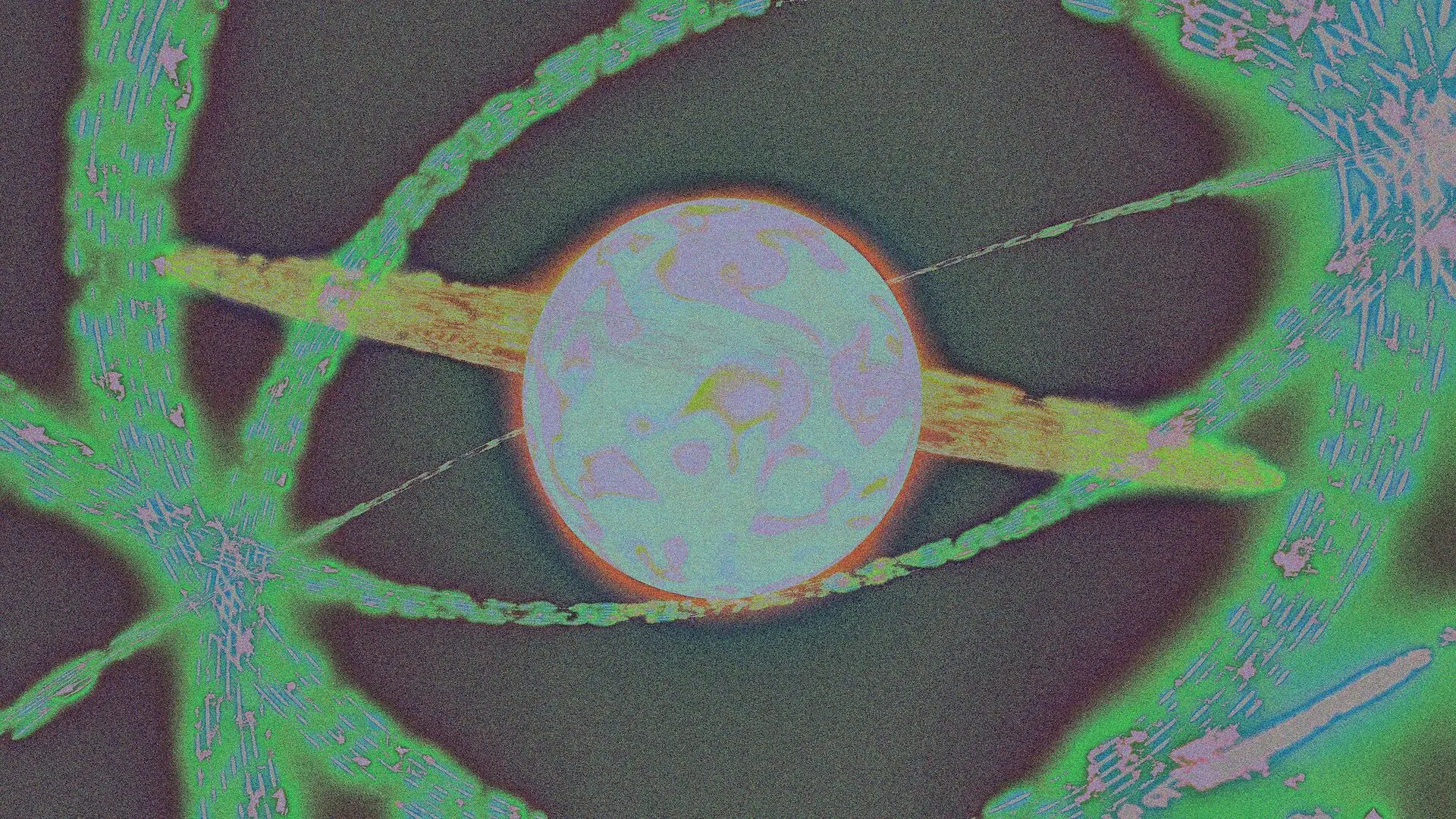
Deep beneath the frozen crust of Saturn’s icy moon Enceladus, hydrothermal activity might be far more complex than scientists previously imagined, according to a laboratory simulation that mimics the alien world’s hidden seafloor. Researchers led by scientists from the University of Leeds sought to understand how rock and water interact in these extreme, distant environments where hidden oceans sit atop rocky cores. By testing how carbon-rich asteroid materials react under extreme pressures and temperatures, the team discovered that organic molecules play an active, chemical role in shaping the mineral landscape rather than just sitting idly by.
The team ground up carbonaceous asteroid material, which is similar to the building blocks that formed Enceladus billions of years ago, and placed it inside a high-pressure experimental apparatus. To watch chemical transformations unfold in real time, the team analyzed the samples using high-resolution synchrotron x-ray diffraction, which involves shining extremely bright beams of X-rays through the material as it is heated and squeezed. This detailed work was published in Science Advances on November 20, 2026, offering a rare window into mineral reactions that typically take place far out of reach in the outer solar system.
How Do Organic Compounds Alter Seafloor Minerals in Deep Space?
When the researchers subjected the asteroid simulant to conditions mirroring the seafloor of Enceladus, they observed that carbon compounds actively catalyzed the breakdown of silicate minerals containing aluminum. Normally, these mineral transformations require immense energy and specific catalysts to proceed at measurable rates. However, the presence of organic matter dramatically accelerated the chemical reactions, suggesting that organic molecules in alien hydrothermal systems are not merely byproducts of chemistry, but active participants that drive mineral evolution.
Furthermore, the experiments revealed that organic matter promoted the dissolution of pyrite, a common iron sulfide mineral often called fool’s gold. As the pyrite dissolved, new minerals began to precipitate out of the heated fluid, including pyrrhotite, another iron sulfide, and melanophlogite, a form of silica that traps gas molecules within its crystal cage. These specific mineral assemblages provide tangible chemical signatures that future planetary missions might look for when analyzing plumes erupting from the south pole of Enceladus.
What Does This Mean for the Search for Extraterrestrial Life?
Enceladus shoots massive plumes of water vapor, salts, and simple organic compounds through cracks in its icy shell, and spacecraft have sampled these materials from orbit. Understanding the mineral reactions happening at the rocky core interface helps astrobiologists connect what is measured in the plumes to the chemical environments down below. If organic compounds actively break down and restructure rocks, they can release chemical energy and trace elements into the subsurface ocean. Such geochemical gradients are precisely the kind of environment where primitive life could potentially find an energy source to sustain itself.
The authors note that while these laboratory simulations provide crucial baseline data, they represent simplified models of a dynamic planetary system operating over geological timescales. Real hydrothermal systems on icy moons involve complex fluid flows, varying thermal gradients, and diverse elemental compositions that are difficult to replicate fully on Earth. Even with these experimental limitations, the work demonstrates that organic-mineral interactions must be factored into any serious model of how ocean worlds evolve and whether they can support habitable conditions.
The research was published in Science advances on November 20, 2026.
This article has been fact checked for accuracy, with information verified against reputable sources. Learn more about us and our editorial process.
Last reviewed on .
Article history
- Latest version
Reference(s)
- Jenkins, Laura E.., et al. “The importance of organics in hydrothermal environments: A synchrotron laboratory study.” Science Advances, vol. 12, no. 47, November 20, 2026 American Association for the Advancement of Science (AAAS), doi: 10.1126/sciadv.aei7801. <https://doi.org/10.1126/sciadv.aei7801>.
Cite this page:
- Posted by Michael Ellison