Deep-Sea Microbes Consume Methane and Produce Abundant Sugars Beneath the Ocean Floor
Isotope experiments reveal that methane-eating microbial consortia synthesize high concentrations of trehalose and sucrose, providing a hidden energy source in deep-sea sediments.
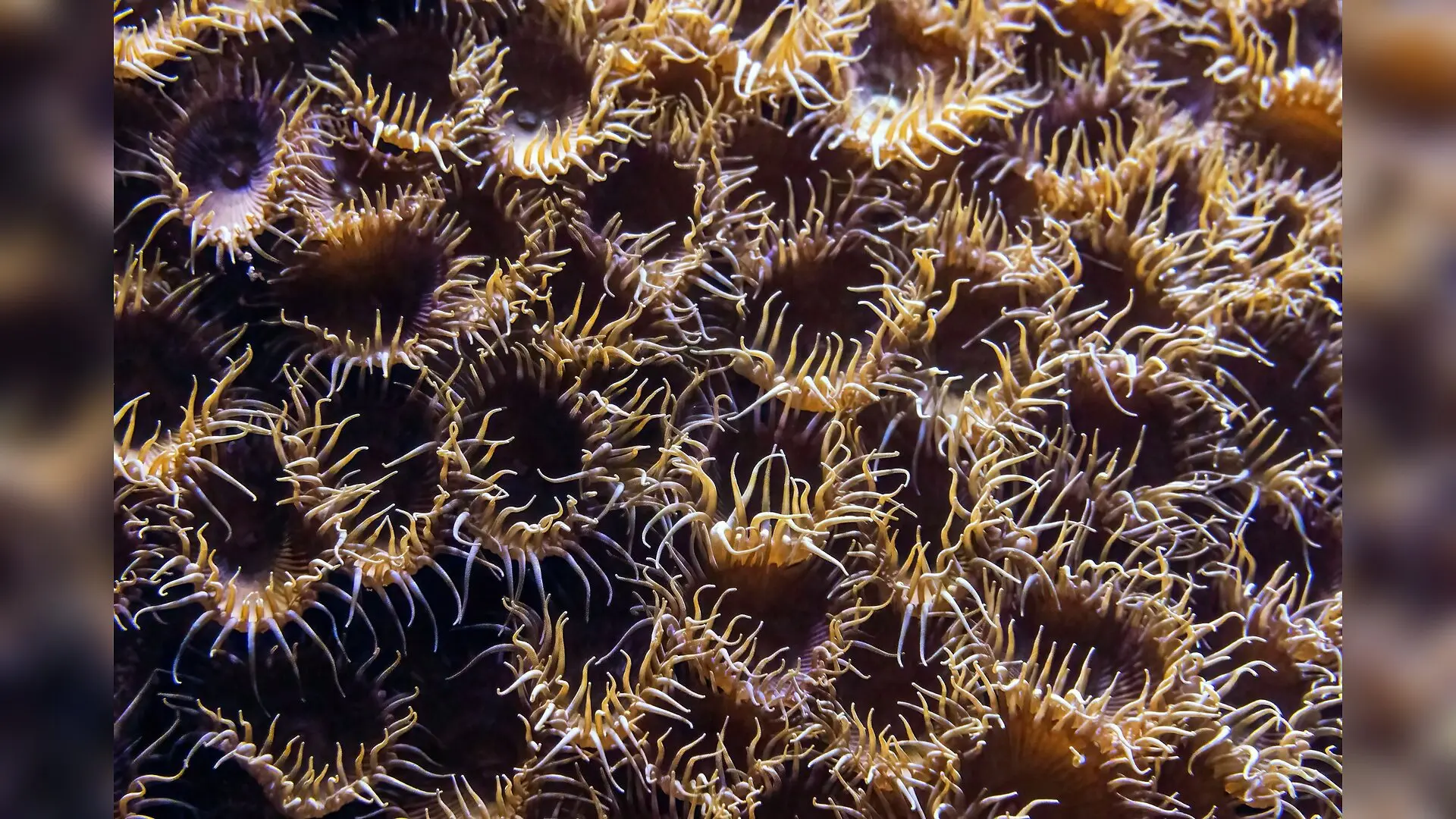
Deep beneath the ocean floor off the coast of Oregon, specialized microbes consuming methane are unexpectedly manufacturing large quantities of common sugars, offering a fresh explanation for how organic carbon fuels mysterious deep-sea food webs. Researchers investigating an active methane-venting zone in Astoria Canyon discovered that underground consortia of methane-eating archaea and sulfate-reducing bacteria produce abundant amounts of the disaccharides trehalose and sucrose.
The findings, published in Nature Communications, reveal a previously unrecognized biological bridge connecting deep geological methane emissions to dissolved organic carbon in marine porewaters. The international research team, led by geoscientist Lennart Stock from the University of Bremen, combined geochemical sampling with stable isotope probing to trace how inorganic carbon derived from methane is rapidly channeled into sugar biosynthesis.
How Do Methane-Eating Microbes Synthesize Sugars 760 Meters Underwater?
Cold seeps are dynamic seafloor environments where methane and other hydrocarbon gases leak upward from beneath the Earth crust. At a site called Sable Seep within Astoria Canyon at a water depth of 760 meters, sediment cores revealed a broad sulfate-methane transition zone, which is the boundary layer where microorganisms consume upward-migrating methane using dissolved sulfate from seawater. Within this active zone, sediment layers contained up to 17.7 milligrams per liter of trehalose alongside porewaters holding up to 1 milligram per liter of sucrose.
To confirm that these sugars originated directly from the local microbial activity rather than sinking organic matter from the surface ocean, the team conducted stable isotope probing experiments using sediment collected from the site. By feeding the sediment carbon-13 labeled dissolved inorganic carbon in the presence of methane, the researchers tracked how the atoms moved through the ecosystem over a period of 30 days. The results showed heavy isotopic enrichment in both trehalose and sucrose, proving that the local anaerobic methane-oxidizing community actively builds these disaccharides from carbon derived from methane.
Why Do Deep-Sea Microorganisms Produce Trehalose and Sucrose?
While sucrose is commonly associated with plants and photosynthetic surface organisms, finding it deep underground points to active synthesis by sulfate-reducing bacteria. Trehalose, on the other hand, can be manufactured by both methane-oxidizing archaea and their bacterial partners as a cellular defense mechanism. In extreme environments, these sugars function as compatible osmolytes that help balance high salinity stress, stabilize fragile cell membranes, and protect proteins from denaturation.
Furthermore, the measurements indicated that these disaccharides turn over faster than traditional diagnostic lipid biomarkers used to track microbial growth. Trehalose and sucrose exhibited turnover times of 148 days and 211 days respectively during the incubation experiments, suggesting they play an active metabolic role rather than remaining inert. The researchers calculate that for every mole of methane oxidized, the microbial community converts about 1.1 millimoles of carbon into these sugars.
What Does This Sugar Production Mean for the Global Ocean Carbon Cycle?
When these disaccharides leak out of microbial cells and into the surrounding aqueous fluid, they enter the dissolved organic carbon pool as a highly labile, easily digestible energy source. Because deep-sea sediments are generally starved of organic nutrients, this methane-derived sugar production may sustain diverse ancillary microbial populations living around the cold seeps, including Actinobacteria, Bacteroidetes, and Chloroflexi.
Extrapolating their experimental rates to a global scale using estimated annual methane consumption figures of 380 teragrams per year, the authors estimate a worldwide production of approximately 0.75 teragrams of trehalose and sucrose annually from anaerobic methane oxidation. While this total is modest compared to surface marine photosynthesis, it provides a vital localized lifeline on the dark, energy-limited ocean floor, reshaping how scientists understand organic carbon export from deep geological reservoirs.
The research was published in Nature communications on November 20, 2026.
This article has been fact checked for accuracy, with information verified against reputable sources. Learn more about us and our editorial process.
Last reviewed on .
Article history
- Latest version
Reference(s)
- Stock, Lennart., et al. “Disaccharide production in marine cold seeps links dissolved organic carbon to anaerobic oxidation of methane.” Nature Communications, vol. 17, no. 1, November 20, 2026 Springer Science and Business Media LLC, doi: 10.1038/s41467-026-79632-0. <https://doi.org/10.1038/s41467-026-79632-0>.
Cite this page:
- Posted by Vikram Desai