GHK-Basic: Molecular Signaling, Structural Regulation, and Research Innovation
Explore GHK-Basic, a tripeptide studied for its role in molecular signaling, gene regulation, structural organization, and emerging peptide research.
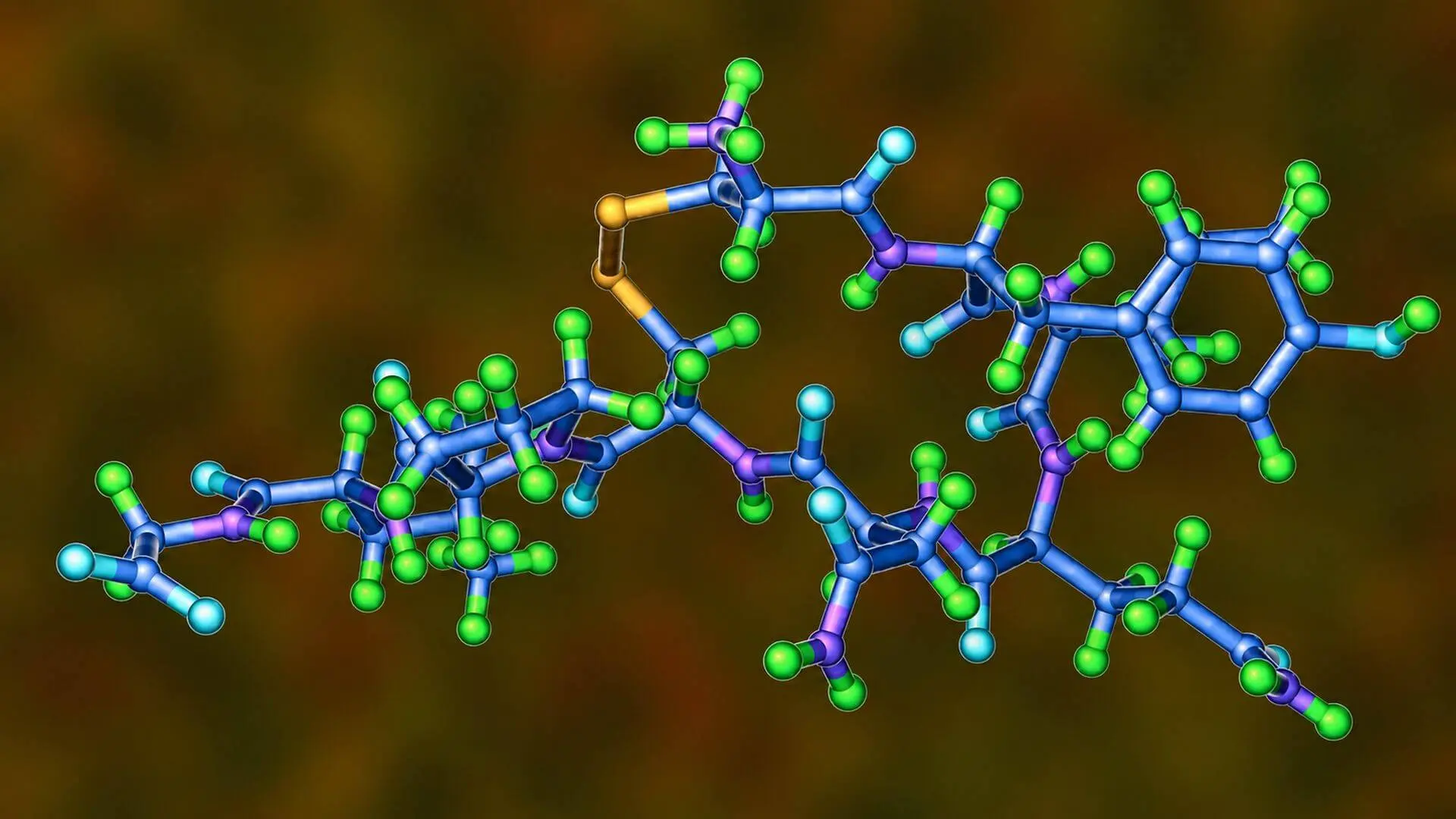
Among the short regulatory peptides that have attracted sustained scientific curiosity, GHK occupies a distinctive conceptual niche. Composed of just three amino acids—glycine, histidine, and lysine—this peptide has been discussed in scientific literature for decades, often in relation to its copper-binding counterpart. Yet the copper-free form, frequently referred to as GHK-Basic, presents its own set of intriguing molecular properties that merit independent theoretical consideration.
GHK-Basic may be understood as a minimal informational peptide, one whose simplicity does not preclude complexity of interaction. Research indicates that small peptides of this nature might operate less as linear messengers and more as modulators of molecular environments, influencing signaling tone, transcriptional orientation, and structural coherence within the organism. Within this framework, GHK-Basic has been hypothesized to function as a regulatory signal fragment capable of interacting with multiple biochemical layers simultaneously.
Molecular Identity and Structural Characteristics
GHK-Basic consists of a tripeptide sequence: glycyl-L-histidyl-L-lysine. Despite its brevity, the peptide possesses notable chemical versatility. The presence of histidine contributes an imidazole side chain capable of coordinating metal ions, while lysine introduces a positively charged ε-amino group that may facilitate electrostatic interactions with negatively charged biomolecules such as nucleic acids and glycosaminoglycans.
In its basic, copper-free form, GHK is theorized to exist in a dynamic equilibrium between free peptide states and transiently associated molecular complexes. Investigations purport that this unbound configuration may allow the peptide to act as a molecular scout, responsive to environmental cues and capable of altering its interaction profile depending on local biochemical conditions.
GHK-Basic as an Informational Peptide
The concept of informational peptides has gained traction within peptide biology. These peptides are theorized to carry regulatory meaning disproportionate to their size, influencing gene expression patterns and cellular behavior through subtle signaling modulation rather than overt activation.
Research suggests that GHK-Basic may participate in transcriptional regulation by indirectly with signaling cascades that influence gene networks related to structural maintenance, oxidative balance, and cellular communication. Investigations purport that exposure to GHK-related peptides in research models correlates with shifts in gene expression profiles associated with tissue organization and metabolic coordination.
Interaction with Metal Ions and Molecular Context
While GHK is widely studied for its affinity for copper ions, the basic, uncomplexed form deserves attention precisely because of its transitional nature. Studies suggest that GHK-Basic may act as a precursor state, with the potential of binding copper when available, yet retaining biological relevance in its unbound configuration.
Research indicates that this reversible binding potential may allow the peptide to function as a molecular intermediary between metal ion availability and biological signaling. In environments where copper concentrations fluctuate, GHK-Basic is believed to serve as a buffering or sensing agent, subtly influencing redox-related processes without directly driving them.
Structural Regulation and Extracellular Matrix Dynamics
One of the most discussed domains surrounding GHK-related peptides involves structural proteins and extracellular matrix organization. Investigations purport that GHK-Basic may interact with matrix components such as collagen fragments, proteoglycans, and matrix-associated signaling molecules.
Rather than initiating matrix synthesis outright, the peptide is thought to influence the regulatory signals that govern matrix turnover, alignment, and renewal. This perspective aligns with research suggesting that short peptides may often modulate enzymatic environments rather than acting as direct substrates or inhibitors.
Oxidative Balance and Cellular Stress Coordination
Another area of scientific interest concerns the peptide’s potential role in oxidative signaling networks. Research indicates that GHK-related peptides may influence pathways associated with oxidative balance, not by neutralizing reactive species directly, but by modulating the signaling systems that govern antioxidant responses.
Studies suggest that GHK-Basic might participate in this domain through its interaction with redox-sensitive transcription factors and signaling intermediates. Investigations purport that the peptide’s presence correlates with altered expression of genes involved in cellular protection and metabolic resilience.
Gene Expression Modulation and Epigenetic Considerations
Emerging discussions in peptide research increasingly focus on gene expression modulation and epigenetic regulation. Short peptides have been hypothesized to influence chromatin accessibility, transcription factor activity, and non-coding RNA dynamics.
Findings imply that GHK-Basic may intersect with these processes by acting upstream of gene regulatory networks. Research suggests that exposure to GHK-related peptides in research models is associated with coordinated shifts across multiple gene families rather than isolated transcriptional changes.
Distinguishing GHK-Basic from GHK-Copper Complexes
While much attention has been given to copper-bound forms of GHK, it is essential to conceptually separate these entities. GHK-Basic represents a foundational state, one that may exist prior to metal association or independently within specific biochemical contexts.
This distinction matters because it reframes the peptide not merely as a delivery vehicle for copper, but as an active participant in signaling logic. Research indicates that many of the transcriptional and structural signaling properties attributed to GHK may originate, at least in part, from the basic peptide itself.
Understanding this distinction allows for more precise experimental design and interpretation within peptide research.
Conclusion: Small Sequence, Expansive Possibility
GHK-Basic exemplifies a growing appreciation within molecular science for minimal regulators with maximal contextual influence. Though composed of only three amino acids, the peptide seems to occupy a rich theoretical landscape—intersecting gene regulation, structural signaling, redox coordination, and systems biology.
Note: This article discusses a research compound not approved for human medical use. See our full disclaimer for more.
Last reviewed on .
Reference(s)
- Pickart, Loren. “The human tri-peptide GHK and tissue remodeling.” Journal of Biomaterials Science, Polymer Edition, vol. 19, no. 8, 2008, pp. 969-988. Taylor & Francis, doi: 10.1163/156856208784909435. <https://doi.org/10.1163/156856208784909435>.
- Maquart, F.X.., et al. “Matrikines in the regulation of extracellular matrix degradation.” Biochimie, vol. 87, no. 3, 2005, pp. 353-360., isbn: 10.1016/j.biochi.2004.10.006. <https://doi.org/10.1016/j.biochi.2004.10.006>.
- Pickart, Loren., et al. “GHK Peptide as a Natural Modulator of Multiple Cellular Pathways in Skin Regeneration.” BioMed Research International, vol. 2015, no. 1, 07 July 2015, doi: 10.1155/2015/648108. <https://doi.org/10.1155/2015/648108>.
- Theimer, Carla A.., et al. “Structural and Functional Characterization of Human Telomerase RNA Processing and Cajal Body Localization Signals.” Molecular Cell, vol. 27, no. 6, 2007, pp. 869-881. Elsevier, doi: 10.1016/j.molcel.2007.07.017. <https://doi.org/10.1016/j.molcel.2007.07.017>.
- Verdier-Sévrain, Sylvie., et al. “Skin hydration: a review on its molecular mechanisms.” Journal of Cosmetic Dermatology, vol. 6, no. 2, 2007, pp. 75-82., doi: 10.1111/j.1473-2165.2007.00300.x. <https://doi.org/10.1111/j.1473-2165.2007.00300.x>.
- Posted by Web Desk