Physicists Reveal How Entangled Quantum Twins Trade Energy Without Melting Into Chaos
A new mathematical framework shows how coupled quantum copies can bypass thermalization and sustain long-lived energy oscillations.
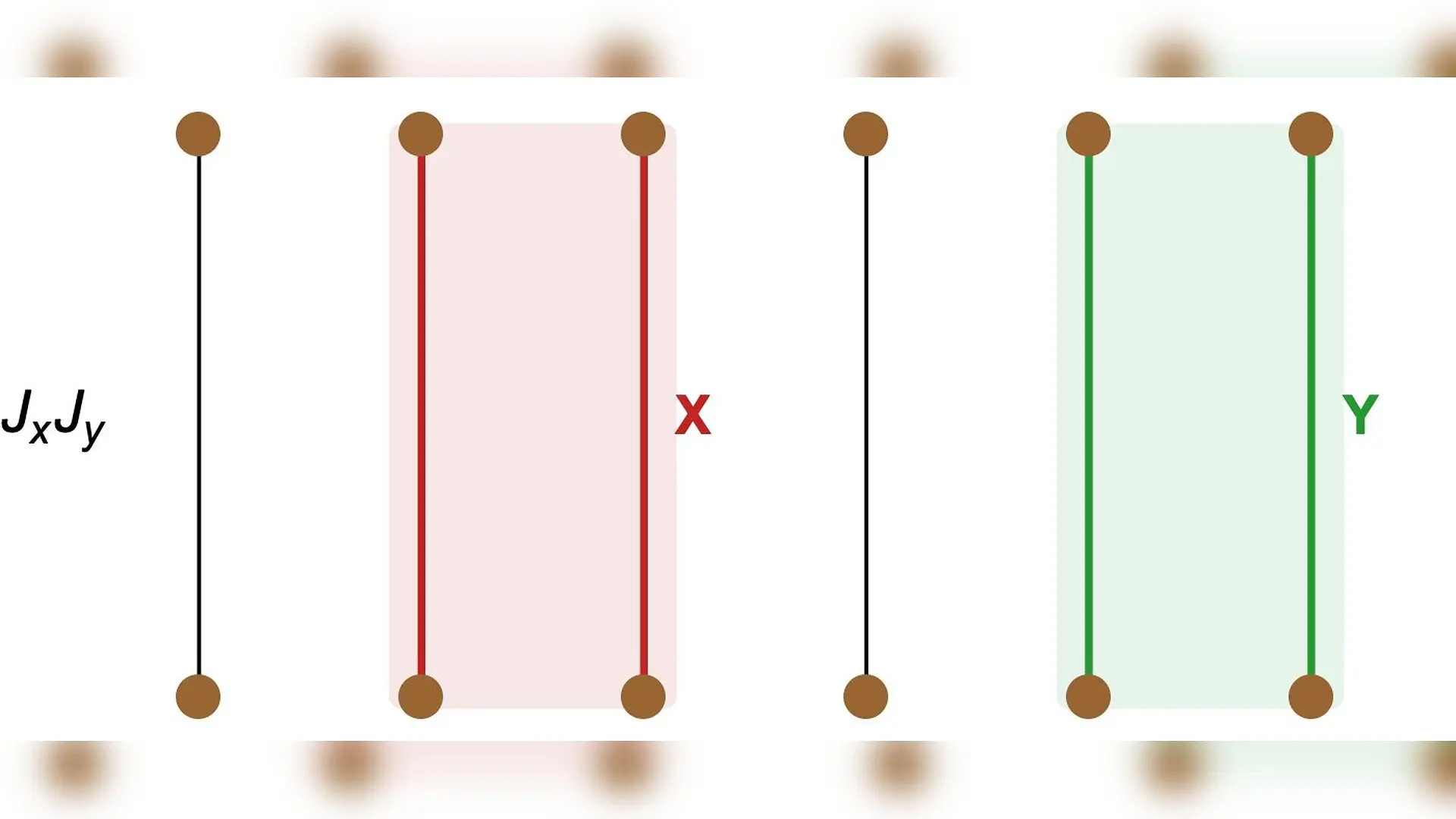
Quantum systems normally scramble information and plunge into thermal chaos, but researchers have identified a physical mechanism that lets two identical copies of a quantum system trade energy back and forth without dissolving into randomness. Physicists Debarghya Chakraborty and Dario Rosa from the ICTP South American Institute for Fundamental Research in Brazil have developed a general mathematical construction showing how special states, known as quantum many-body scars, naturally emerge in coupled quantum systems.
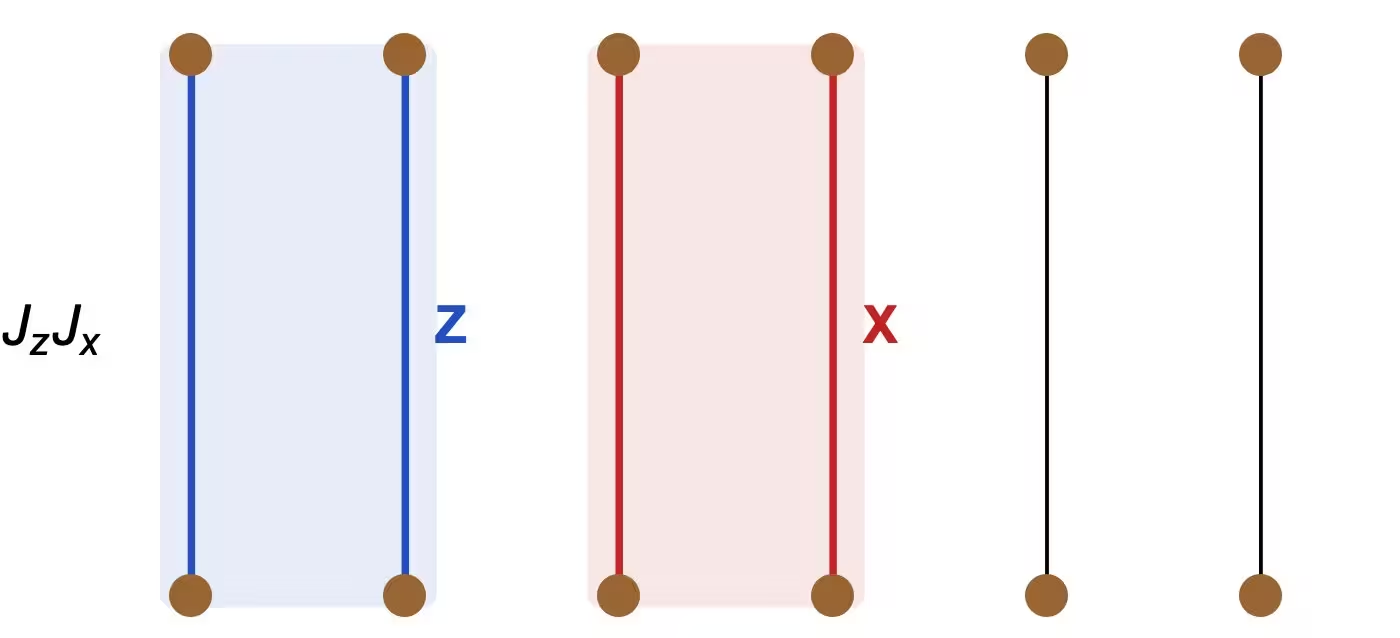
Quantum many-body scars act like highways of coherent behavior running through an otherwise chaotic landscape. While standard thermalizing systems spread energy evenly across all available degrees of freedom, scarred states preserve specific patterns and undergo persistent oscillations. The new study, available on the arXiv preprint server, demonstrates that this phenomenon can be unlocked using a specific type of coupling known as a bilocal size interaction, which links individual sites on one copy of a system directly to their partner sites on the duplicate copy.
To understand how this interaction preserves order, researchers look at the underlying size of quantum operators. In many local spin chains and complex models, the system can be expanded using an operator basis where terms have a fixed size, representing how many local degrees of freedom they involve. When the authors applied mathematical tools called Krylov basis states to an infinite-temperature thermofield double state, which represents a pair of entangled identical systems, they found something remarkable. In the thermodynamic limit where system size grows very large, these Krylov states become sharply concentrated on a single size sector.
The size operator then acts like an emergent transverse field, splitting the states into a tower of equally spaced energy levels. This level spacing drives collective, coherent oscillations of energy bouncing back and forth between the left and right copies of the system. The team tested this framework on two copies of a general q-body nearest-neighbor spin chain as well as the Sachdev-Ye-Kitaev model, a theoretical framework often used to study quantum chaos and black hole physics. In both cases, the calculations reveal that the Krylov states converge smoothly to size eigenstates, keeping the non-ergodic dynamics intact.
How Does System Size Shape Quantum Scars?
The mathematical proof relies on tracking how deviations, labeled as epsilon values, shrink as the number of sites increases. For standard local spin chains, the deviation parameter scales down as one over the system size, proving that the states become true size eigenstates in the limit of infinite components. However, the analysis shows that this description eventually breaks down when the excitation index reaches the square root of the system size. This means the amount of energy the two copies can persistently exchange is fundamentally bounded, preventing runaway instabilities while still supporting robust finite-energy scars.
In the Sachdev-Ye-Kitaev model, the convergence is even stronger due to the presence of coarse-grained size distributions rooted in chord diagrams. The researchers calculated that the leading corrections drop off even faster, highlighting that the mechanism operates across different classes of quantum architectures. Beyond exact subspaces, the authors also constructed an accessible family of approximate scars using contiguous blocks of energy-density excitations separated by buffer sites. By spacing these blocks appropriately, they showed that quantum coherence can persist over long timescales, giving experimentalists a concrete roadmap for realization in state-of-the-art quantum simulators and superconducting processor platforms.
The study was posted to the arXiv preprint server on November 20, 2026.
This article has been fact checked for accuracy, with information verified against reputable sources. Learn more about us and our editorial process.
Last reviewed on .
Article history
- Latest version
Reference(s)
- Chakraborty, Debarghya. “Quantum Many-Body Scars from Operator Size.” arXiv.org <http://arxiv.org/abs/2611.27982v1>.
Cite this page:
- Posted by Aisha Ahmed