New Math Model Reveals How Immune Memory And Fractal Scaling Shape COVID-19 Epidemic Peaks
A fractional-order framework incorporating double-dose vaccination data cuts epidemiological forecasting error by over sixty percent.
A new mathematical model tracking COVID-19 transmission in Bangladesh suggests that accounting for the brain-like memory of immune responses and irregular population contact patterns drastically improves pandemic forecasting. Conventional epidemiological models often fail because they assume disease transmission rates depend exclusively on current states, entirely ignoring how past infections, waning immunity, and delayed host responses shape future outbreaks.
To capture these hidden historical effects, a team of researchers led by Md. Jahidul Islam and colleagues developed an advanced mathematical framework that integrates both fractional-order memory and fractal time scaling. The study is published in PLOS One, detailing how double-dose vaccination dynamics and disease severity compartments can be modeled with unprecedented precision.
How Does Memory Change Disease Spread?
Biological systems do not operate like simple switches, as immune memory and delayed health responses mean yesterday’s infections directly influence tomorrow’s case counts. Traditional integer-order differential equations treat epidemics as memoryless Markovian processes, which leads to sharp peaks and rapid declines that rarely match real-world data. The authors tackled this limitation by applying the Atangana-Baleanu fractal-fractional derivative, a specialized mathematical operator featuring a non-singular Mittag-Leffler kernel that excels at tracking crossover behaviors between exponential and power-law decay.
Beyond memory effects governed by the fractional order, the model incorporates a fractal dimension to capture population time scaling. This structural complexity reflects the heterogeneous, self-similar interaction patterns and irregular contact networks that characterize how people move and gather in real-world settings. Together, the two parameters work in tandem, where memory delays disease progression while fractal scaling accounts for variations in healthcare access and individual behavior.
What Did the Numbers Reveal About Bangladesh?
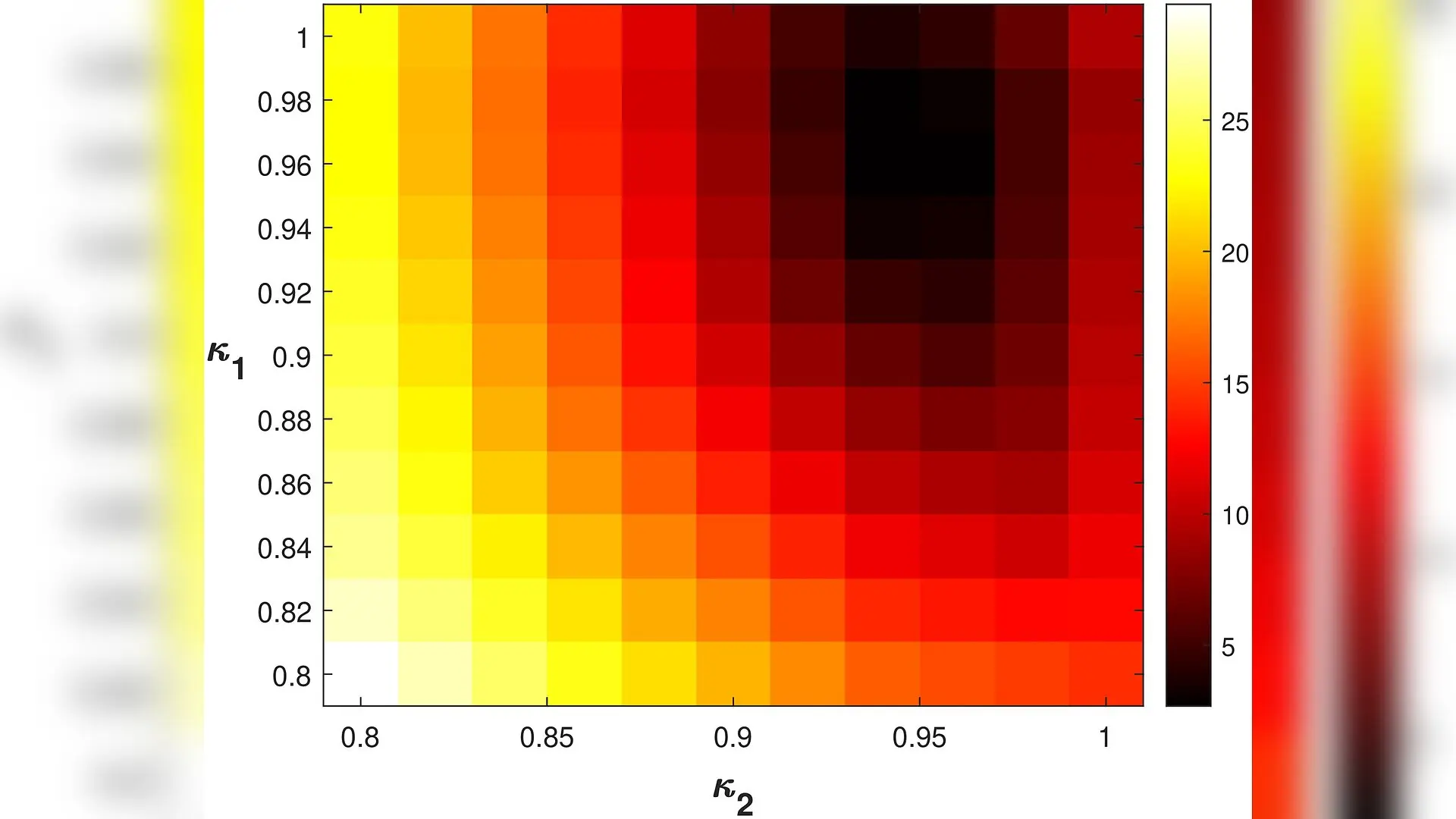
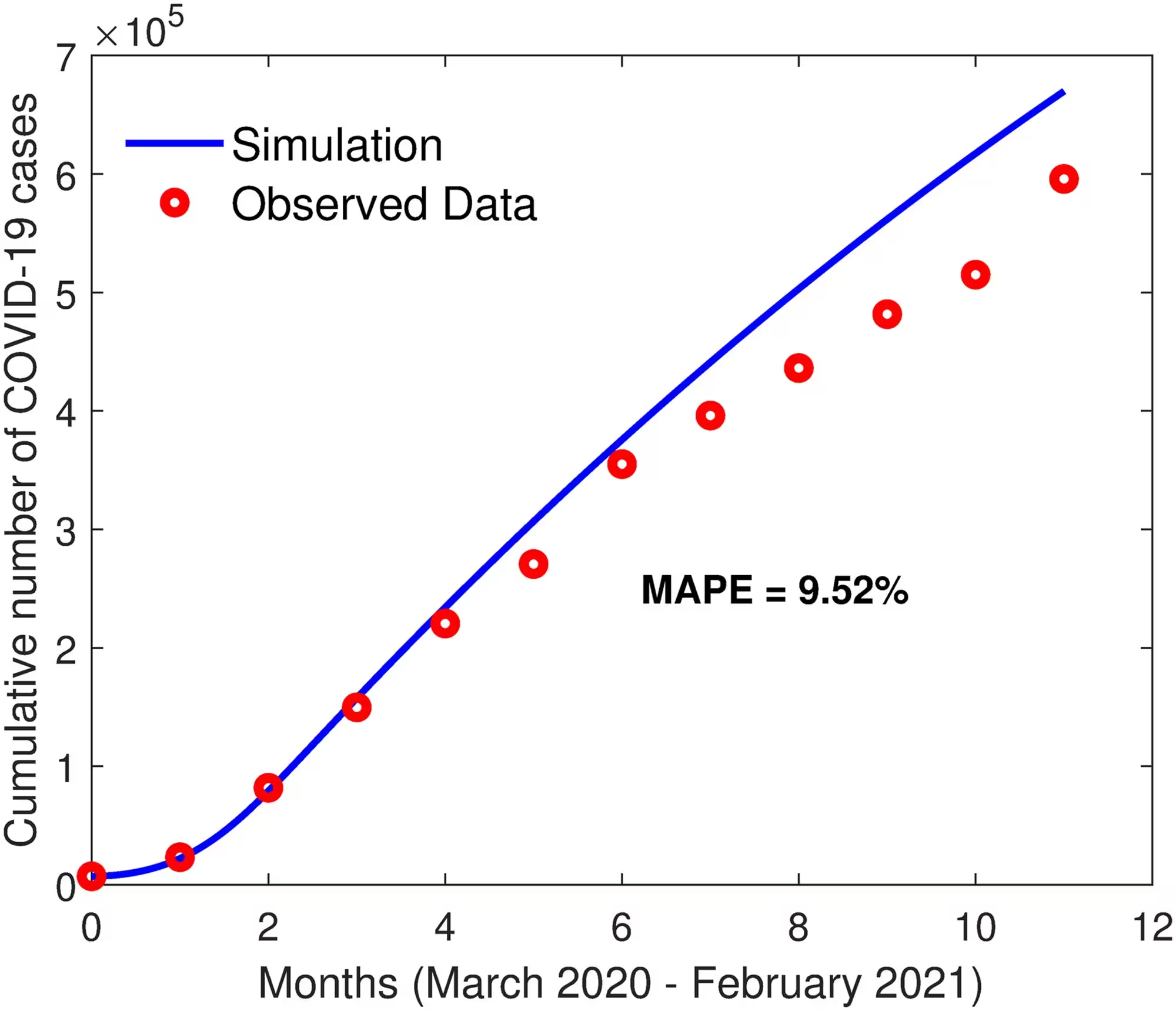
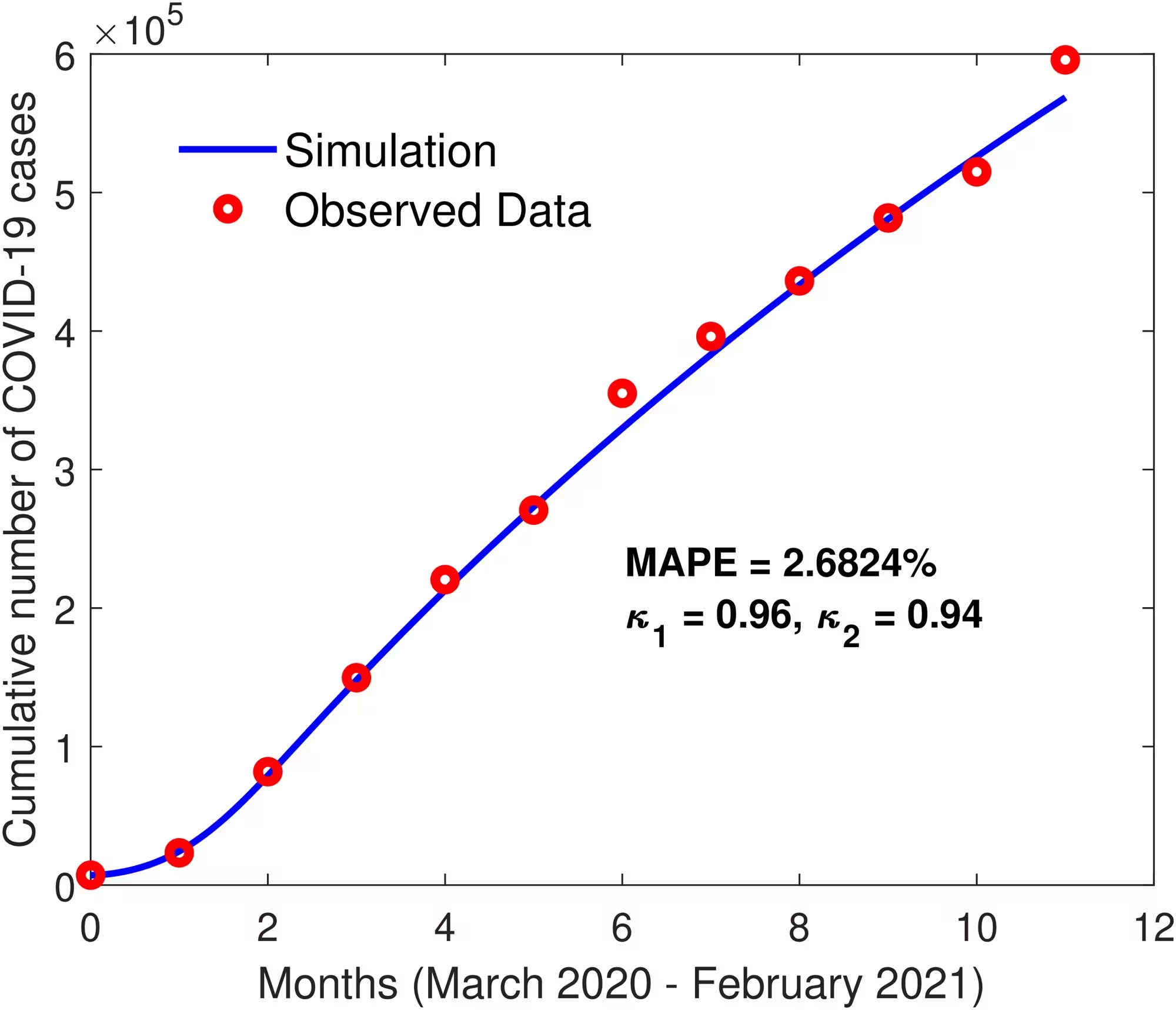
The research team tested their framework using monthly cumulative COVID-19 incidence data from Bangladesh spanning March 2020 through September 2021. For the training dataset covering March 2020 to February 2021, the classical integer-order model yielded a mean absolute percentage error of 9.52 percent. When the authors introduced their fractal-fractional framework, the optimal combination of parameters successfully reduced the error down to just 2.68 percent.
Further validation using an independent test dataset from March 2021 to June 2021 showed that the optimized model achieved an error rate of 6.71 percent, compared to 10.37 percent for the classical approach. Over the entire study period, the fractional-fractional model cut the overall forecasting error by more than sixty percent. The optimal parameters identified in the study were established at a fractional order of 0.96 and a fractal dimension of 0.94, outperforming models that relied on standard integer assumptions.
What Are the Limits of These Predictions?
While the mathematical framework demonstrates remarkable alignment with historical data, the authors emphasize that compartmental models rely on fitted parameters that represent broad population averages rather than individual behaviors. The study focused specifically on a double-dose vaccination strategy within the demographic context of Bangladesh, meaning the exact numerical values would need recalibration if applied to regions with different healthcare infrastructures or vaccination rollout speeds. Furthermore, the current model assumes fixed fractal dimensions over time, whereas real-world human mobility and social distancing policies fluctuate dynamically.
Vector phase portraits around the endemic equilibrium confirmed that the modeled populations will eventually stabilize at persistent, low-level circulation rather than vanishing entirely. The authors conclude that public health planners must integrate memory-dependent mathematics and irregular time scaling into future intervention designs to avoid the inaccurate peak projections characteristic of traditional epidemiological tools.
The research was published in PLOS One on November 25, 2026.
This article has been fact checked for accuracy, with information verified against reputable sources. Learn more about us and our editorial process.
Last reviewed on .
Article history
- Latest version
Reference(s)
- Islam, Md. Jahidul., et al. “Fractal-fractional analysis of covid-19 double vaccination in bangladesh: Theoretical and numerical insights from epidemiological data.” PLOS One, vol. 21, no. 11, November 25, 2026, pp. e0362086 Public Library of Science (PLoS), doi: 10.1371/journal.pone.0362086. <https://doi.org/10.1371/journal.pone.0362086>.
Cite this page:
- Posted by Joseph Jackson