Artificial Intelligence Literacy And Lifelong Learning Shape How Teachers View Gifted Math Students
A survey of 353 educators reveals strong links between digital competence and continuous learning, though separating their distinct classroom impacts remains complex.
When artificial intelligence steps into a classroom of mathematically gifted teenagers, the human teacher’s own mindset may matter just as much as the algorithms on the screen. A new study reveals how an educator’s grasp of artificial intelligence and their personal drive for continuous learning intertwine when shaping how they view student progress in high-level math education.
Led by Guangyu Xu and colleagues at East China Normal University, the research surveyed 353 teachers working with mathematically gifted students in competitive secondary school programs across China. The findings show that while teachers who understand and ethically navigate artificial intelligence tend to harbor stronger lifelong learning tendencies, teasing apart their exact individual impacts on classroom success remains a complex puzzle.
How do teachers navigate artificial intelligence and continuous learning?
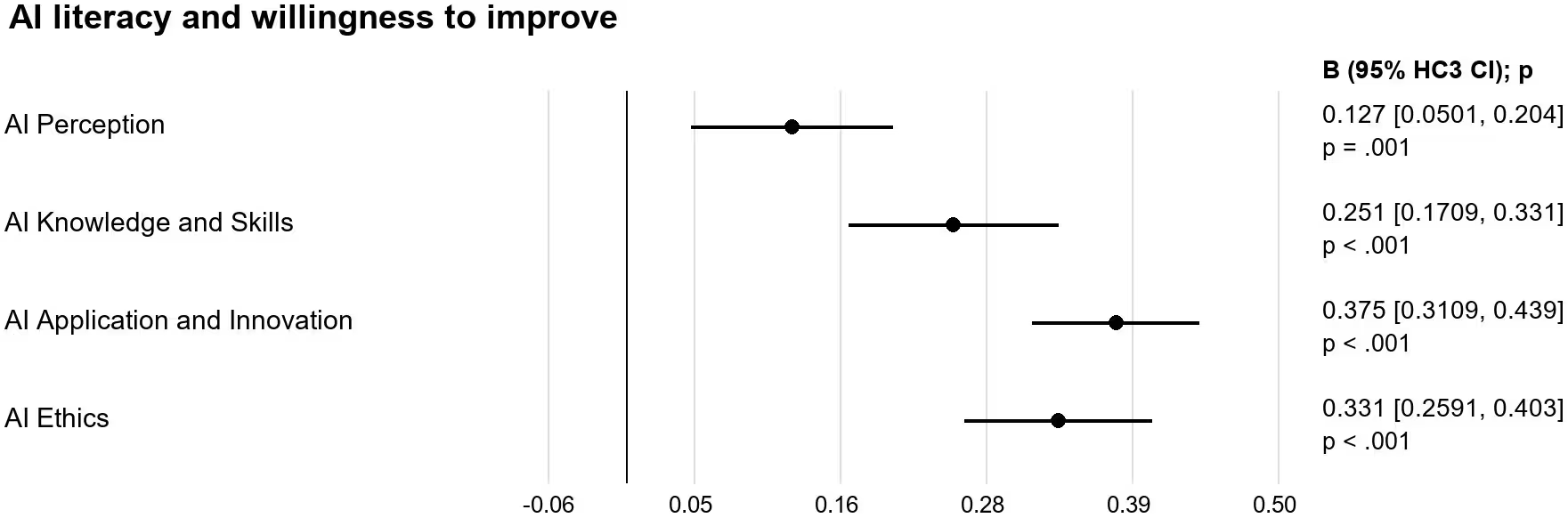
The researchers set out to map how four distinct dimensions of artificial intelligence literacy, namely perception, knowledge and skills, application and innovation, and ethics, relate to two pillars of lifelong learning: the willingness to learn and the willingness to improve. By analyzing complete survey records from all 353 participants, the team uncovered strong statistical ties between how comfortable a teacher feels with modern technology and how motivated they are to keep evolving professionally.
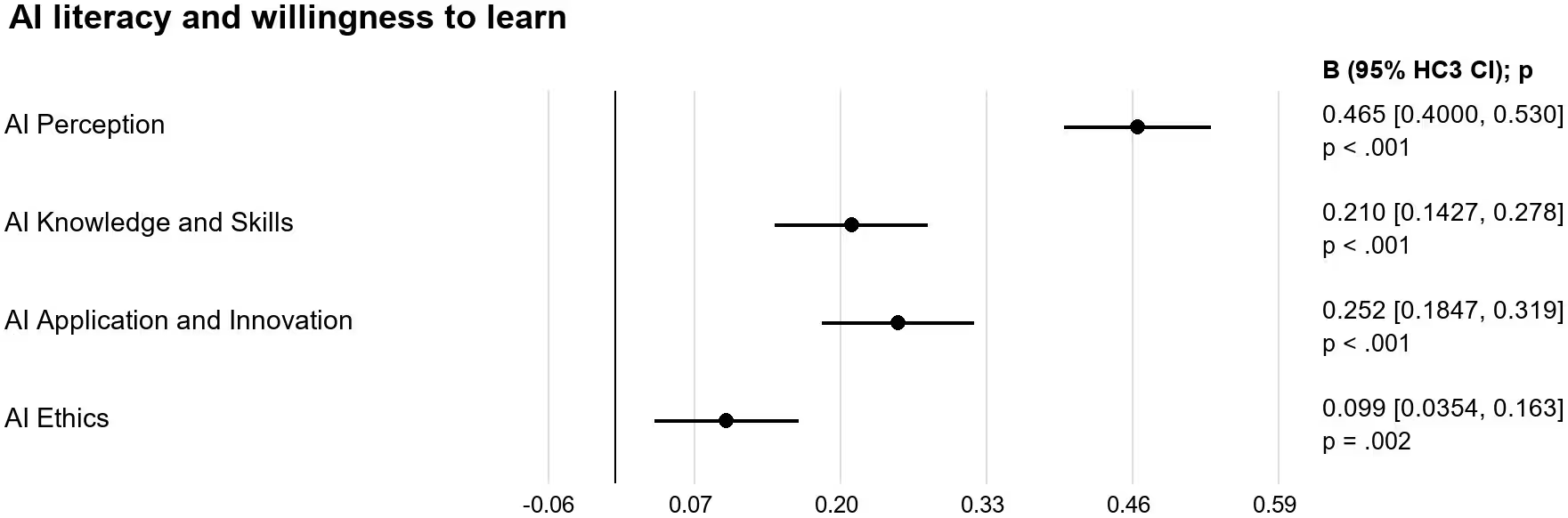
When the researchers published their findings in PLOS One, they noted that the statistical models accounted for over seventy percent of the variance in teachers’ lifelong learning tendencies. Specifically, how positively a teacher perceives artificial intelligence stood out as a major predictor of their baseline motivation to acquire new knowledge, whereas hands-on application skills and ethical awareness heavily influenced their drive for ongoing professional refinement.
What happens when technology meets gifted mathematics education?
Teaching students who excel in advanced problem solving, competition math, and creative reasoning demands an uncommon level of pedagogical agility. Educators must decide when an AI-generated solution helps a gifted student stretch their thinking and when it bypasses crucial mathematical reasoning entirely. To capture this dynamic, the team utilized an adapted framework to measure teacher-perceived student development across four domains: learning performance, problem solving, creative approaches, and sustained motivation.
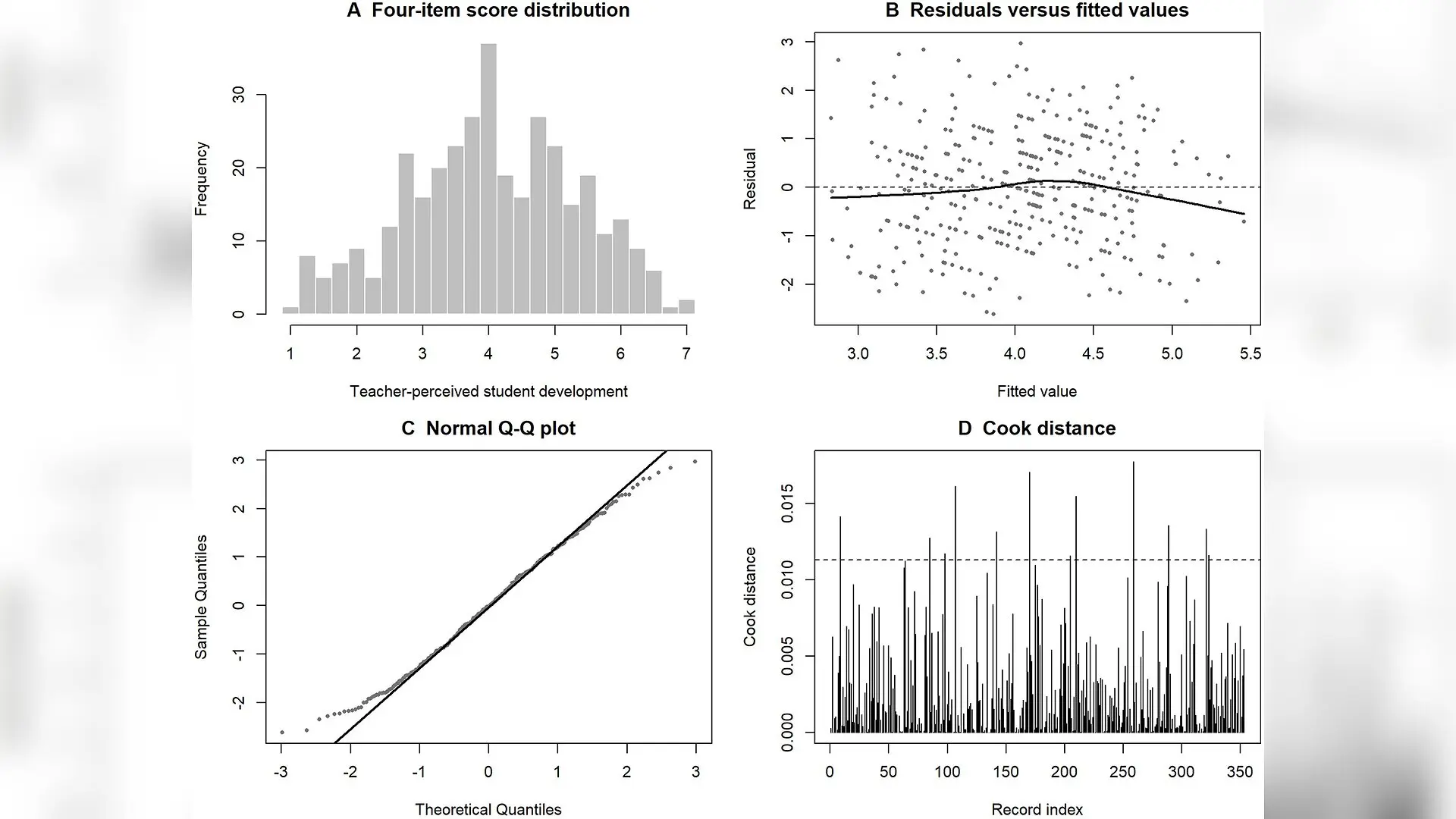
Statistical models that combined both teacher artificial intelligence literacy and lifelong learning tendencies explained about nineteen percent of the variance in these teacher-perceived student outcomes. However, the analysis revealed substantial overlap between the two predictor blocks. Once artificial intelligence literacy was factored into the regression models, the lifelong learning dimensions added very little independent explanatory power, pointing to deeply shared cognitive and professional traits.
What are the limits and the next steps for digital age educators?
Despite the robust statistical approach, which incorporated robust standard errors, confirmatory factor analyses, and repeated cross-validation, the authors emphasize important boundaries to their conclusions. Because both the teacher attributes and the student development ratings came from the same survey respondents, shared self-perceptions could influence the observed correlations. Furthermore, the convenience sampling method means the participants may skew toward educators who are already enthusiastic about technology and professional growth.
Future research will need to incorporate independent student assessments and longitudinal observations to determine whether boosting an educator’s artificial intelligence literacy directly translates into measurable gains for gifted learners. For now, the work provides a foundational map showing that supporting teachers as digital learners is an essential first step toward preparing classrooms for an algorithm-driven future.
The research was published in PLOS One on November 25, 2026.
This article has been fact checked for accuracy, with information verified against reputable sources. Learn more about us and our editorial process.
Last reviewed on .
Article history
- Latest version
Reference(s)
- Xu, Guangyu., et al. “Artificial intelligence literacy, lifelong learning tendency, and teacher-perceived student development among teachers engaged in mathematics gifted education: A survey-based study.” PLOS One, vol. 21, no. 11, November 25, 2026, pp. e0360430 Public Library of Science (PLoS), doi: 10.1371/journal.pone.0360430. <https://doi.org/10.1371/journal.pone.0360430>.
Cite this page:
- Posted by Rabia Shah