Only 28 Percent of Young Women With HIV Receive Human Papillomavirus Vaccines in Developing Nations
A new meta-analysis reveals a massive immunization gap for vulnerable young women in low- and middle-income countries.
Adolescent girls and young women living with HIV face a cervical cancer risk up to five times higher than their HIV-negative peers, yet fewer than three in ten have received even a single dose of the vaccine meant to protect them. Human papillomavirus infections are notoriously persistent in individuals with suppressed immune systems, turning what is normally a temporary virus into a major driver of life-threatening cervical disease across resource-limited nations.
What Does the New Study Reveal About Vaccination Rates in Developing Nations?
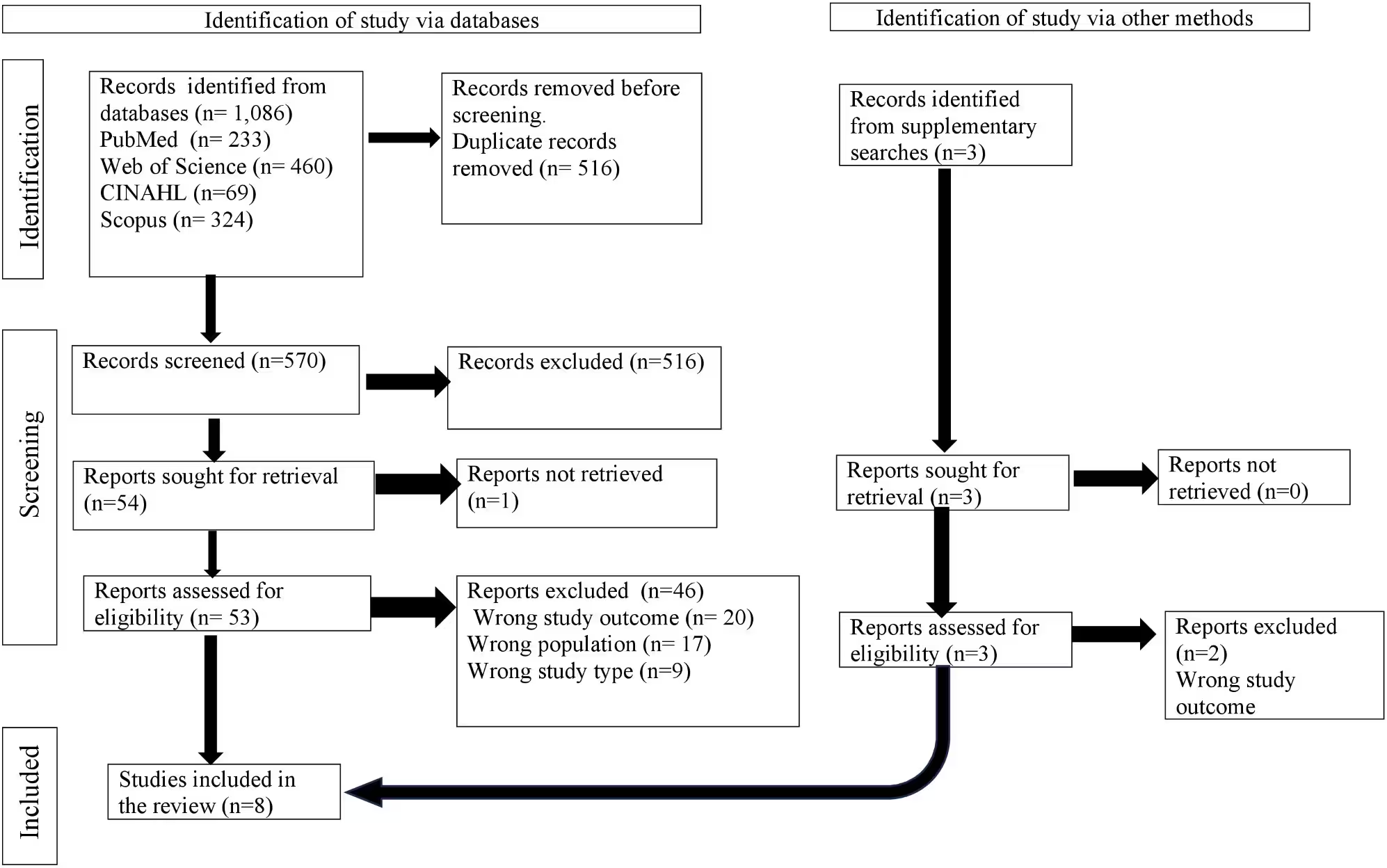
To measure the true scale of this protection gap, researchers conducted a comprehensive systematic review and meta-analysis examining vaccination levels among HIV-positive girls and young women. Led by Ifeyinwa Lilian Ezenwosu and colleagues, the research synthesized data from eight observational studies published in the peer-reviewed literature, available on the PLOS One journal. The analysis focused exclusively on low- and middle-income countries, capturing studies published between January 2014 and December 2025.
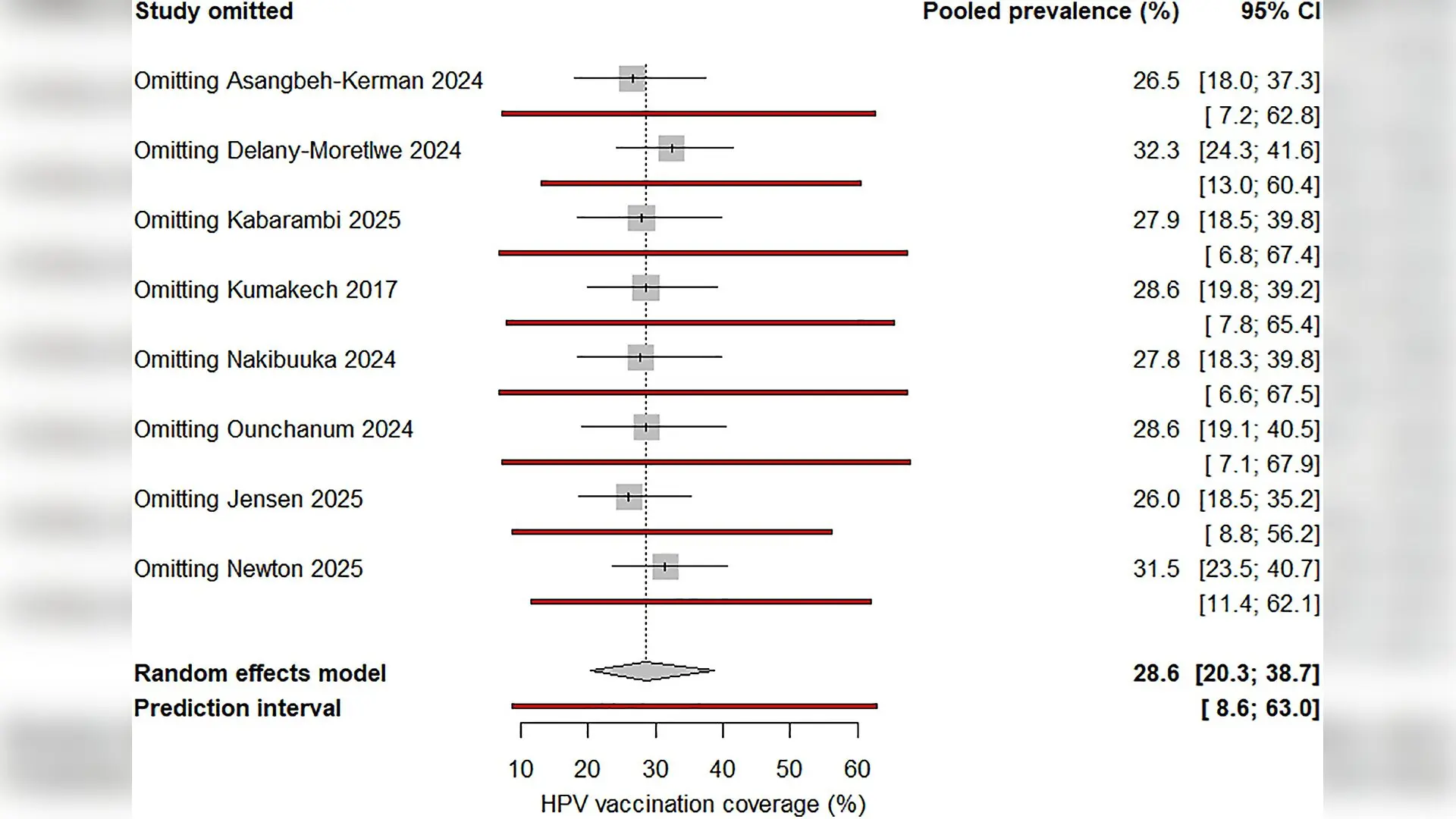
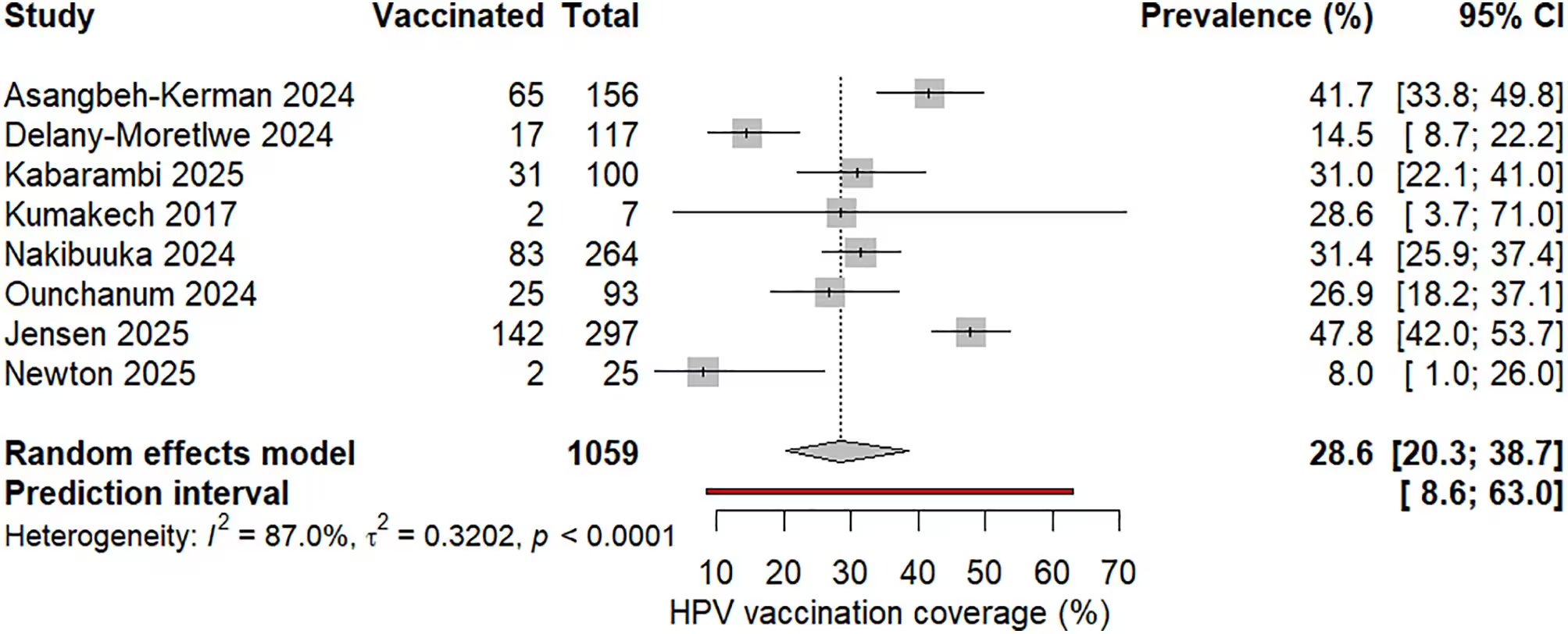
The pooled analysis revealed an overall human papillomavirus vaccination coverage rate of 28.6 percent among this vulnerable subpopulation. This number sits far below global health targets established by the World Health Organization, which calls for 90 percent of all girls worldwide to be fully vaccinated against the virus by the age of 15.
Why Are Young Women Living With HIV Missing Out on Life-Saving Doses?
The heavy reliance on standard childhood immunization platforms often leaves older adolescents and young adults behind, particularly those receiving care through specialized medical clinics. Many of the included studies showed that vaccination delivery relied heavily on school-based programs, which frequently fail to reach out-of-school youth or young women who attend specialized health facilities rather than traditional classrooms.
Furthermore, people living with HIV require specialized multi-dose schedules to achieve long-lasting immunity, yet standard vaccination campaigns often treat everyone with a one-size-fits-all approach. The authors noted that integrating immunization services directly into routine HIV care centers and adolescent support clubs could eliminate many of the logistical hurdles that prevent patients from completing their full vaccine series.
What Did the Age and Vaccine Type Subgroup Analyses Uncover?
When the researchers broke the data down by age groups, younger participants aged 9 to 14 years showed a much higher estimated coverage level of 90.3 percent, compared to just 19.2 percent among participants aged 15 to 26 years. However, the authors stressed that these age comparisons remain exploratory because only a single study contributed data to the younger bracket.
The analysis also compared different vaccine formulations, finding a pooled coverage rate of 38.2 percent in studies administering quadrivalent vaccines, which protect against four viral strains, compared to 20.6 percent in studies using bivalent vaccines, which protect against two strains. The researchers caution that this difference likely reflects regional program availability rather than inherent preferences for one vaccine type over another.
What Are the Limitations and Next Steps for Public Health Policy?
Substantial statistical heterogeneity across the selected studies means these findings must be interpreted with measured caution. Most of the available data originated from East Africa, specifically Uganda, leaving large portions of the developing world completely unrepresented in the current literature.
Future public health strategies must focus on expanding vaccine access in underserved regions while actively addressing vaccine hesitancy and misinformation through community outreach. Ensuring that high-risk young women receive full protection remains a vital step toward reducing the devastating burden of preventable cancers in developing regions.
“, ޒabstract”: "Human papillomavirus infections pose a severe threat to adolescent girls and young women living with HIV, who face a significantly elevated risk of developing cervical cancer. A systematic review and meta-analysis of eight studies across low- and middle-income countries evaluated human papillomavirus vaccination coverage in this high-risk subpopulation. The researchers estimated a pooled vaccination coverage of 28.6 percent, highlighting a massive shortfall compared to global public health targets. Subgroup and exploratory analyses revealed variations across age groups and vaccine types, though regional data gaps and high statistical heterogeneity underscore the need for targeted interventions. Integrating immunization delivery directly into routine HIV care services could improve access and completion rates for vulnerable young patients.The research was published in PLOS One on November 24, 2026.
This article has been fact checked for accuracy, with information verified against reputable sources. Learn more about us and our editorial process.
Last reviewed on .
Article history
- Latest version
Reference(s)
- Ezenwosu, Ifeyinwa Lilian., et al. “Human papillomavirus vaccination coverage among adolescent girls and young women living with HIV in low- and middle-income countries: A systematic review and meta-analysis.” PLOS One, vol. 21, no. 11, November 24, 2026, pp. e0363748 Public Library of Science (PLoS), doi: 10.1371/journal.pone.0363748. <https://doi.org/10.1371/journal.pone.0363748>.
Cite this page:
- Posted by Joseph Jackson