Enhanced Computer Vision Model Spots Hidden Tomato Crop Diseases and Deficiencies in Natural Fields
By adding specialized recalibration modules to a compact neural network, researchers boosted detection accuracy for elusive agricultural pests and nutrient deficiencies.
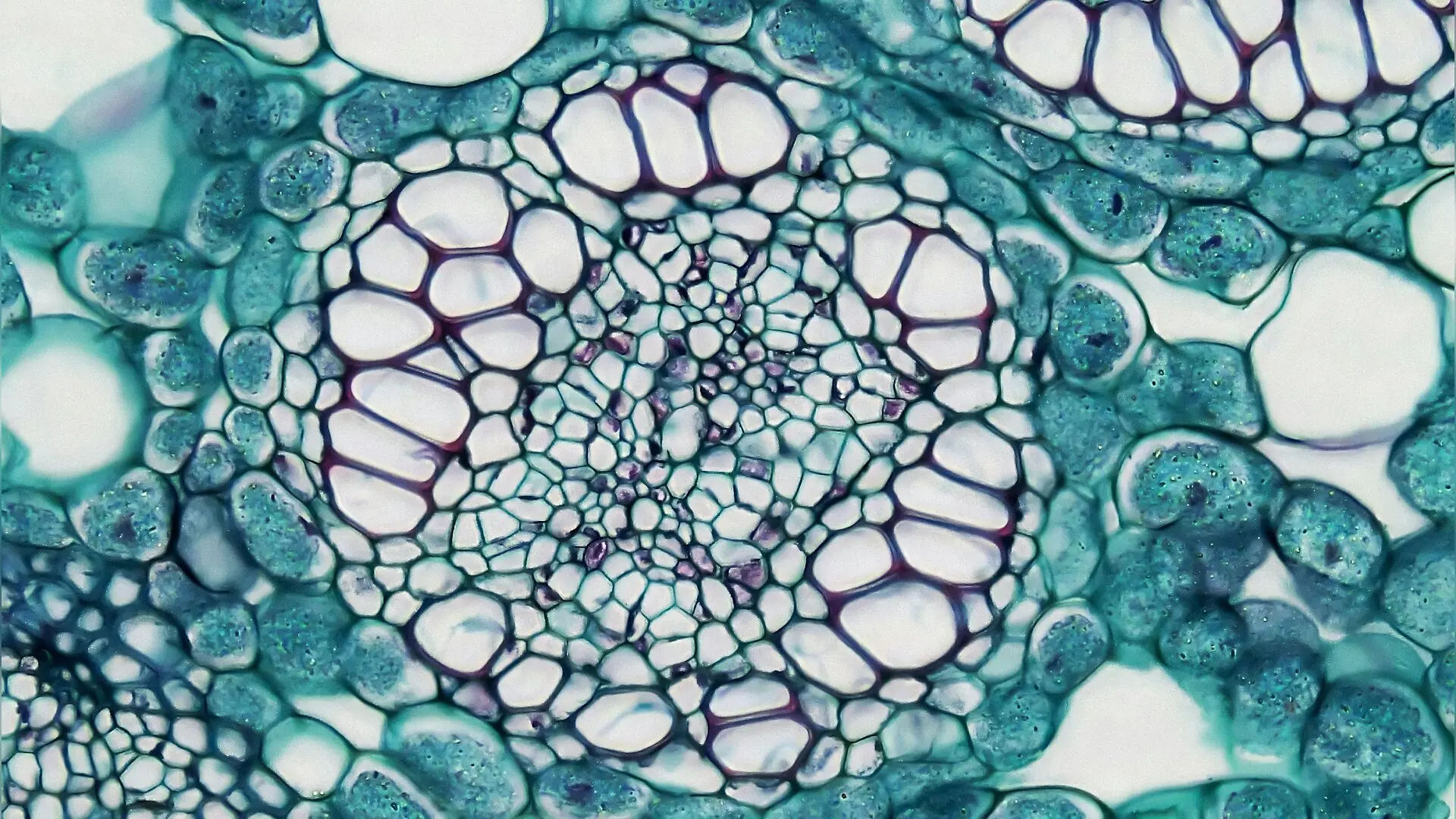
A new computer vision model detects crop diseases and pest damage on tomato leaves with higher accuracy, helping farmers spot hidden threats in complex field environments where leaves, soil, and changing light create visual confusion. Detecting agricultural problems early is difficult because symptoms often blend into backgrounds or resemble one another, prompting researchers to refine lightweight neural networks for real-time agricultural monitoring.
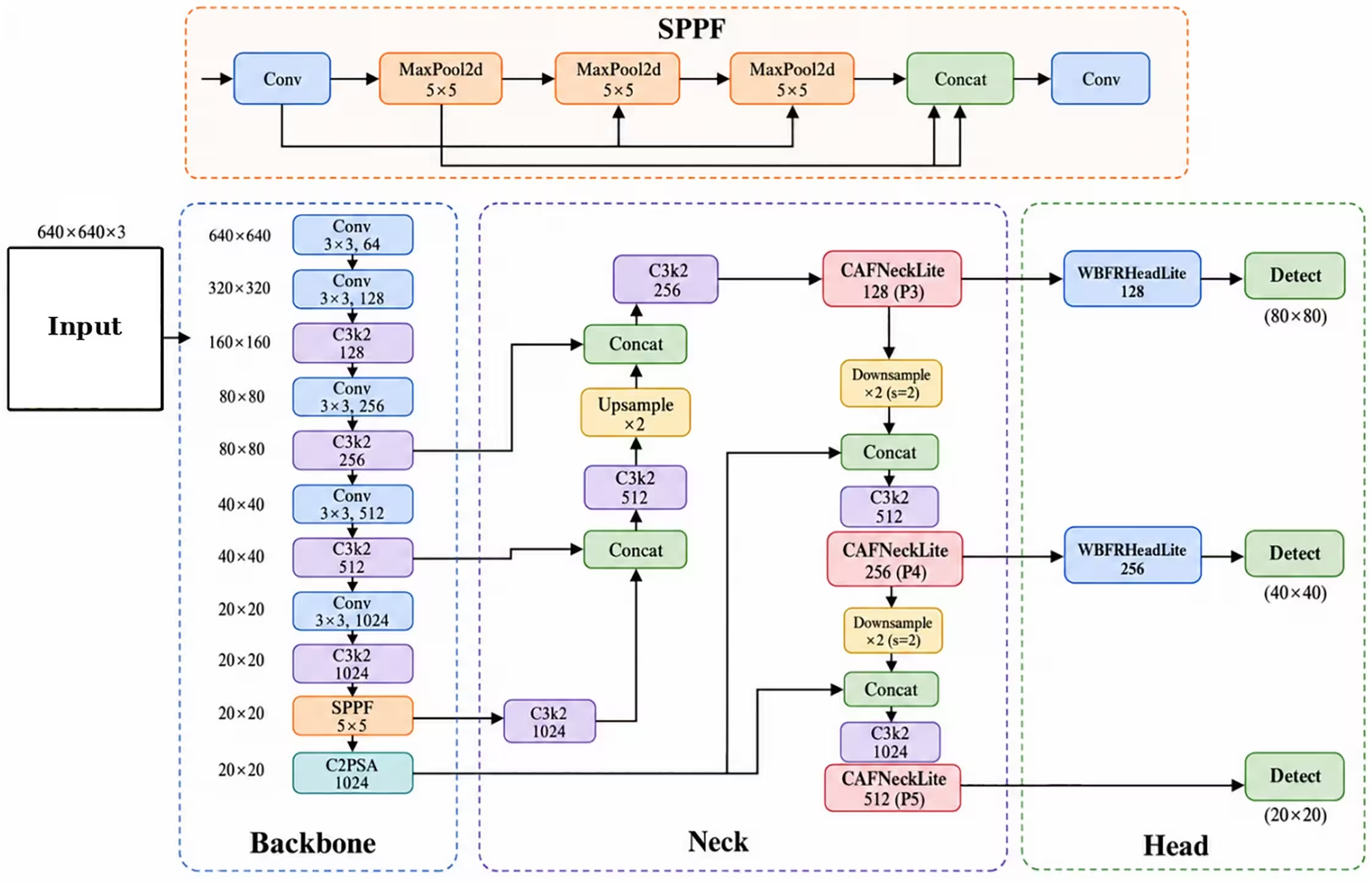
To tackle these real-world obstacles, Jia Lv and researchers at their institution developed a specialized object-detection system called CWF-YOLO11s. The work is published in PLOS One, detailing an enhanced architecture built upon the compact YOLO11s baseline framework. Rather than redesigning the entire neural network, the authors introduced two localized modules designed to clean up background noise and sharpen blurry lesion boundaries.
How Do Localized Feature Enhancements Improve Crop Disease Recognition?
Natural agricultural scenes present severe hurdles for automated scouting because shadows, stems, soil, and overlapping foliage distort the appearance of damaged areas. The first module, named CAFNeckLite, is positioned at the fused feature outputs of the network neck to recalibrate multi-scale information by combining local spatial modeling with channel weighting. The second module, WBFRHeadLite, is placed directly before the primary detection branches to strengthen local texture and low-contrast boundaries.
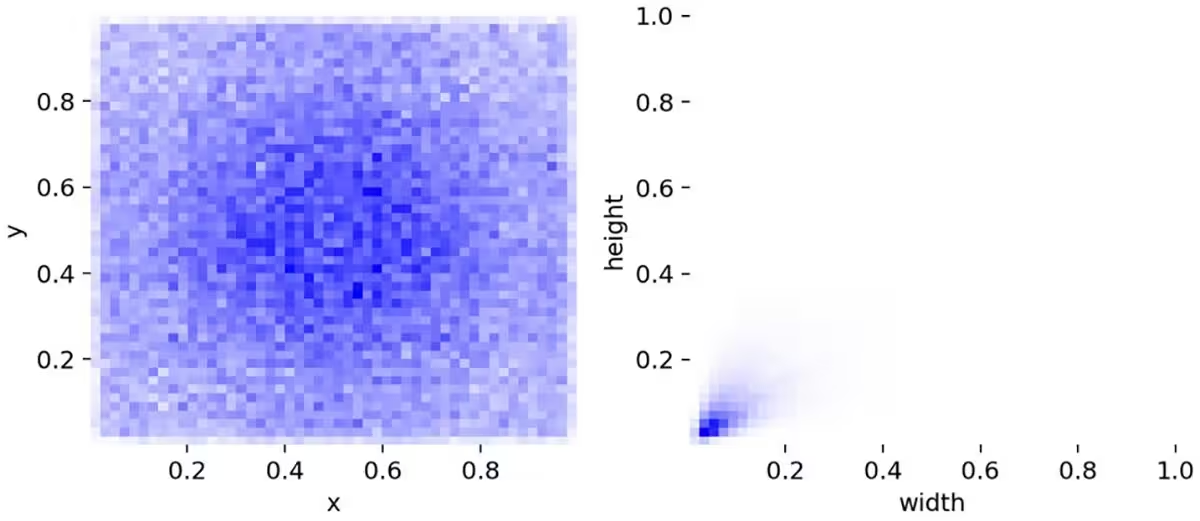
The research team evaluated the complete model on the Tomato-Village validation set, which encompasses six distinct abnormality categories including late blight, leaf miner damage, and nutrient deficiencies. Under a standardized experimental setup, the enhanced model achieved a mean average precision at an intersection-over-union threshold of 0.50 of 0.8940, alongside a stricter multi-threshold mean average precision of 0.6153. These figures represent improvements of about two percentage points across both metrics compared to the standard baseline.
What Does Class-Specific Performance Reveal About Detection Challenges?
A closer look at individual categories shows that performance gains varied significantly depending on the visual nature of the symptom. Potassium deficiency, which features leaf-margin chlorosis and localized necrosis, saw the largest jump in average precision, rising by over eight percentage points. Conversely, magnesium deficiency showed a slight decrease in leniient overlap scoring while improving under stricter localization criteria.
- Late Blight: Achieved stable high precision across evaluations.
- Leaf Miner: Involves irregular serpentine feeding trails that remain difficult to localize precisely.
- Potassium Deficiency: Showed the most pronounced accuracy boost despite a smaller sample size.
The authors also tested the model on an independent benchmark dataset containing images from Bangladesh, where CWF-YOLO11s lifted precision by more than ten percentage points compared to the baseline. Ablation experiments confirmed that both recalibration modules contribute complementary benefits, though their integration increases computational complexity by about fourteen percent in parameters and floating-point operations.
What Are the Limitations and Next Steps for Field Deployment?
Despite the accuracy gains, the model requires additional computational overhead, which slightly reduces processing speed from roughly one hundred seventy-two frames per second down to about one hundred fifty-one frames per second on an advanced graphics processing unit. Furthermore, identifying tiny or irregularly shaped lesions under strict overlap criteria remains challenging across all tested configurations.
The authors note that future research will focus on model compression techniques, such as network pruning and quantization, to make the system suitable for resource-constrained edge devices. Additional field trials across different seasons and geographic locations will also be necessary to verify the generalizability of the detection framework under diverse agricultural conditions.
The research was published in PLOS One on November 25, 2026.
This article has been fact checked for accuracy, with information verified against reputable sources. Learn more about us and our editorial process.
Last reviewed on .
Article history
- Latest version
Reference(s)
- Lv, Jia., et al. “CWF-YOLO11s: Context-aware and weak-boundary feature recalibration for tomato leaf abnormality detection in natural field scenes.” PLOS One, vol. 21, no. 11, November 25, 2026, pp. e0363466 Public Library of Science (PLoS), doi: 10.1371/journal.pone.0363466. <https://doi.org/10.1371/journal.pone.0363466>.
Cite this page:
- Posted by Rabia Shah