Zebrafish Study Reveals How Tendons Turn Into Bone Through a Shared Genetic Switch
Single-cell tracking in fish and human cells uncovers a conserved gene regulatory axis that drives rigid bone formation inside soft connective tissues.
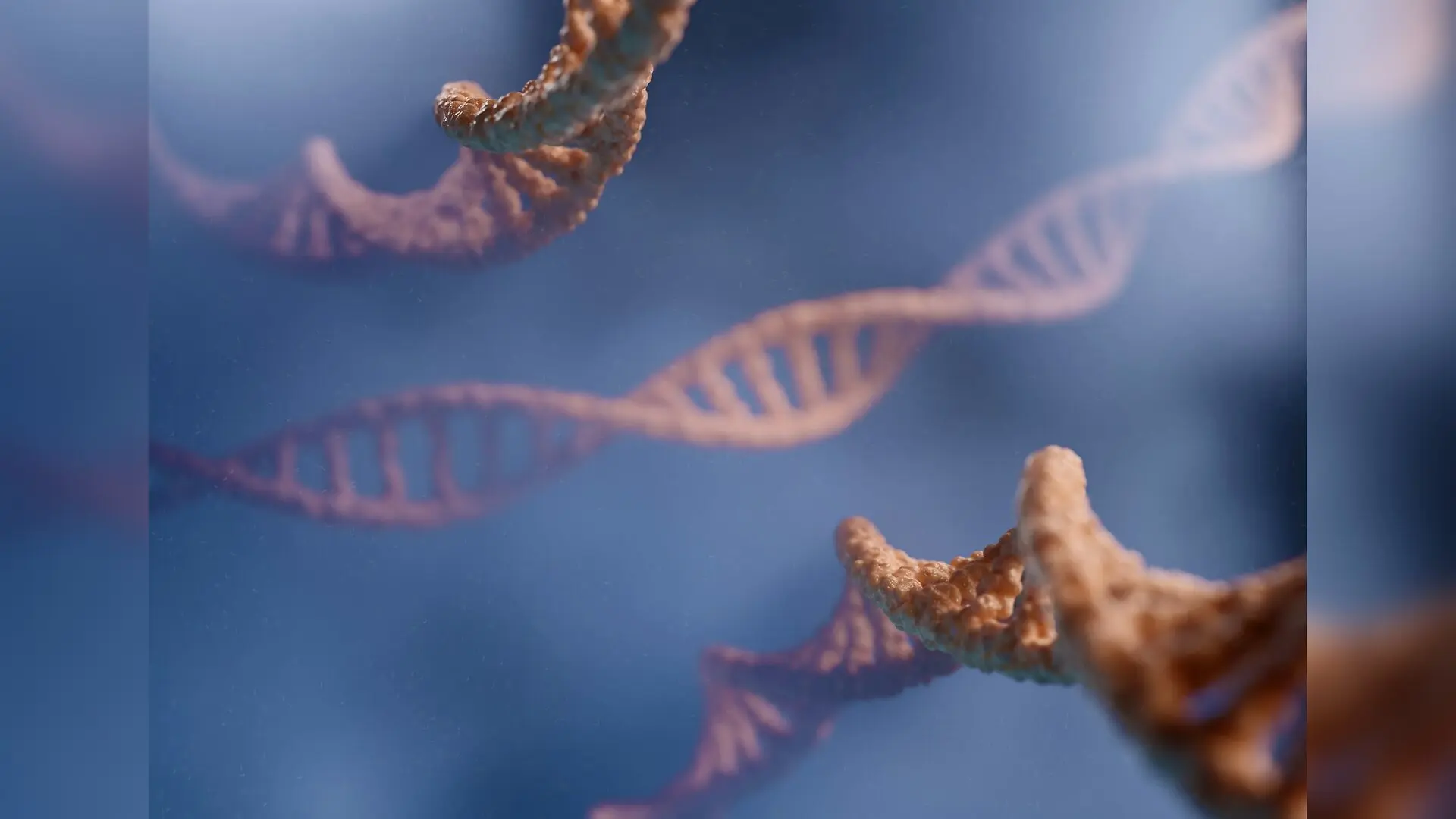
Tiny zebrafish grow natural bones inside their tendons through a genetic program that is surprisingly similar to the one causing painful bone growths in human tendons. Researchers tracked thousands of individual cells in developing zebrafish to uncover how a master gene switches ordinary connective tissue into rigid bone.
Tendons typically connect muscle to bone and help animals move smoothly without turning rigid. But in many fish species, specialized skeletal segments called intermuscular bones form inside these soft tissues naturally. In humans, however, bone growing where it does not belong causes a debilitating condition known as heterotopic ossification, which often follows severe injury or surgery.
To understand the genetic roots of this process, lead author Xu-Dong Wang and senior author Ze-Xia Gao at Huazhong Agricultural University tracked cellular changes across four distinct developmental stages in zebrafish, spanning from 18 days post-fertilization up to 170 days. The findings are published in Advanced Science. By combining single-cell RNA sequencing and chromatin accessibility profiling on more than thirty-four thousand cells, the team isolated a specific group of mesenchymal progenitor cells marked by the gene prrx1.
How progenitor cells change course
During the early growth stages of the fish, these prrx1-positive progenitor cells sat at the root of a developmental tree, capable of turning into tenocytes, fibroblasts, or osteoblasts. As the zebrafish grew, the relative number of these progenitor cells dropped while bone-forming osteoblast populations expanded. The researchers also noticed that cell signaling pathways linked to bone formation, such as bone morphogenetic protein and Wnt signaling, spiked during this early initiation window.
When the team disrupted the prrx1 gene in live zebrafish using precise gene-editing tools, the fish developed disorganized and significantly shorter ossified tendon structures. Laboratory tests on cultured fish cells confirmed that overexpressing prrx1 boosted markers of bone formation, while inhibiting the gene suppressed them. This demonstrated that prrx1 acts as a crucial driver for turning flexible tendon tissue into rigid bone.
What connects fish bones to human disease?
To see whether these mechanisms translate to mammals, the researchers compared their fish cell data with existing single-cell datasets from mice and humans. Cross-species mapping revealed conserved cellular correspondence among tenocytes, fibroblasts, and progenitor populations. Further investigation pointed to a downstream target gene called wwp2, which is already known in humans to influence spinal ligament ossification by regulating osteogenic transcription factors.
The team identified a specific regulatory DNA element, known as enhancer 4, located within the wwp2 gene locus. Protein-binding assays and genetic experiments showed that the PRRX1 protein binds directly to this enhancer to activate wwp2 expression. When the researchers targeted this enhancer using gene-silencing techniques in both zebrafish and human tendon stem cells, bone-forming activity dropped significantly.
The authors note that while zebrafish form these bones naturally as part of their normal anatomy without inflammation or injury, the underlying genetic machinery appears deeply conserved across vertebrates. Understanding this shared pathway offers a foundational molecular framework that could eventually help researchers design strategies to manage abnormal bone growth in human tendons, or alternatively, help aquaculture breeders manage skeletal traits in economically important fish species.
The research was published in Advanced science (Weinheim, Baden-Wurttemberg, Germany) on November 24, 2026.
This article has been fact checked for accuracy, with information verified against reputable sources. Learn more about us and our editorial process.
Last reviewed on .
Article history
- Latest version
Reference(s)
- Wang, Xu‐Dong., et al. “An Evolutionarily Conserved prrx1–wwp2 Enhancer Axis Regulates Osteogenic Differentiation in Tendon‐associated Progenitors.” Advanced Science, November 24, 2026 Wiley, doi: 10.1002/advs.78913. <https://doi.org/10.1002/advs.78913>.
Cite this page:
- Posted by Elizabeth Taylor