Mathematical Models Reveal Why Temperature Tracking Fails To Predict Honeybee Hive Collapses
Field data and mathematical modeling suggest that standard statistical indicators cannot reliably distinguish collapsing beehives from healthy ones.
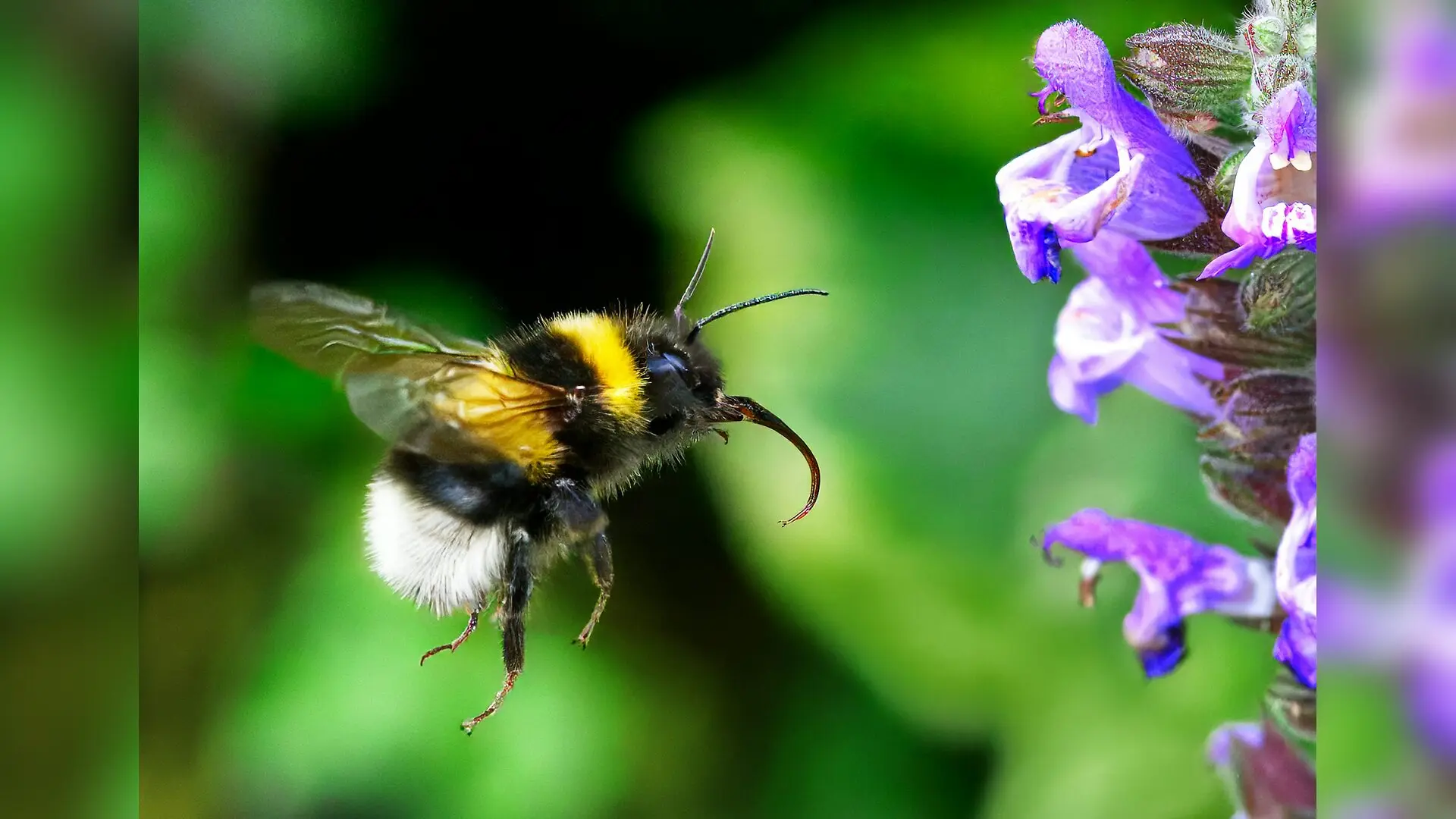
Honeybee (Apis mellifera) colonies facing infestations of the parasitic mite Varroa destructor and the Deformed wing virus can collapse within one to two years, posing severe risks to global agriculture and biodiversity. Researchers have long searched for reliable indicators to forecast these catastrophic declines before they happen. A team of scientists led by Daniele Proverbio at the University of Trento investigated whether statistical red flags could successfully predict when a honeybee hive is headed for irreversible collapse.
The study, available on the arXiv preprint server, evaluated whether mathematical indicators of critical transitions can reliably spot failing colonies. While mathematical models confirm that honeybee systems can theoretically experience regime shifts, the researchers discovered that these theoretical warnings do not translate into reliable practical predictions under real-world conditions.
Why Do Standard Warning Signs Fall Short in Hives?
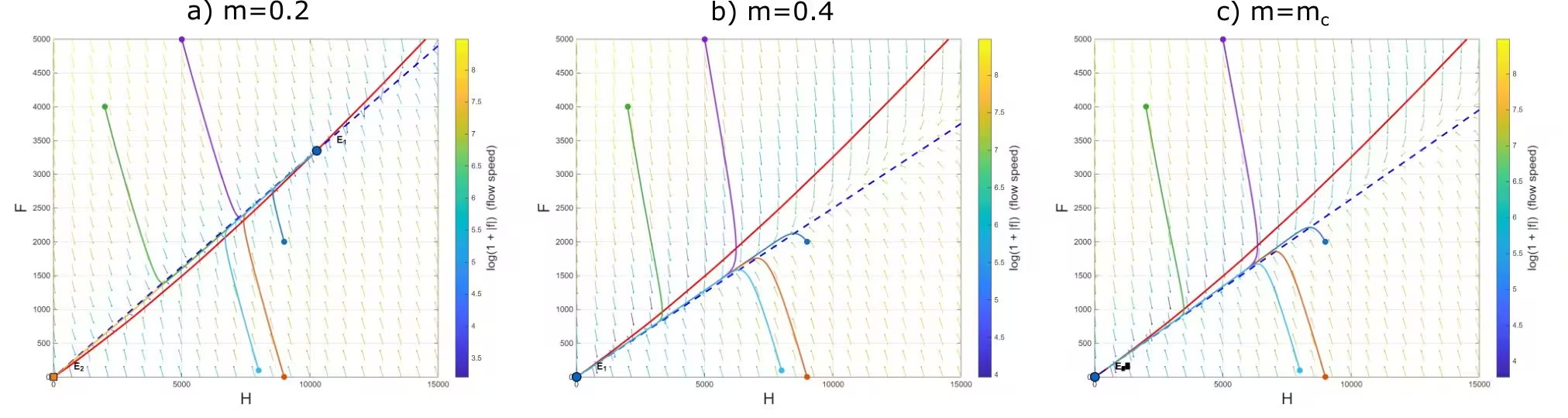
Ecologists often look for early warning signals based on critical slowing down, a phenomenon where a system takes progressively longer to recover from everyday environmental disturbances as it nears a tipping point. This slowing recovery typically causes statistical measures like variance and lag-one autocorrelation to spike. However, Proverbio and their colleagues found that honeybee colony dynamics are governed by a different mathematical pathway known as a transcritical bifurcation rather than the saddle-node tipping points typically assumed in ecological literature.
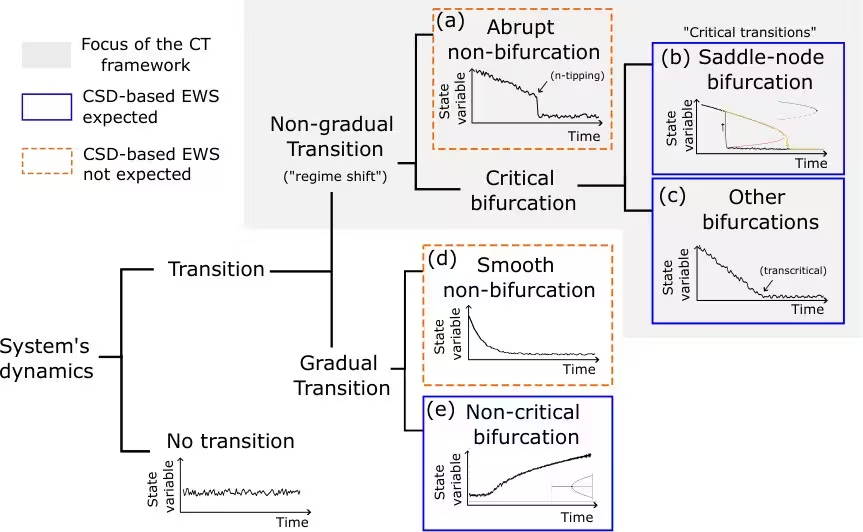
In systems driven by transcritical dynamics, standard early warning indicators tend to be much weaker and less distinct. Furthermore, the internal temperature of a beehive is subject to complex noise patterns and environmental variability that obscure these statistical signals. The authors noted that the background noise inside the hives resembles red noise rather than the clean, white noise required for traditional indicators to perform effectively.
Can Hive Temperature Data Distinguish Surviving Colonies From Failing Ones?
To test these theoretical insights in the field, the researchers analyzed temperature records from ten experimental hives in Northern Italy during 2018. Five of the colonies were left untreated and suffered severe Varroa mite infestations resulting in four collapses, while the other five were treated and survived. Internal hive temperatures were logged every twenty minutes using sensors placed in the center of the brood combs.
The team evaluated how well conventional statistical indicators could discriminate between the collapsing colonies and the surviving ones. Most of the tested indicators performed no better than a random coin toss. The sole exception was the simple mean temperature, which showed modest predictive value because it steadily declines as a colony loses its ability to regulate heat. However, relying on mean temperature alone generates false alarms, as healthy colonies can also experience temperature drops due to seasonal shifts.
What Does This Mean for Future Beekeeper Monitoring Tools?
The findings indicate that the presence of dynamical warning signs in a system does not automatically make them useful for early detection. Detecting statistically significant signals in noisy, finite observational data requires exceptionally dense sampling over long time spans, often exceeding the seasonal cycles of the bees themselves. Consequently, automated remote monitoring systems based solely on complex statistical variance may struggle to prevent colony losses without direct measurements of population strength and parasite loads.
The researchers emphasize that while internal hive temperature remains a valuable tool for low-cost, decentralized detection of broad colony states, remote sensors alone cannot yet provide a foolproof warning for impending collapse. Future efforts will need to incorporate multivariate indicators, improved mechanistic models, and direct assessments of bee mortality to bridge the gap between theoretical ecology and practical apiary management.
The study was posted to the arXiv preprint server on November 20, 2026.
This article has been fact checked for accuracy, with information verified against reputable sources. Learn more about us and our editorial process.
Last reviewed on .
Article history
- Latest version
Reference(s)
- Proverbio, Daniele. “Critical slowing down in hive temperature does not provide actionable early warnings of honey bee colony collapse.” arXiv.org <http://arxiv.org/abs/2611.27766v1>.
Cite this page:
- Posted by Linda Wilson