Why 1994 China Bottling Plant Job Upended Everything Known About Corporate Evolution
Decades of observing global businesses reveal that companies act like evolving biological species rather than rigid economic machines.
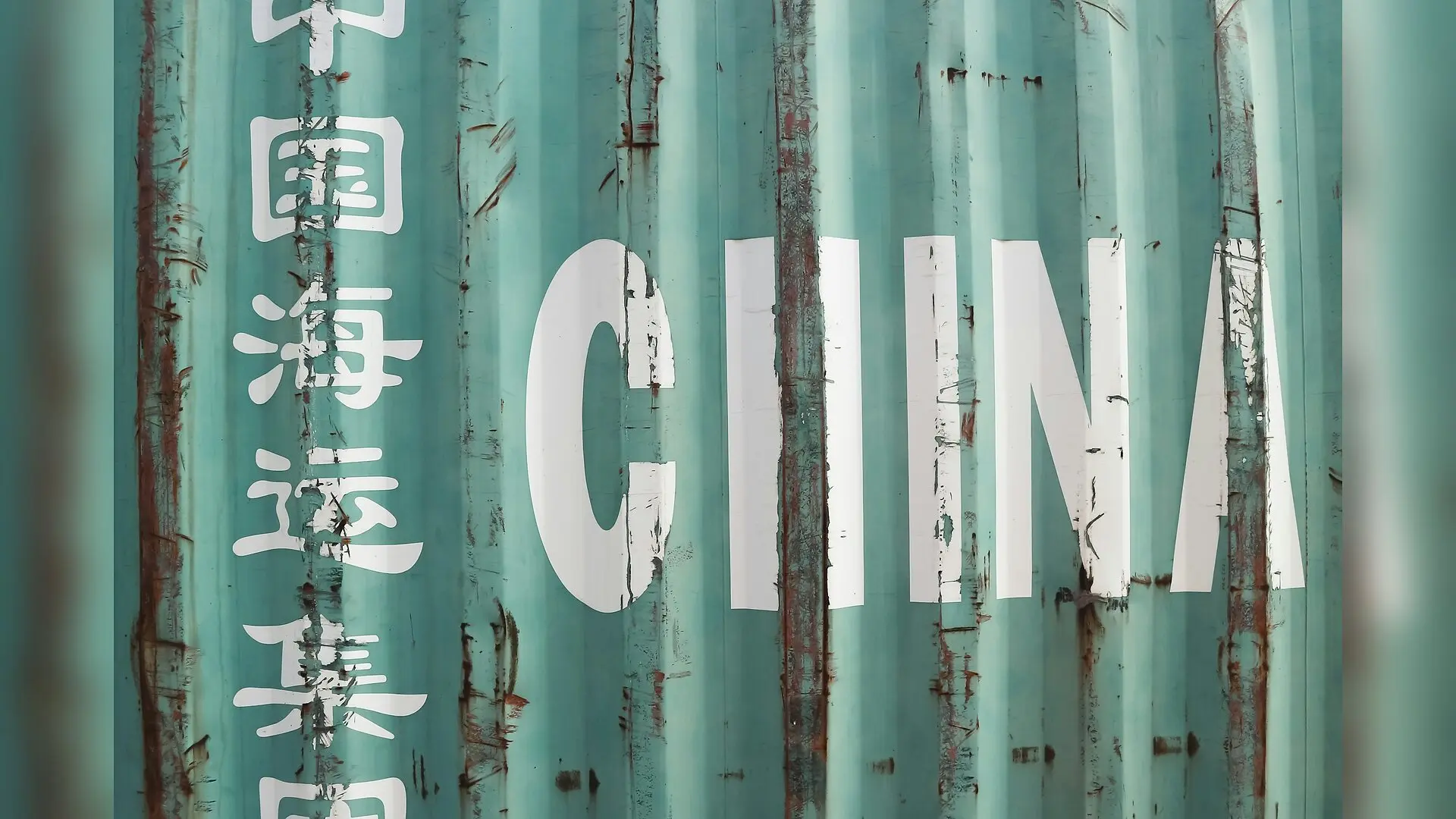
When management trainee Jamie Heywood stepped into a rusty bottling facility in Hangzhou in 1994, he expected a straightforward commercial venture, but instead found himself navigating a hybrid corporate ecosystem shaped by decades of state planning. Walking into the factory daily meant participating in morning exercises and singing national anthems in the car park, revealing an institution that operated as much more than a simple economic enterprise. That early cultural clash in China, where employees lived in company-owned apartments and relied on workplace units for healthcare, illustrated that corporate structures are not immutable laws of economics. Instead, as published in The Innovation Age, companies emerge as adaptive social institutions that shape-shift to solve the most pressing problems of the communities they serve.
How Corporate Species Evolve Like Darwin’s Finches
Looking across global business history reveals that corporate forms change just as biological species do in response to shifting environments. When Charles Darwin explored the Galapagos Islands aboard the HMS Beagle in the 1830s, he observed how finches developed specialized beaks to exploit different ecological niches. Business environments vary just as drastically across legal systems, social norms, and technological landscapes, forcing companies to adapt distinct evolutionary traits.
German companies, for instance, evolved a governance model prioritizing stakeholder collaboration over short-term shareholder returns, largely due to historical banking structures and post-war labor agreements. In contrast, Anglo-American corporations historically leaned toward concentrated shareholder power and rapid financial transactions. These divergent paths prove that no single corporate design represents a permanent ideal, but rather a localized response to historical and economic pressures.
Why the Shift to the Innovation Age Demands a New Corporate Blueprint
Human prosperity has historically advanced through a series of long economic waves driven by general purpose technologies, from steam power and railways to mass production. Each wave triggers a speculative frenzy followed by a financial crash and deep social disruption, eventually resolving only when new leadership forges a modernized social contract. Society is currently transitioning from the mass-production Machine Age into an information-rich era powered by technologies like artificial intelligence.
Economists remain divided on whether market systems succeed through efficient resource allocation or through the continuous generation of new problem-solving innovations. While orthodox economic theory treats corporations primarily as efficient sorting machines, progressive analysts argue that companies are vital social engines designed to tackle complex human challenges. The persistent tension between optimizing for operational efficiency and striving for radical innovation means modern economies must continuously reconfigure their corporate institutions to survive and thrive.
The research was published in The Innovation Age on January 1, 2027.
This article has been fact checked for accuracy, with information verified against reputable sources. Learn more about us and our editorial process.
Last reviewed on .
Article history
- Latest version
Reference(s)
- Heywood, Jamie. “The Evolution of the Company.” The Innovation Age, October 27, 2026, pp. 27-41. Springer Nature Switzerland, doi: 10.1007/978-3-032-36361-9_2. <https://doi.org/10.1007/978-3-032-36361-9_2>.
Cite this page:
- Posted by Robert Brown